
Evidence-Based Conversation About Your Surgical Options
If you are reading this, there is a good chance you are living with significant joint pain every day.
Perhaps you have been told that surgery is not an option until you lose weight. Perhaps you have been trying to do exactly that, only to find that the pain makes exercise feel impossible. Perhaps you feel stuck, unable to move freely because of your joints, and unable to access the treatment that could help because of your weight.
If any of this sounds familiar, this article is written for you.

Understanding the BMI Barrier
Many public and private hospitals across Australia apply a Body Mass Index (BMI) cutoff, most commonly set at 40 kg/m², as a threshold for joint replacement surgery. The intention behind this policy is to reduce the risk of surgical complications, which are known to be higher in patients with severe obesity.
In practice, however, this means that patients with a BMI above 40 are frequently declined surgery, sometimes even without a thorough individual assessment, or a clear pathway forward.

What BMI Numbers Mean
BMI is calculated by dividing your weight in kilograms by your height in metres squared. It is a screening tool and is not a complete picture of health, surgical fitness, or individual risk. |
For many patients, the situation creates what feels like an impossible cycle: joint pain prevents the exercise needed to lose weight, and excess weight accelerates joint damage. Over time, the pain becomes more severe, function declines further, and quality of life deteriorates.
It is important to understand that this experience is not a personal failing. Osteoarthritis and obesity are complex medical conditions with overlapping causes. Many patients with higher BMI have tried repeatedly and sincerely to lose weight, and find it extremely difficult while living with debilitating joint pain. Telling someone to simply "lose weight first" without offering meaningful support or a clear timeframe is rarely a sufficient or compassionate response.
What the Medical Research Actually Tells Us
In recent years, a significant body of peer-reviewed research has re-examined the relationship between BMI and joint replacement outcomes. The findings are more nuanced, and in some respects more encouraging, than blanket BMI restrictions might suggest.
BMI Cutoffs May Deny More Patients Than They Protect
A landmark study published in PLOS Medicine examined the real-world impact of applying a BMI cutoff of 40 kg/m² to joint replacement surgery. The researchers calculated how many patients were denied surgery under such a policy, and compared this to how many were genuinely protected from a complication they would otherwise have experienced.¹
14 : 1 |
For every one patient protected from a complication by a BMI ≥ 40 cutoff, fourteen patients were denied a procedure they would have undergone without any complication. (PLOS Medicine, 2023)¹ |
The authors concluded that BMI-based restrictions, when applied as a blanket policy, are not well supported by evidence and that they risk creating significant inequality in access to care, while causing avoidable harm to patients who would have benefited from surgery.
Knee Replacement Revision Rates Are Similar Across BMI Groups
A 2024 study published in Arthroplasty Today followed patients for three to nine years after primary total knee replacement surgery. The researchers found no statistically significant difference in the risk of requiring a revision (repeat) procedure between patients with obesity and those without.²
Of particular interest, patients with a higher BMI actually reported greater early improvements in pain and function at 90 days following surgery, with outcomes comparable to lower-BMI patients at one year post-operatively.²
Patients With Higher BMI Achieve Meaningful Improvement
A 2024–2025 study in Journal of Arthroplasty examined patients with a BMI above 35 who underwent anterior-based total hip arthroplasty. While the researchers acknowledged a higher rate of complications compared to lower-BMI patients, they confirmed that these patients still achieved clinically meaningful improvement in pain and function - outcomes that significantly improved their quality of life.³
Day 90 |
Patients with higher BMI reported greater and faster improvement in pain and function in the first 90 days following knee replacement than lower-BMI patients.² |
Same-Day Surgery Is Feasible for BMI > 40
A major 2025 study published in Arthroplasty Today analysed patients with a BMI above 40 who underwent outpatient (same-day discharge) hip and knee arthroplasty. The study, which reviewed data from 2015 to 2022, found that same-day surgery in this patient group was not associated with any significant increase in early complications compared to lower-BMI patients.⁴
What This Means for You
None of the above suggests that operating on patients with a higher BMI carries no additional risk. It does. What this research does tell us is that the risk is manageable, that outcomes can be meaningful, and that a blanket policy of refusal, without individual assessment, is not well justified by the evidence that currently exists.
Why Surgical Experience Matters
One of the most important factors in determining surgical outcomes (especially in complex cases) is the experience and volume of the surgeon performing the procedure. This is especially relevant for patients with a higher BMI.
A 2024 propensity-matched study published in the Journal of Arthroplasty evaluated more than 13,000 patients who underwent primary total hip arthroplasty with high-volume arthroplasty surgeons. Patients were grouped by BMI, including those with a BMI of 40 or above. The results showed that 90-day readmission rates and long-term revision surgery rates were comparable across all BMI groups in the hands of high-volume surgeons.⁵
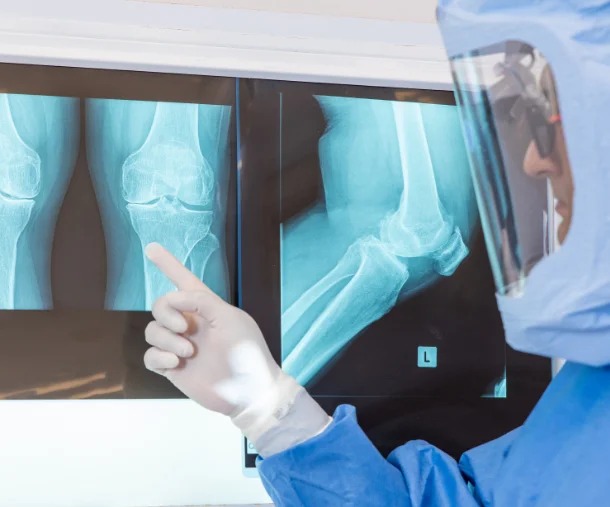
Patients with higher BMI did experience longer operative times and slightly longer hospital stays, both of which were expected findings in technically more demanding procedures. However, the rates of serious complications and the need for further surgery were not significantly different between weight groups.
What does 'high-volume surgeon' mean?A high-volume arthroplasty surgeon is one who performs a large number of hip and knee replacement procedures each year. Surgical volume is associated with better procedural precision, lower complication rates, shorter operating times, and reduced blood loss. Surgeons who regularly operate on patients with elevated BMI also develop specific technical expertise and tailored perioperative protocols that further support patient safety. |
Modern Surgical Techniques for Complex Cases
Advances in surgical technique and technology have expanded what is achievable for patients with higher BMI. Two approaches are particularly relevant:
Robotic-Assisted Knee Replacement
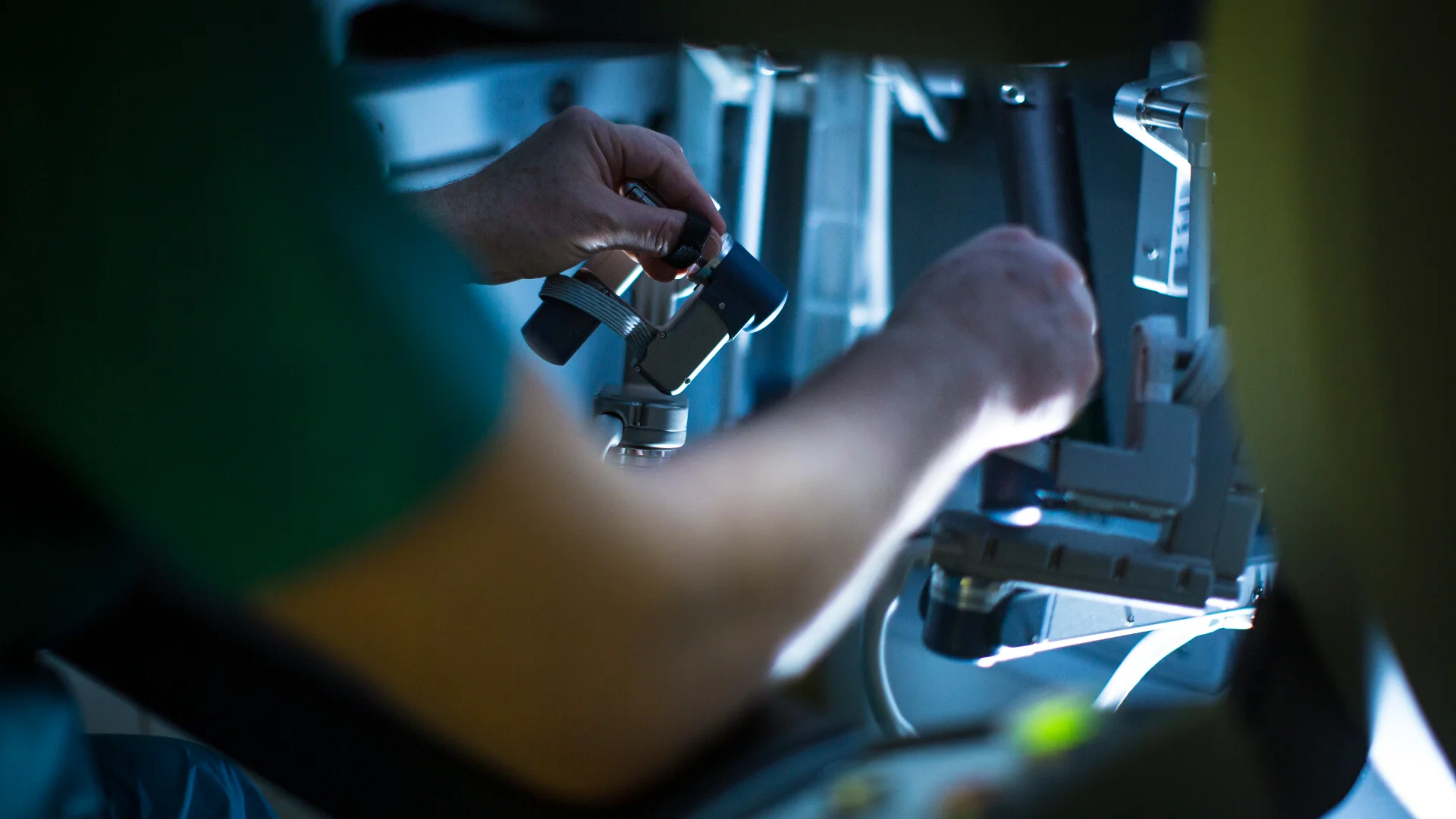
Robotic-assisted total knee arthroplasty uses real-time surgical guidance technology to achieve precise implant positioning that is difficult to replicate with conventional technique alone. During surgery, the robotic system provides continuous feedback to the surgeon, allowing adjustments to be made intraoperatively based on each patient's unique anatomy.
In patients with a higher BMI, where the depth of soft tissue can make anatomical landmark identification more challenging, this level of precision may offer a meaningful safety advantage.
Research published in PubMed Central has confirmed that robotic-assisted knee replacement achieves significantly better implant alignment compared to conventional technique, with fewer outliers.⁶ Importantly, a separate study confirmed that the functional benefits of robotic-assisted surgery are not diminished in patients with higher BMI. These outcomes were equivalent to those achieved in lower-BMI patients.⁷
Direct Anterior Approach Hip Replacement
The direct anterior approach to hip replacement is a muscle-sparing surgical technique that reaches the hip joint through a natural interval between muscles, without cutting or detaching any major muscle groups. This is in contrast to traditional approaches, which require partial detachment and subsequent reattachment of surrounding muscles.
For carefully selected patients with a higher BMI, this approach may offer:
Faster early recovery and mobilisation following surgery
- Reduced early dislocation risk through technique rather than relying on soft tissue healing
- Earlier return to normal activities and independence
- Real-time intraoperative imaging to confirm implant positioning before wound closure
Important note: the direct anterior approach requires specific surgical training and experience, and is not appropriate for every patient. A thorough pre-operative assessment will determine whether this technique is the right choice for your individual anatomy and circumstances.
An Honest Discussion About Risk
| We believe that every patient deserves a clear, honest account of the risks involved in their care. The following is a factual summary, it is not intended to alarm, but to inform. |

Patients with a BMI above 40 do carry a higher baseline surgical risk compared to patients with a lower BMI. This is well established in the medical literature, and any surgeon who suggests otherwise is not being straightforward with you. The key risks include:
Risks That Are Elevated at BMI > 40
|
It is equally important to understand what these risks do not necessarily mean. A higher risk of a complication is not the same as a certainty of one. Risk can be identified in advance, reduced through careful pre-operative preparation, and managed throughout the surgical episode. The goal of a comprehensive pre-operative workup is to convert a theoretical risk into a manageable one.
Pre-Operative Preparation That Can Help Reduce Your Risk
|
There will also be a subset of patients for whom, after thorough individual assessment, the risks do outweigh the likely benefits at a particular point in time. An experienced surgeon will have this conversation with you directly, clearly, and with genuine regard for your wellbeing, not as a reason to dismiss you, but as a starting point for a plan.
Could You Be a Suitable Candidate for Surgery?
There is no single answer to this question that applies to everyone. Suitability for joint replacement surgery is always determined on an individual basis, following a thorough clinical assessment. The following factors generally support further consideration of surgery even at a higher BMI:
- Severe, daily joint pain from osteoarthritis that has been confirmed on imaging and has not adequately responded to non-operative treatments including physiotherapy, weight management, and pain management.
- Medical conditions (such as diabetes, hypertension, or sleep apnoea) that are well controlled and have been reviewed by your GP or relevant specialist.
- No active medical contraindications to anaesthesia and surgery.
- A clear understanding of the elevated risks associated with surgery at a higher BMI, and a willingness to engage in pre-operative preparation to reduce those risks.
- Good motivation and realistic expectations regarding recovery and rehabilitation.
- Access to appropriate post-operative support at home.
A proper assessment will include a review of your imaging, your medical history, your current medications, and your overall fitness for surgery. It will also include an honest conversation about what surgery can and cannot achieve, and what recovery realistically involves.
About Dr Yas Edirisinghe and Ortho Precision
Dr Yas Edirisinghe is a Fellow of the Royal Australasian College of Surgeons (FRACS) and a Fellow of the Australian Orthopaedic Association (FAOrthA). He completed sub-specialty fellowship training in complex hip and knee joint replacement surgery.
Joint replacement surgery, including hip and knee arthroplasty, makes up the majority of Dr Edirisinghe's practice. He performs a high volume of procedures across multiple surgical sites, including patients with elevated BMI and other major surgical complexities. He holds a public hospital appointment with the Northern Adelaide Local Health Network, and serves as the Director of Surgeon training at Lyell McEwinn and Modbury Hospitals.

Dr Edirisinghe's clinical approach is grounded in evidence-based practice, thorough individual assessment, and a belief that every patient deserves an honest, informed conversation about their options, regardless of their weight.
Dr Yas Edirisinghe offers consultation locations at Ashford Hospital, Calvary Central Districts Hospital, and regionally in Gawler.
Specialist Services Offered by Dr. Yas Edirisinghe• Robotic-assisted total and partial knee replacement • Kinematic alignment (tailored to your individual anatomy) • Direct anterior approach total hip replacement • Comprehensive pre-operative risk assessment for complex patients • Multidisciplinary perioperative support including anaesthetics and physiotherapy |
If You Would Like to Learn More
If you have been living with significant joint pain and have been uncertain whether surgery is an option for you, we encourage you to seek a proper, individualised assessment. You may have more options than you have been told.
A GP referral is required for a specialist appointment. If you do not currently have a referral, your general practitioner can assist.
Medical Disclaimer - This article has been prepared for general educational purposes only. It does not constitute medical advice, a clinical recommendation, or a substitute for consultation with a qualified medical practitioner. Individual patient circumstances vary considerably. All surgical procedures carry risks that must be discussed in full with your treating surgeon during a formal consultation. The information presented is based on published peer-reviewed literature available at the time of writing and is subject to revision as evidence evolves. Dr Yas Edirisinghe is an AHPRA-registered medical practitioner. This content has been prepared in compliance with AHPRA advertising guidelines. No surgical outcomes are guaranteed or implied.
Scientific References
For Social Media Team Use — Full Citation List
The following peer-reviewed publications formed the scientific basis for this article. All citations are formatted for reference and verification purposes.
- Clement ND, et al. Reassessing BMI-based access to joint replacement surgery. PLOS Medicine. 2023; doi:10.1371/journal.pmed.1005003. Available: https://journals.plos.org/plosmedicine/article?id=10.1371/journal.pmed.1005003
- Wylde V, et al. Body Mass Index Did Not Affect the Risk of Revision 3–9 Years After Total Knee Replacement Surgery. Arthroplasty Today. 2024; doi:10.1016/j.artd.2024.00061-X. Available: https://www.arthroplastytoday.org/article/S2352-3441(24)00061-X/fulltext
- Body Mass Index Above 35 Has Increased Risk of Complications but Still Achieves Clinically Meaningful Improvement in Patient-Reported Outcomes After Anterior-Based Total Hip Arthroplasty. ScienceDirect / Journal of Arthroplasty. 2024–2025; doi:10.1016/j.artd.2025.000524. Available: https://www.sciencedirect.com/science/article/pii/S2352344125000524
- Outpatient Hip and Knee Arthroplasty in Obese Patients With Body Mass Index Above 40 kg/m² is Not Associated With Increased Early Complication Rates. PubMed Central. 2025. PMCID: PMC12375198. Available: https://pmc.ncbi.nlm.nih.gov/articles/PMC12375198/
- The Impact of Obesity on Total Hip Arthroplasty Outcomes When Performed by High-Volume Surgeons — A Propensity Matched Analysis From a High-Volume Urban Center. The Journal of Arthroplasty. 2024; doi:10.1016/j.arth.2024.00185-2. PubMed ID: 38428691. Available: https://www.arthroplastyjournal.org/article/S0883-5403(24)00185-2/abstract
- Robotic-Assisted Total Knee Arthroplasty in Obese Patients. PubMed Central. 2024. PMCID: PMC10885316. Available: https://pmc.ncbi.nlm.nih.gov/articles/PMC10885316/
- Robotic-assisted technology does not influence functional outcomes among obese and morbidly obese total knee arthroplasty patients. PubMed Central. 2023. PMCID: PMC10390435. Available: https://pmc.ncbi.nlm.nih.gov/articles/PMC10390435/
- Truong M, et al. Obesity is associated with an increased risk of undergoing hip replacement in Australia. ANZ Journal of Surgery. 2023; doi:10.1111/ans.18543. Available: https://onlinelibrary.wiley.com/doi/10.1111/ans.18543
- Wall C, et al. Obesity is associated with an increased risk of undergoing knee replacement in Australia. ANZ Journal of Surgery. 2022; doi:10.1111/ans.17689. Available: https://onlinelibrary.wiley.com/doi/10.1111/ans.17689
- Australian Orthopaedic Association National Joint Replacement Registry (AOANJRR). Annual Report 2024. South Australian Health and Medical Research Institute. Available: https://aoanjrr.sahmri.com/annual-reports-2024