

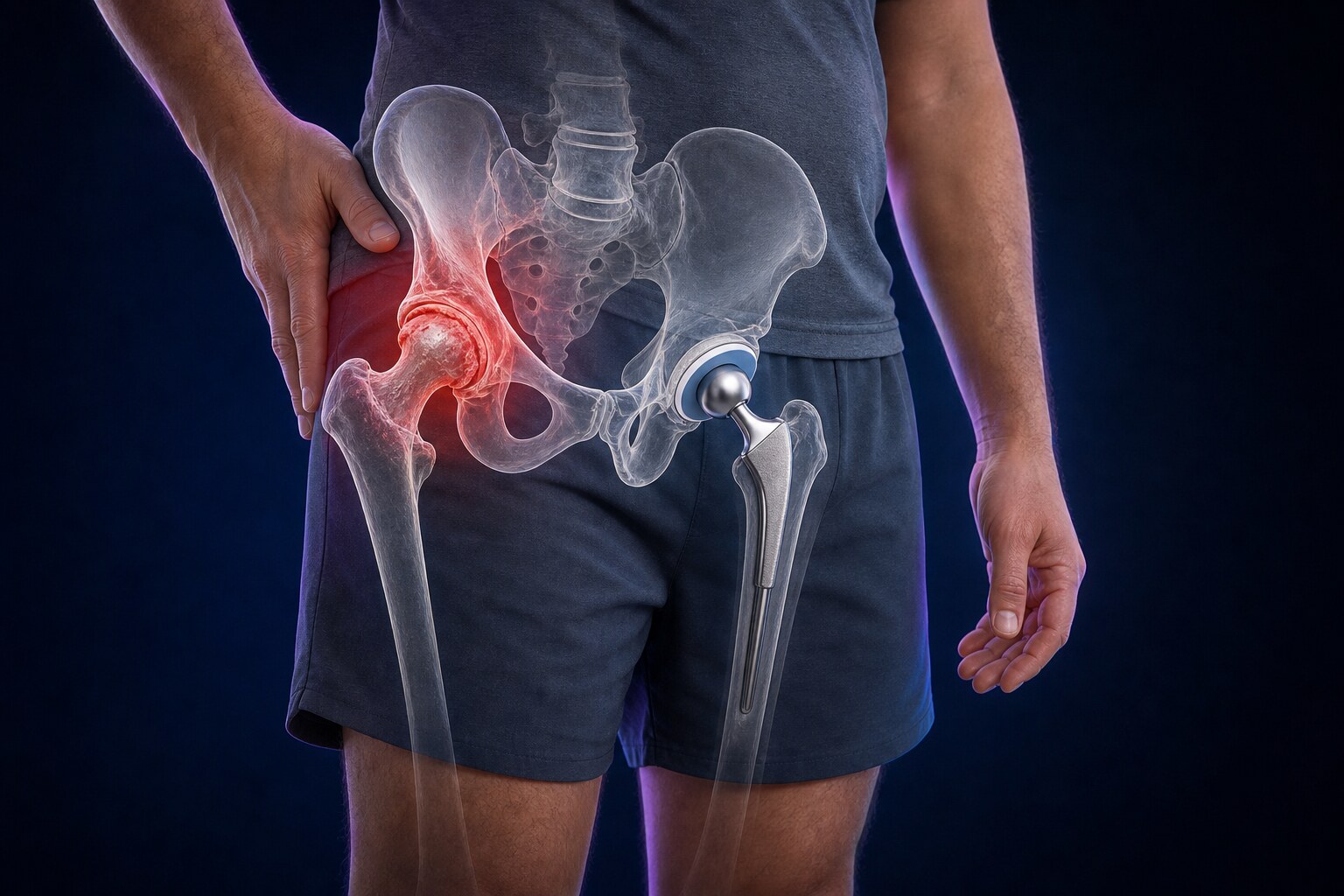
A trusted operation that keeps getting better
Total hip replacement has an excellent long-term record, and modern hip replacements are lasting longer than ever. A 2026 study in The Lancet, which pooled data from more than 1.9 million hip replacements, found that contemporary hip replacements have around a 92 per cent chance of still being in place at 30 years, and about 93 to 94 per cent at 20 years.¹ ² ³
For most people, the real question is not whether a hip replacement works — it is how good the hip can feel afterwards. That is where careful, individualised surgery makes the difference.
Planned in three dimensions, matched to your anatomy
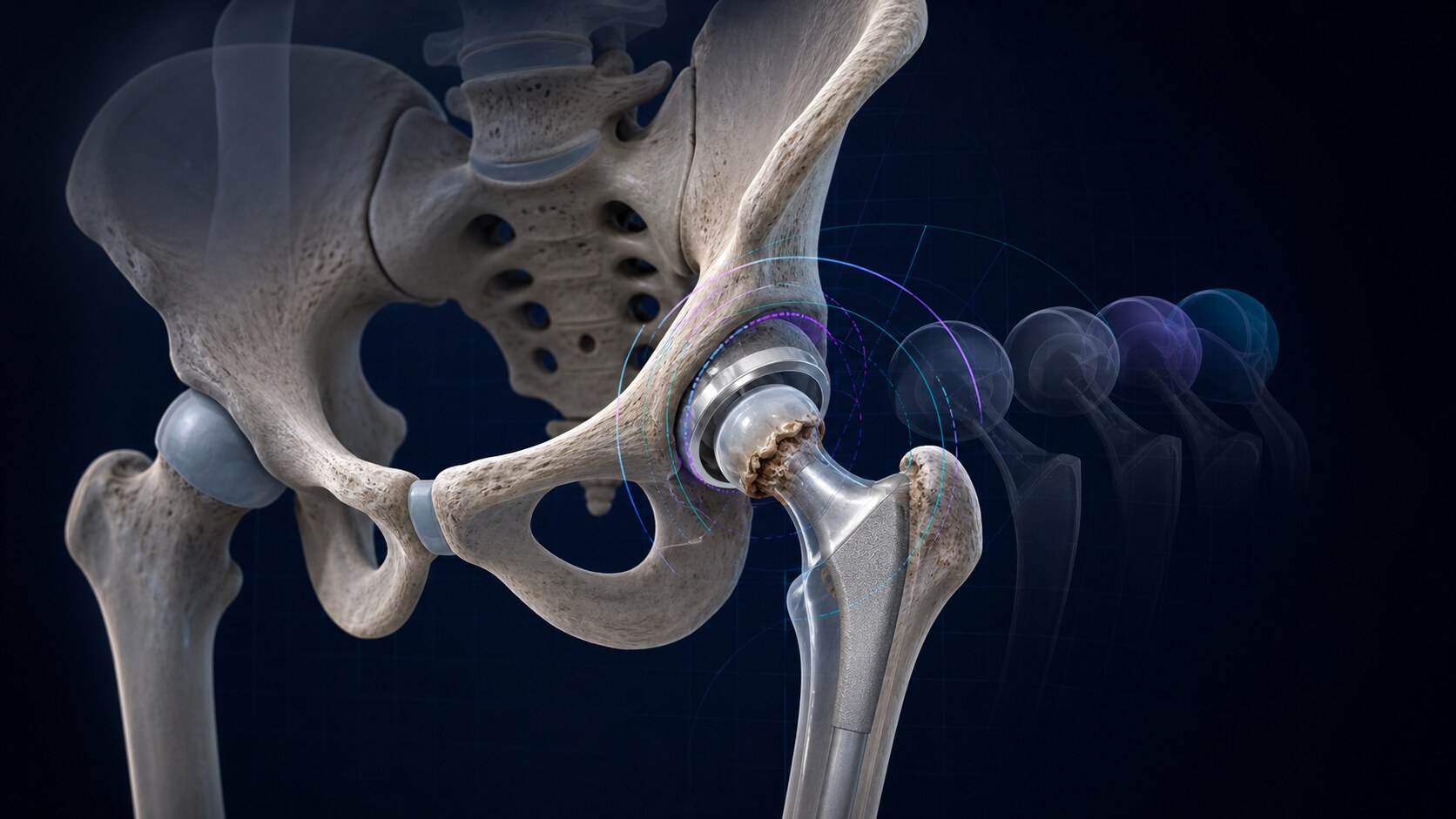
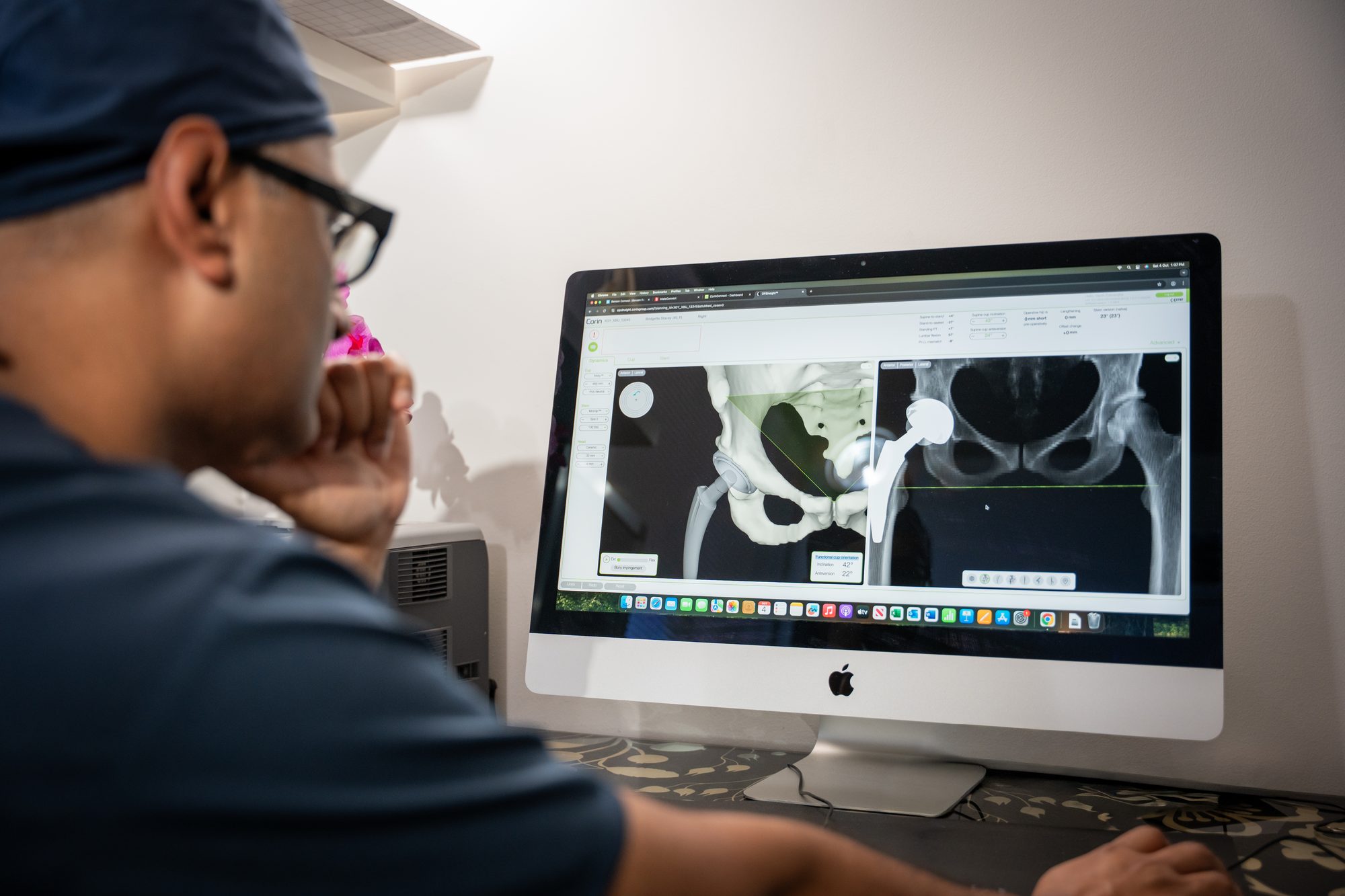
No two hips are the same, so I do not plan yours from a flat two-dimensional X-ray alone. Where it is suitable, I plan your operation in three dimensions from a CT scan — matching the implant to your individual femur and pelvis, restoring your natural leg length and the way your hip sits and moves, and rehearsing the reconstruction before the day of surgery.
Detailed planning supports accurate implant placement and helps to lower the risk of problems such as dislocation.⁴
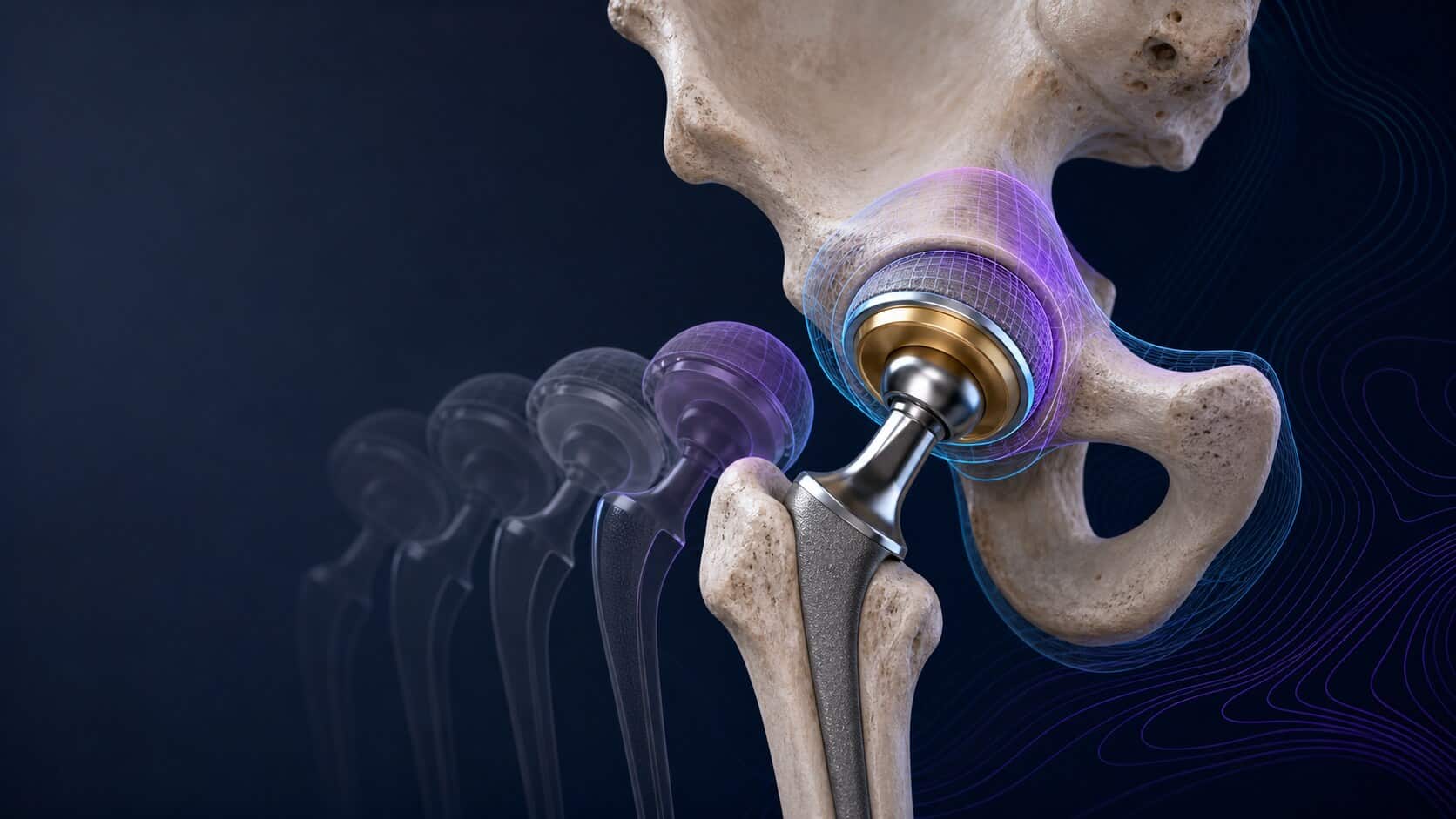
A hip that feels like yours
Many people do well after a hip replacement and yet still notice subtle things — a little lingering groin ache, or some discomfort on the outer side of the hip. These finer issues can often be improved by getting the technical detail right: the size and position of the implant, your leg length, and how the soft tissues are balanced.
My aim is a hip that feels comfortable, stable and natural — not simply better than before, but as close as possible to the way a healthy hip should feel.
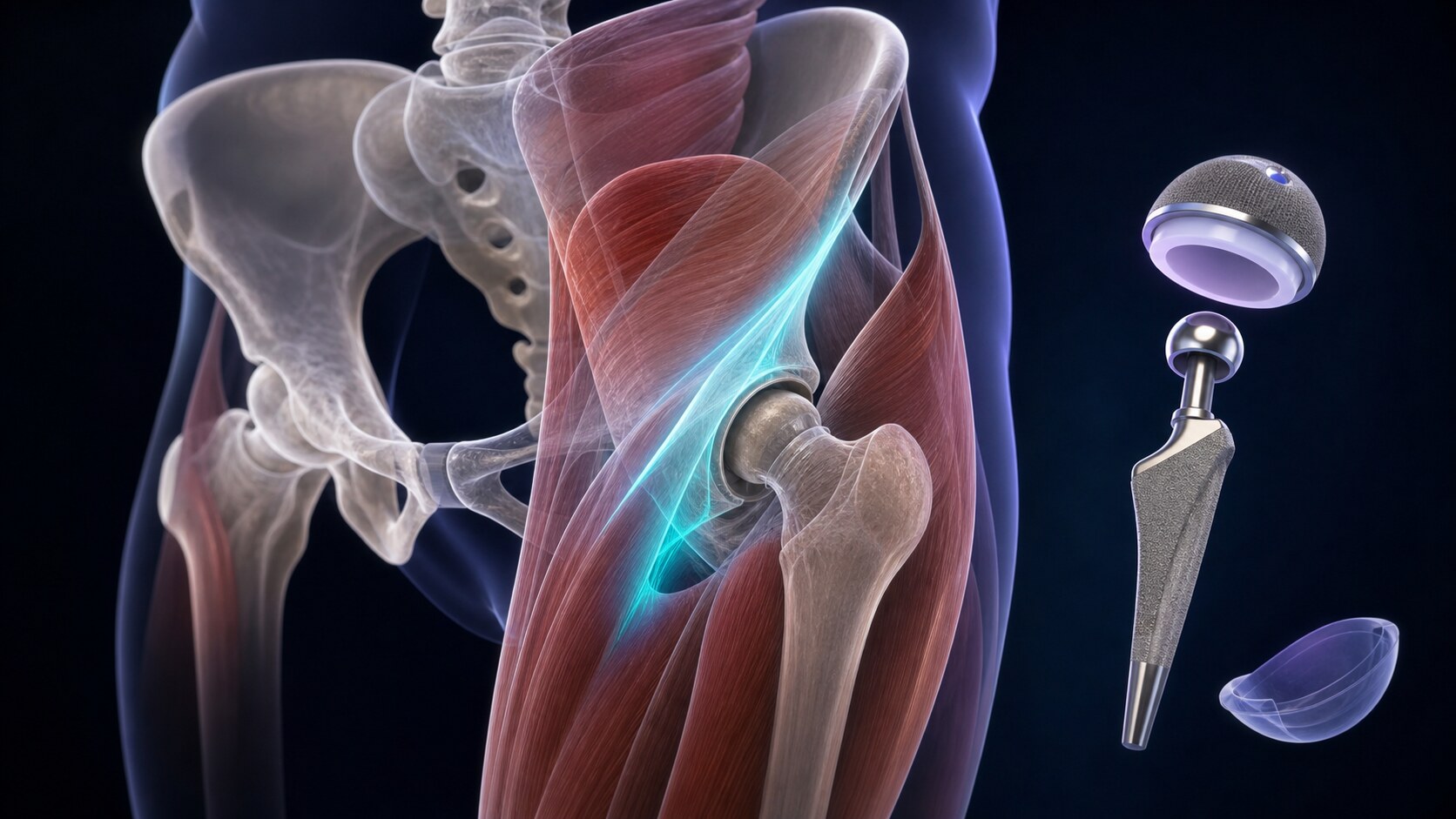
Surgical approaches, including muscle-sparing
The hip can be replaced through different approaches, and the right one depends on you. I offer the direct anterior (muscle-sparing) approach, which works between the muscles at the front of the hip and can allow some people a quicker early recovery, as well as the posterior approach where that suits you better.
Whichever approach is used, well-performed hip replacements tend to function equally well by six to twelve months,⁵ so I will talk you through what is most appropriate for your hip.
Your recovery
Most people are up and moving with the team on the day of surgery or the day after, and then continue a guided rehabilitation programme over the following weeks. I will give you a clear plan for getting home, returning to driving and work, and easing back into the activities you enjoy.

A calm, considered approach
I would always rather help you stay active and explore non-surgical options first, and recommend a hip replacement only when it is genuinely the right step for you. The goal is simple: less pain, natural movement, and a confident return to the things you love doing.
Request a consultation
Send a few details and the rooms will be in touch within one business day.
Request a consultation
Send a few details and the rooms will respond. A GP referral helps but is not required to enquire.
"*" indicates required fields
More on hip conditions & treatments
Explore the four pillars
Want surgery designed for your anatomy, not the average?
Joint-preserving partial replacement where suitable, personalised total replacement with kinematic alignment and 3D planning, and direct anterior hip surgery — matched to your joint, not a standard mould.
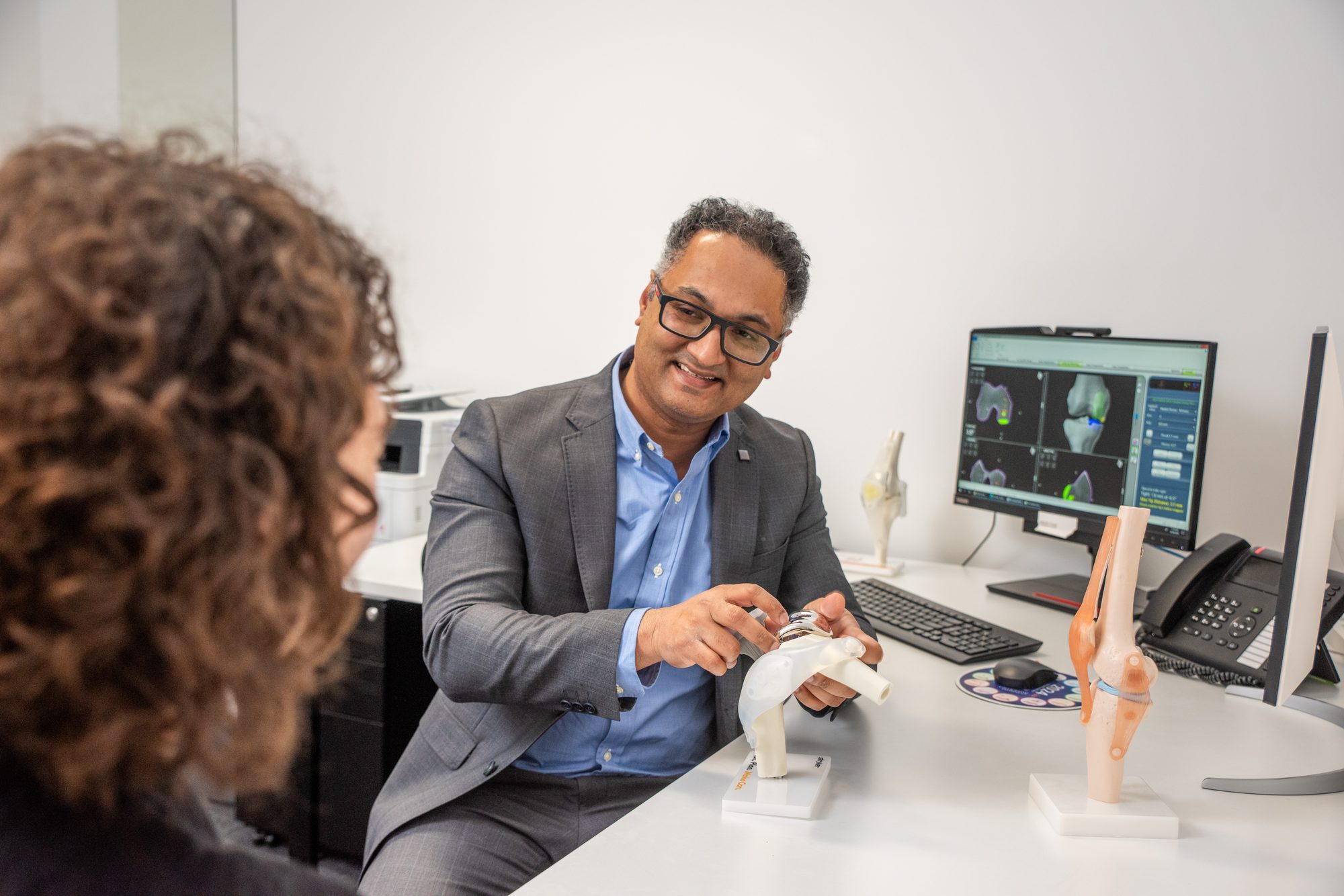
Had a replacement that still doesn’t feel right?
When a replacement hasn’t worked out there is often a specific reason — and a specific solution. An independent review: examination, imaging reviewed, and a written summary of your options.
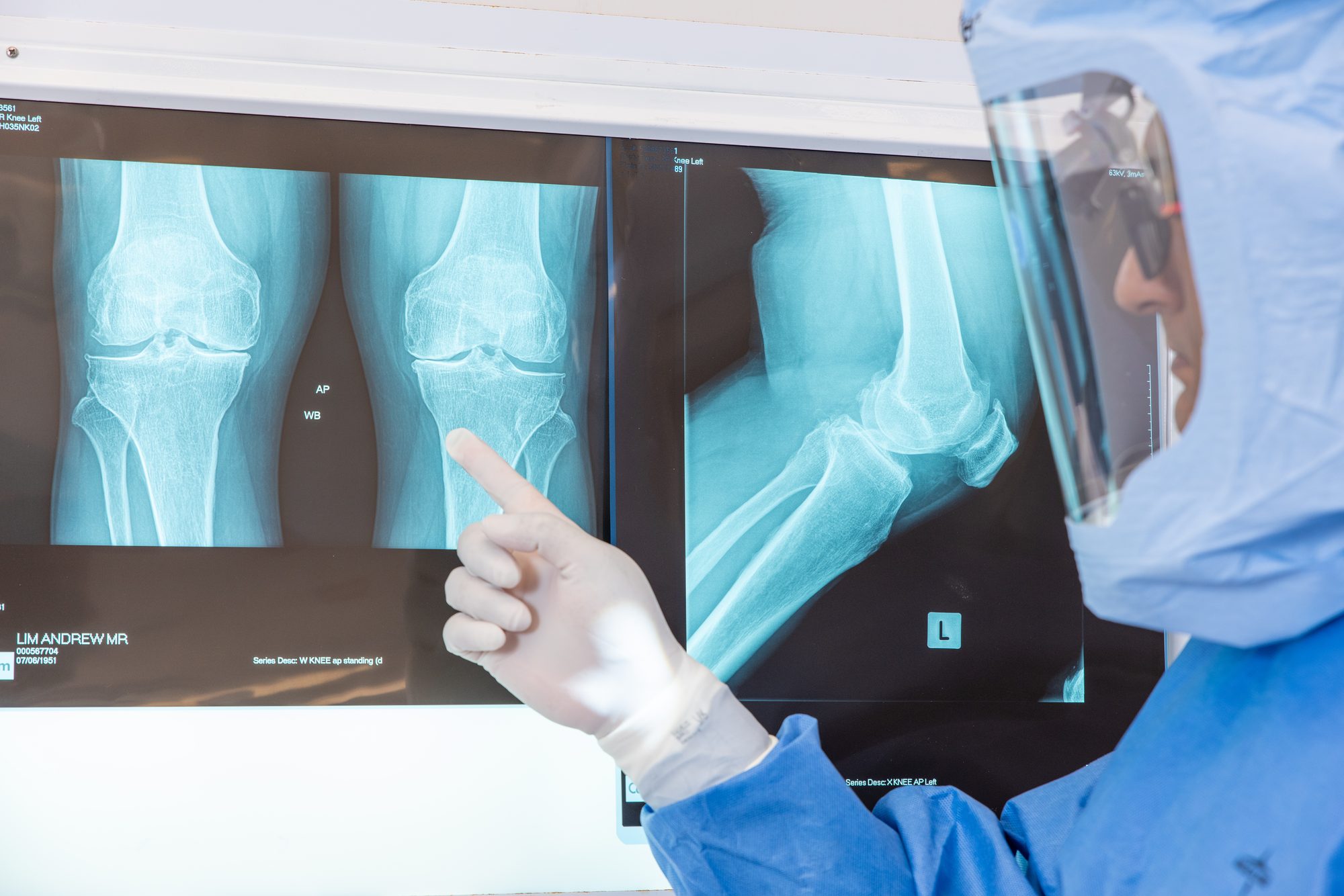
Been told you’re too young, too heavy, or to just wait?
Dr Yas reviews each patient case by case and recommends the operation that fits the joint — not the other way around. Higher-BMI patients considered on their individual merits, not declined on weight alone.
Been told nothing more can be done?
Specialist revision hip & knee surgery, partial-to-total conversion with modern bone-preserving technique, and complex reconstruction after trauma — including limb-preserving surgery — considered case-by-case.

Latest insights from Dr Yas
Plain-language articles on modern hip & knee surgery — written to help you make an informed decision.


- Pentland V, et al. Survivorship of modern total hip replacement to 30 years: systematic review, meta-analysis, and extrapolation of global joint registry data. The Lancet 2026;407:55–66.
- AOANJRR — Australian Orthopaedic Association National Joint Replacement Registry, annual report. aoanjrr.sahmri.com
- UK National Joint Registry, 2024 Annual Report. njrcentre.org.uk
- 3D pre-operative planning of primary hip arthroplasty: a systematic literature review. EFORT Open Reviews 2020;5(12):808–815.
- Direct anterior versus posterior approach in total hip arthroplasty — systematic review & meta-analysis: better early function, no significant difference by 6–12 months.