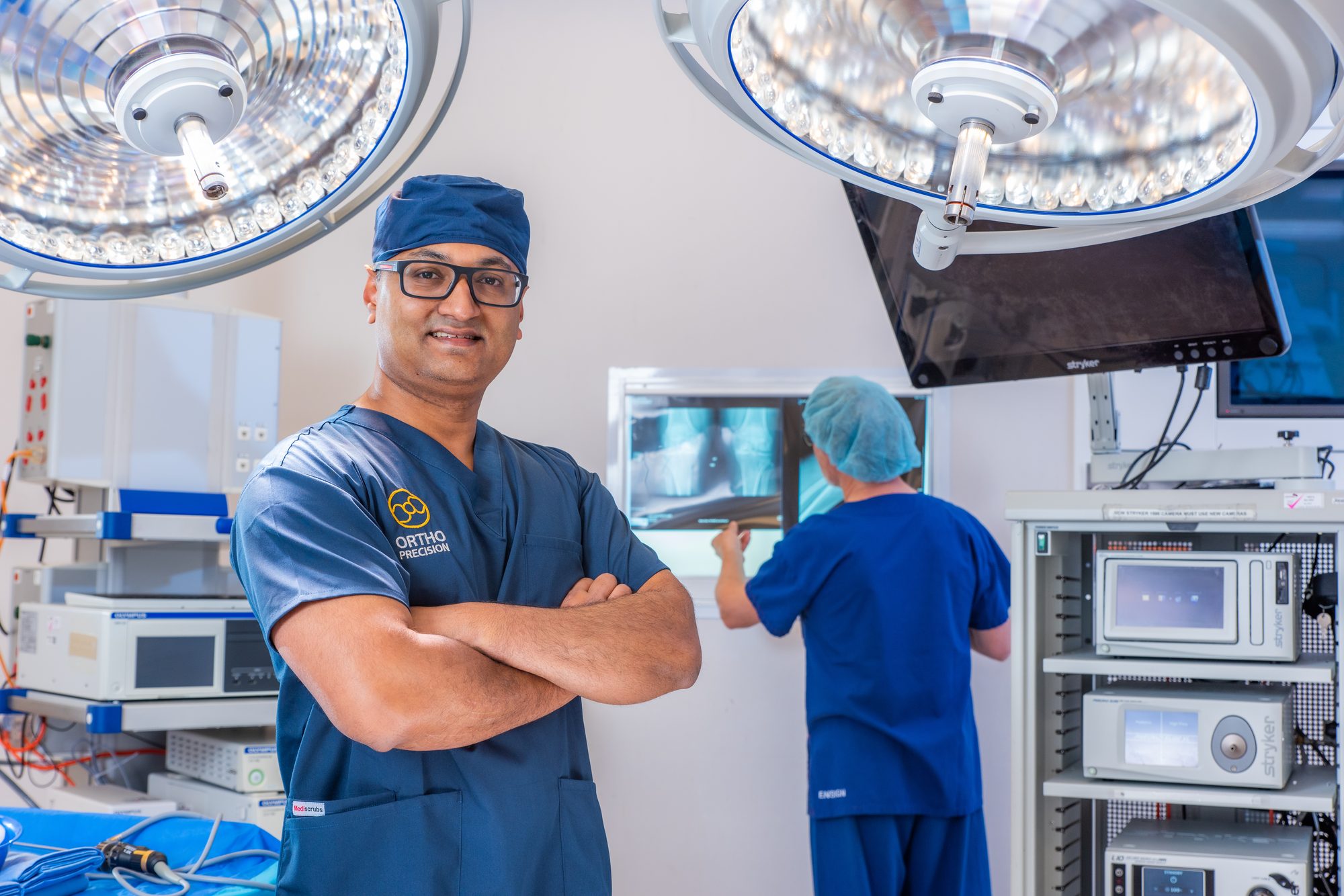

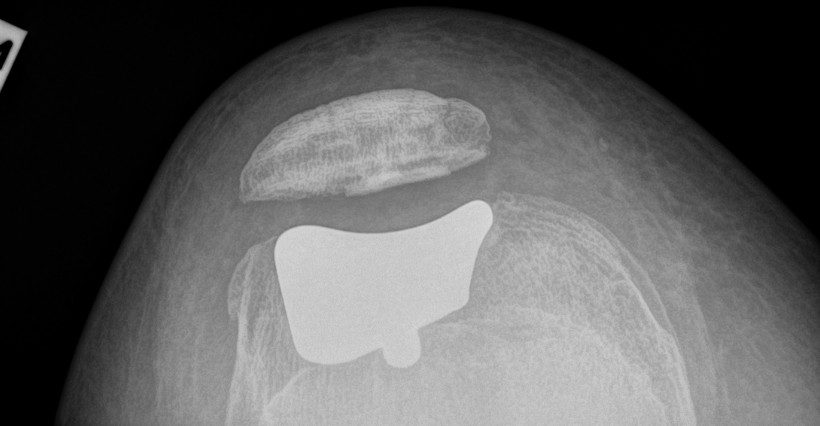
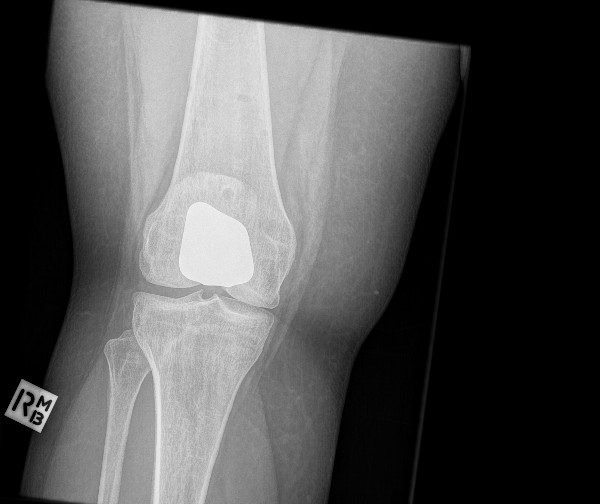
The kneecap (patella) glides in a groove at the front of the knee. When it does not track smoothly, or the joint behind it wears, you can feel pain on stairs, when squatting, or after sitting for a while. Dr Yas treats this in a considered, stepwise way: physiotherapy first, then finding the reason for any wear, correcting kneecap maltracking where that is the cause, and — only when the joint is significantly worn — a targeted patellofemoral replacement positioned to your individual anatomy. The X-ray above is one of Dr Yas’ own patients after a patellofemoral replacement.
Symptoms
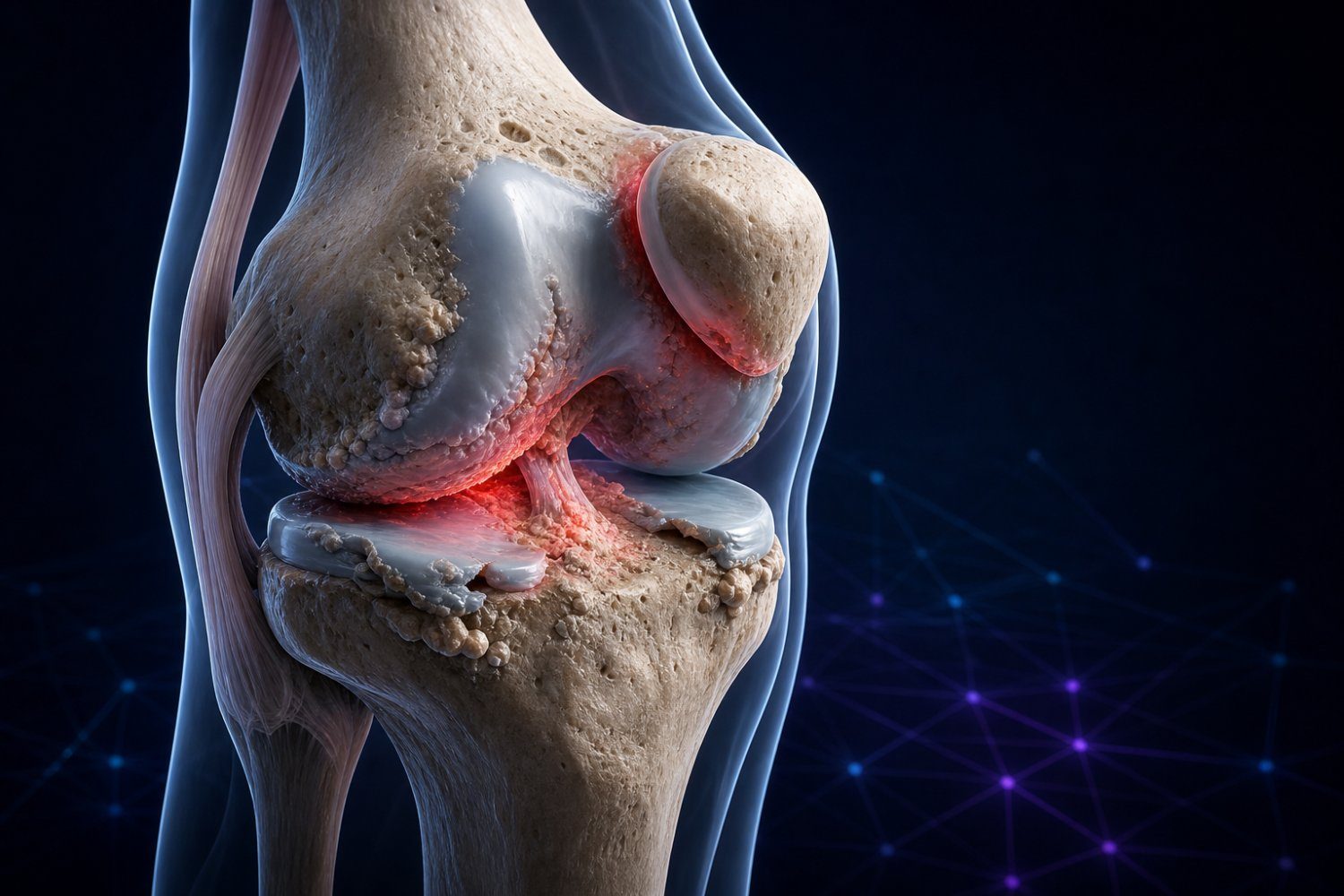
Patellofemoral pain is felt at the front of the knee, around or behind the kneecap. It is often worse on stairs, when squatting, kneeling, or after sitting for a long time with the knee bent.
Some people notice grinding, a sense of the kneecap catching, or the knee occasionally giving way.
Physiotherapy comes first
For front-of-knee pain, Dr Yas agrees that the first treatment is physiotherapy. Targeted work to balance and strengthen the muscles that control the kneecap, alongside activity adjustment, helps a great many people and is always the starting point.
Surgery is considered only if a structured course of physiotherapy has not settled your symptoms.
Finding the reason for the wear
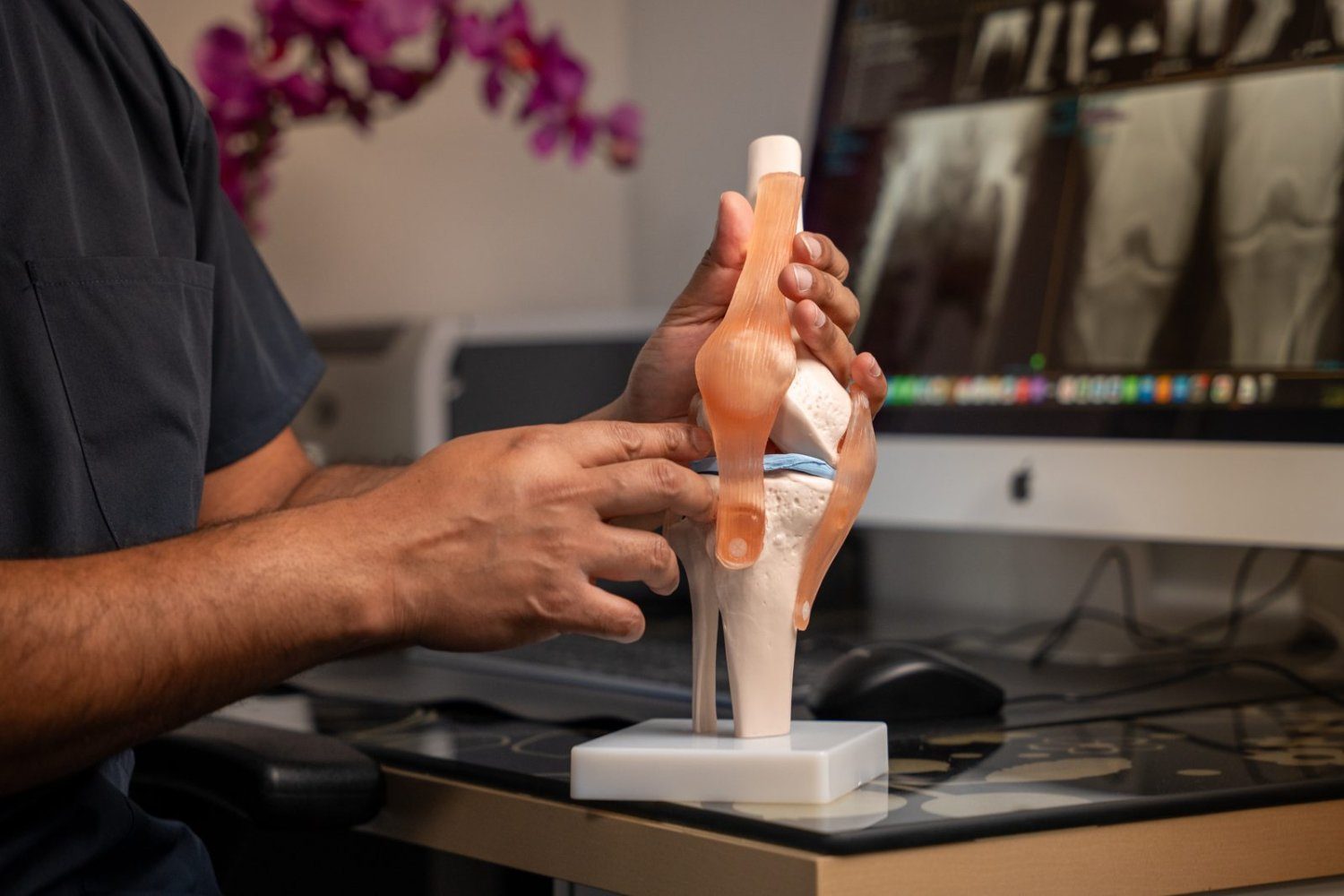
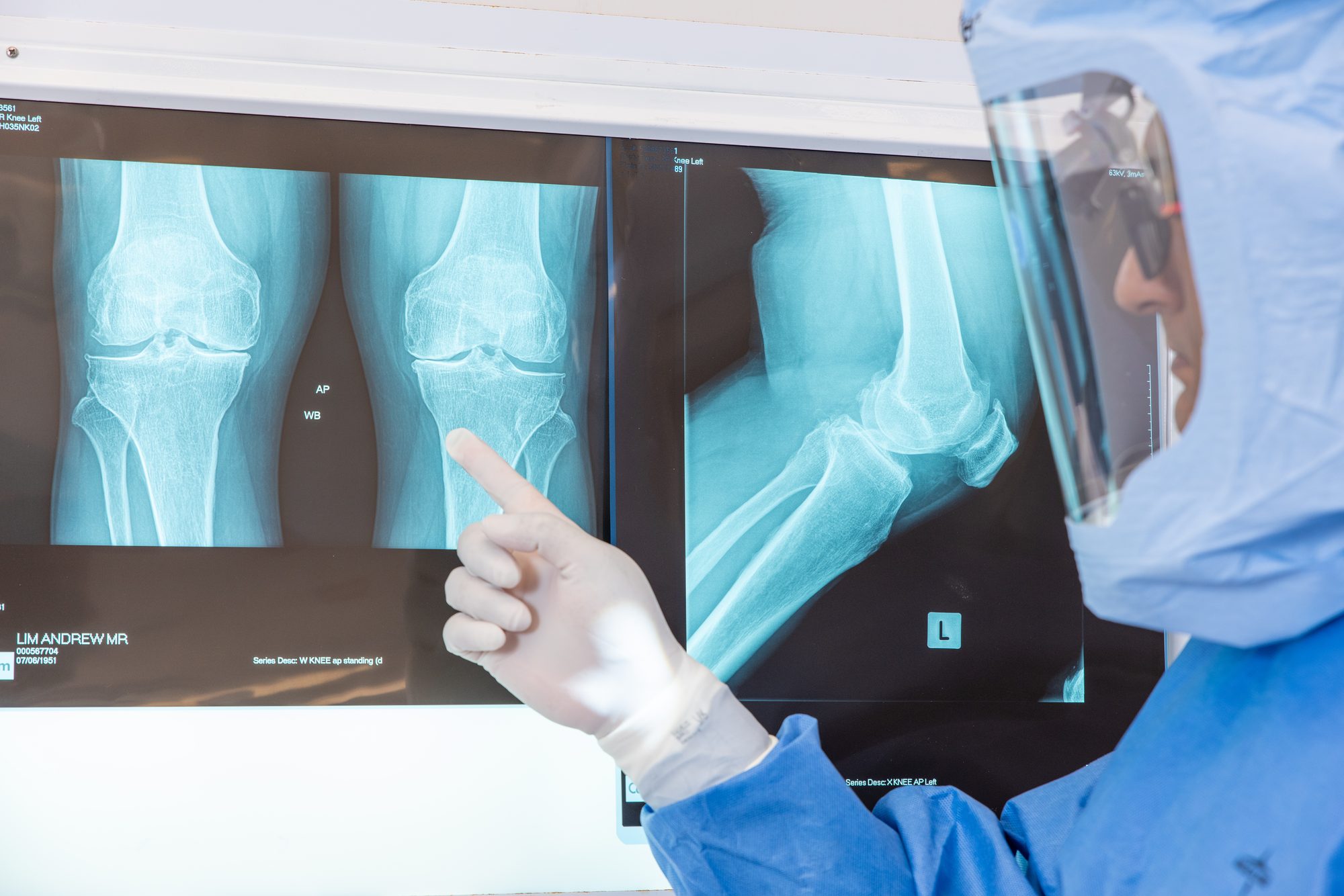
If pain persists after physiotherapy, the next step is to understand why. Dr Yas looks for the underlying reason for the wear or arthritis behind the kneecap — examining how the kneecap sits and moves, and reviewing your imaging.
The two questions that guide everything next are: is the kneecap mistracking, and how far has any wear progressed?
Correcting maltracking (MPFL realignment)
Where the problem is that the kneecap does not track correctly, you may benefit from correcting that maltracking rather than resurfacing the joint. This can involve realigning the extensor mechanism and reconstructing the medial patellofemoral ligament (MPFL), which helps hold the kneecap in its proper path.
Correcting the cause can relieve symptoms and protect the joint — a joint-preserving step before any replacement is considered.
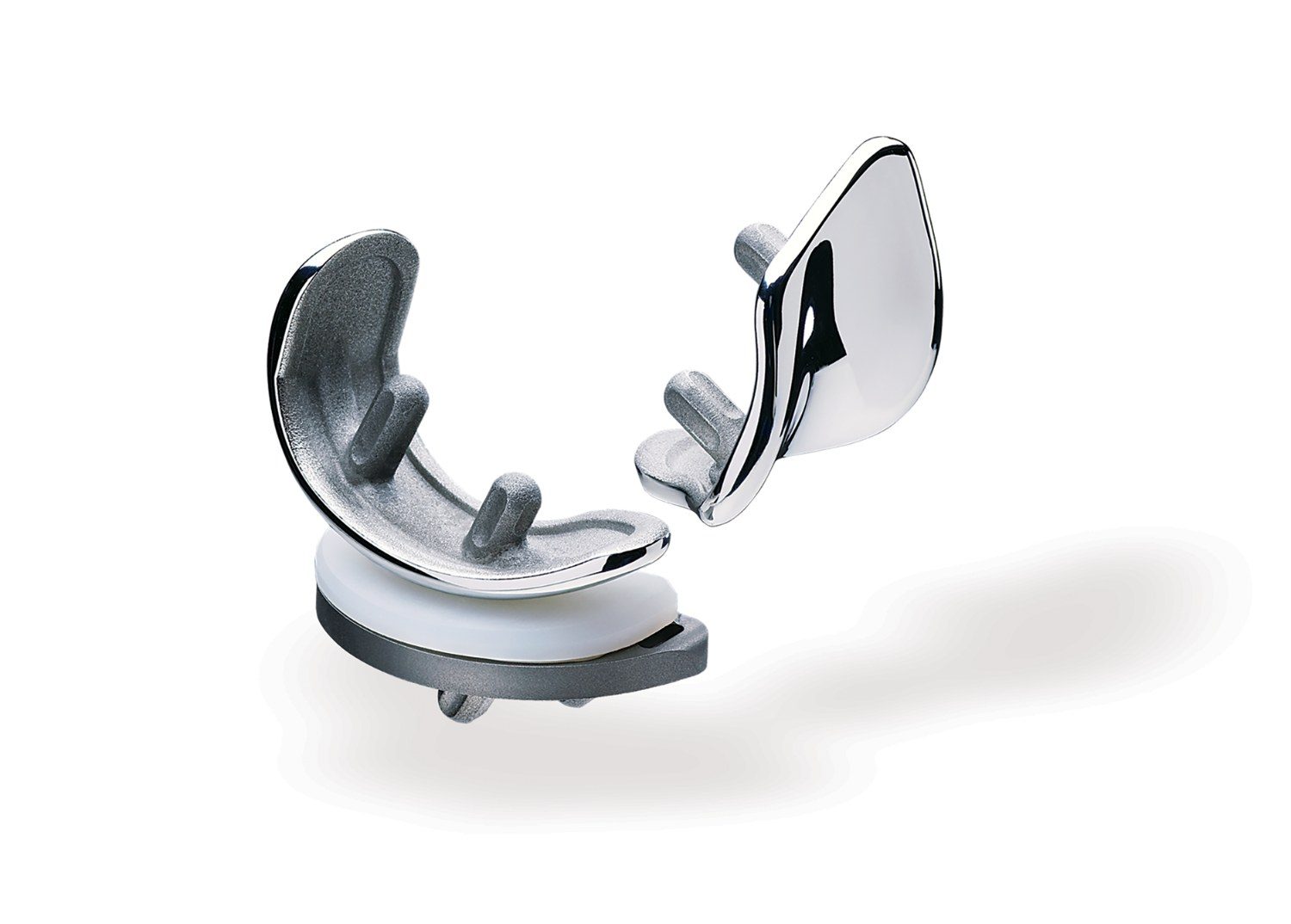
When wear is advanced: a targeted, robotically-aligned replacement
If the process has progressed too far and the joint behind the kneecap is significantly worn, you may benefit from a targeted patellofemoral replacement — resurfacing only the kneecap joint and preserving the rest of your knee.
Because it resurfaces only one part of the knee, this is a much smaller "dose" of surgery than a full knee replacement — less of the joint is opened and disturbed, which generally means less swelling, less pain and a quicker recovery.
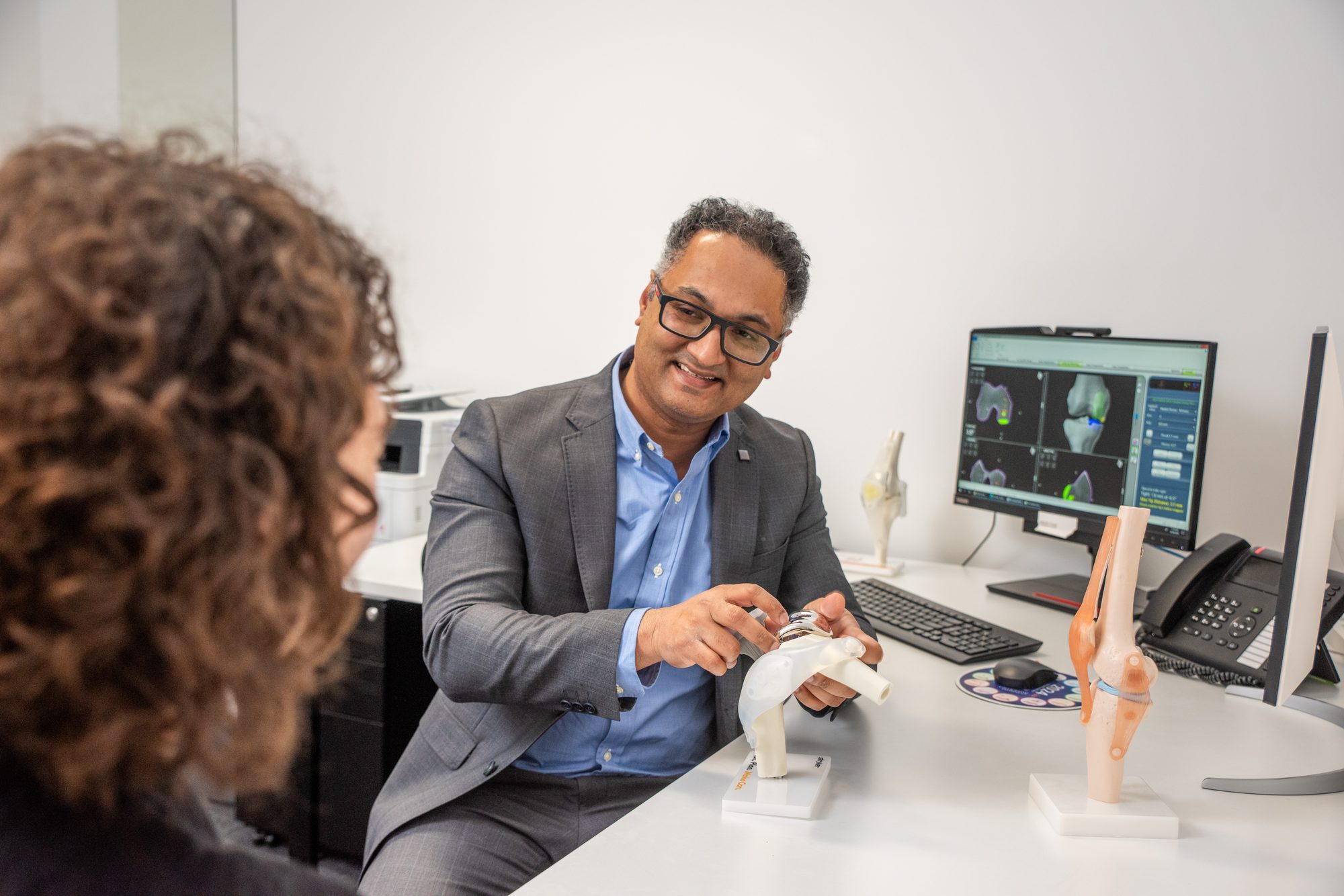
Here is the nuance that matters most: the benefit comes not simply from carrying out a patellofemoral replacement, but from positioning it accurately. Dr Yas plans and places the implant with robotic assistance so it is aligned to your individual anatomy and the way your kneecap tracks. Accurate alignment is technically demanding, and it is central to how natural the joint feels and how well it lasts — which is why Dr Yas makes it the focus of this operation.
Key takeaways
Common questions
Request a consultation
Send a few details and the rooms will be in touch within one business day.
Request a consultation
Send a few details and the rooms will respond. A GP referral helps but is not required to enquire.
"*" indicates required fields
More on knee conditions & treatments
Explore the four pillars
Want surgery designed for your anatomy, not the average?
Joint-preserving partial replacement where suitable, personalised total replacement with kinematic alignment and robotic precision, and direct anterior hip surgery — matched to your joint, not a standard mould.
Had a replacement that still doesn’t feel right?
When a replacement hasn’t worked out there is often a specific reason — and a specific solution. An independent review: examination, imaging reviewed, and a written summary of your options.
Been told you’re too young, too heavy, or to just wait?
Dr Yas reviews each patient case by case and recommends the operation that fits the joint — not the other way around. Higher-BMI patients considered on their individual merits, not declined on weight alone.
Been told nothing more can be done?
Specialist revision hip & knee surgery, partial-to-total conversion with modern bone-preserving technique, and complex reconstruction after trauma — including limb-preserving surgery — considered case-by-case.
Latest insights from Dr Yas
Plain-language articles on modern hip & knee surgery — written to help you make an informed decision.