

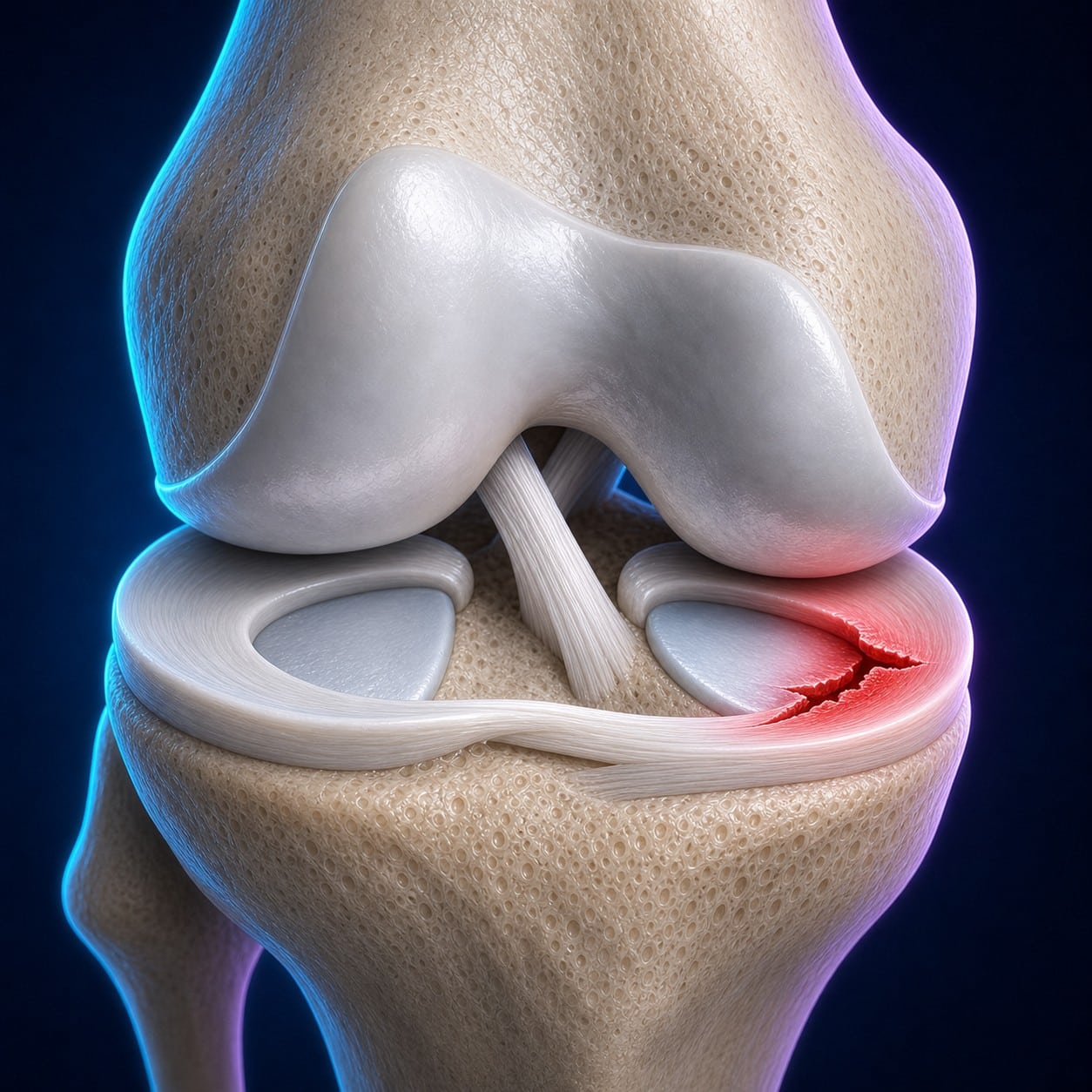
Each knee has two menisci — C-shaped cartilage cushions that absorb shock, spread your weight and help keep the joint stable. Removing meniscus raises the long-term risk of arthritis, so Dr Yas follows the modern principle: repair and preserve the meniscus wherever it can be done. Whether repair is possible depends on the tear pattern, the tissue and the blood supply.
What the meniscus does
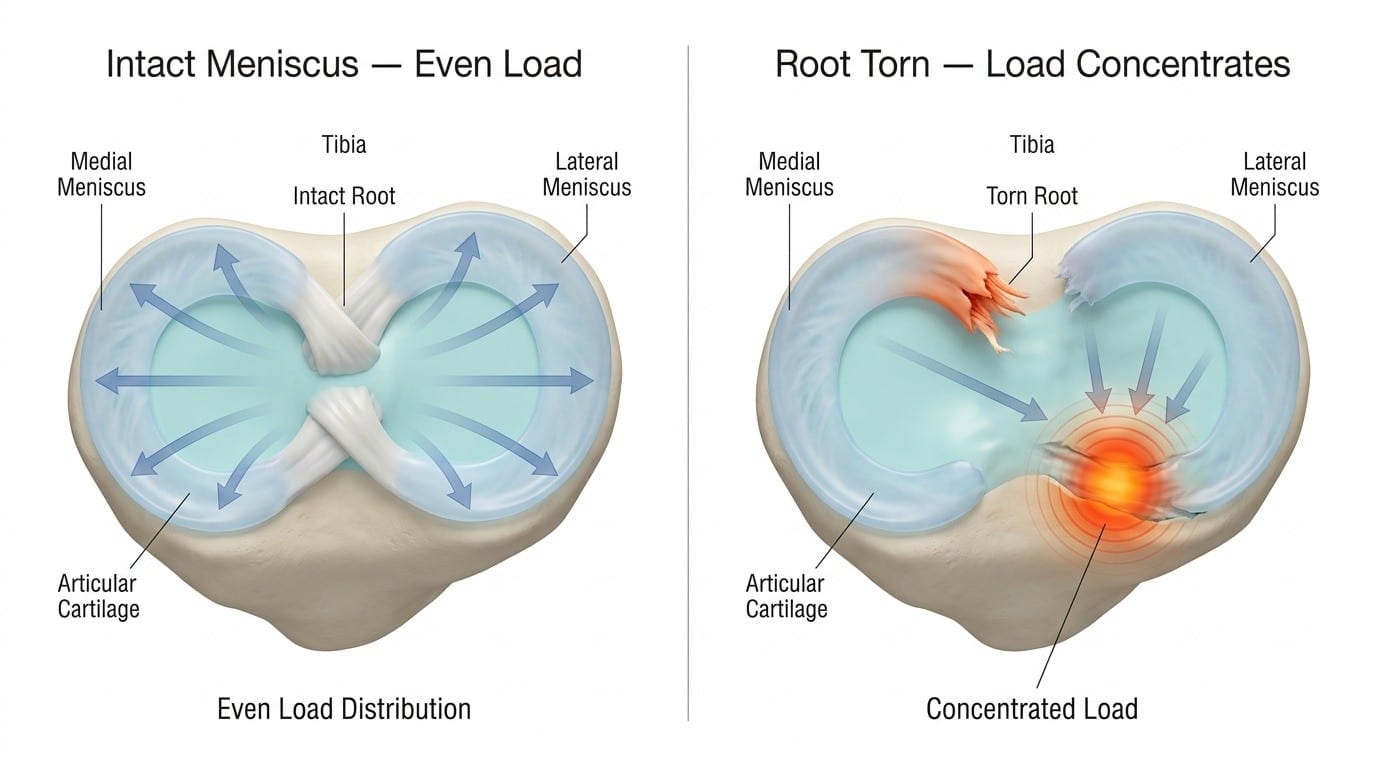
Each knee has two menisci — C-shaped cartilage cushions that act as shock absorbers, spread your body weight across the joint, and help keep it stable. They work like a tensioned ring, anchored front and back by the roots.
Lose the meniscus, and the load concentrates onto a small patch of joint surface, which then wears out.
Tear types
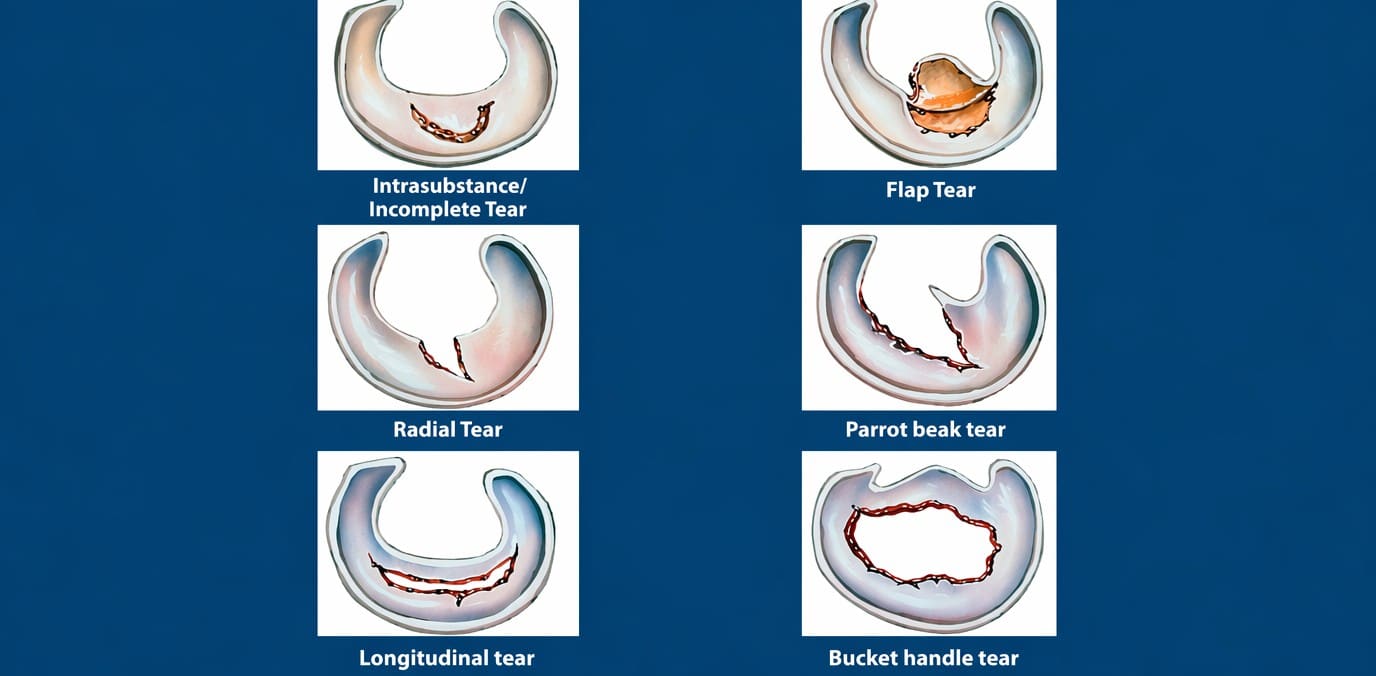
Tears come in patterns — radial, horizontal, bucket-handle (which can lock the knee so it will not fully straighten), complex degenerative tears, and root tears.
A root tear detaches the meniscus’s anchor; because the ring loses its tension and slips out of the joint, a root tear behaves like losing the whole meniscus — yet it is one of the most commonly missed knee injuries. It often presents as a "pop" at the back of the knee from a simple squat or twist.
Preservation first — the principle that protects your knee
A meniscus that is simply trimmed away cannot be replaced, and removing even part of it raises the long-term risk of arthritis.
The published evidence is clear: for medial meniscus root tears, repair leads to far lower rates of arthritis at ten years than removal or leaving it alone, and is more cost-effective. Dr Yas’s approach follows the modern principle: repair and preserve the meniscus wherever it can be done.
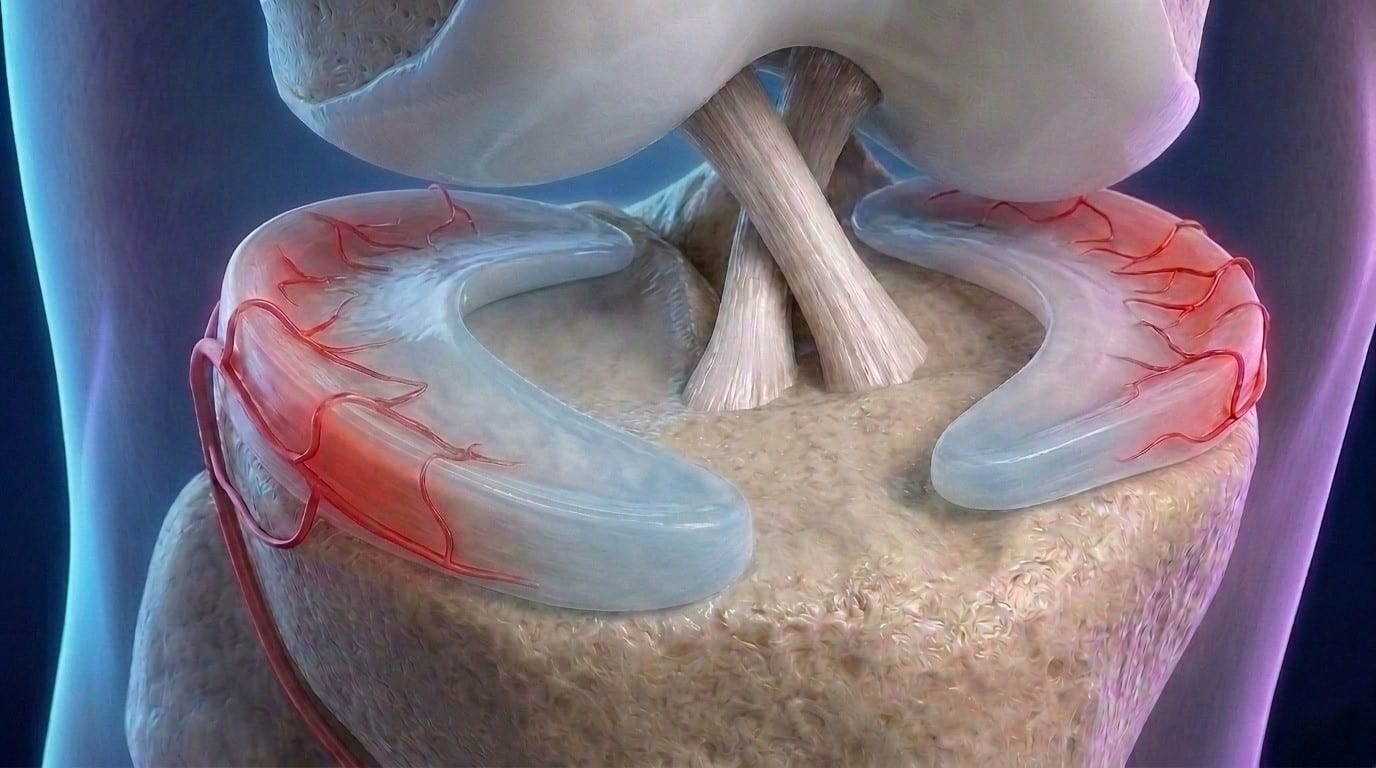
The red peripheral zone has a blood supply and can heal; the paler inner zone has little blood supply and usually cannot.
When repair is possible vs not
Healing depends on blood supply — the outer rim heals well, the inner portion has little blood supply and usually cannot.
Clean peripheral and root tears are often repairable; ragged, worn tears in an already arthritic compartment may not be. There is no strict age cut-off — activity and the state of your cartilage matter more.
What repair involves
For a root tear, the meniscus is reattached to its proper spot on the bone with strong sutures passed through a small tunnel and secured — restoring the cushion’s anchor.
Recovery protects the repair (limited weight-bearing and deep bend for several weeks), with most returning to running around 5–7 months.
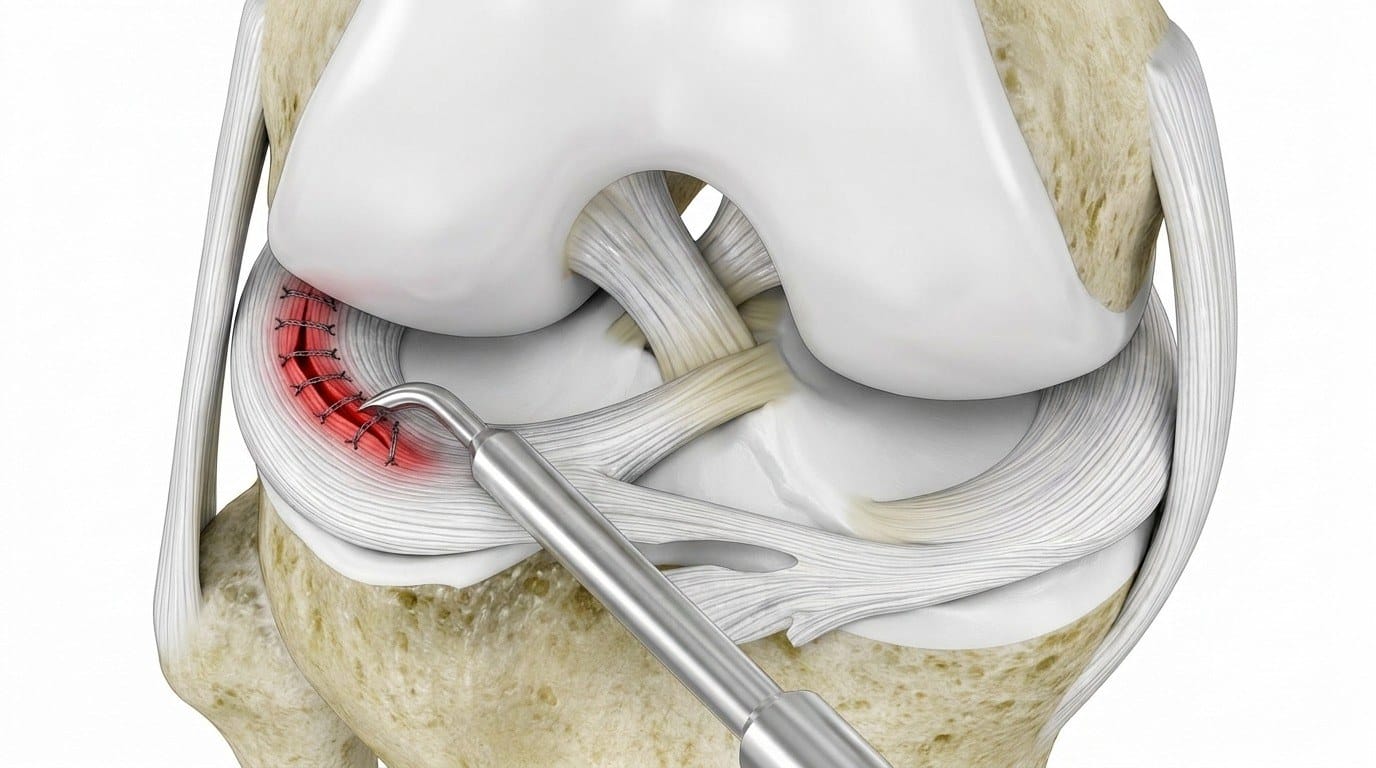
A meniscus repair: sutures placed across the tear in the vascular zone to hold it while it heals. Stylised illustration.
Guides to take home
Most meniscus surgery is keyhole (arthroscopic) day surgery. Dr Yas’ home-recovery guide covers the first two weeks; follow any specific instructions from Dr Yas and the hospital team.
Key takeaways
Common questions
Request a consultation
Send a few details and the rooms will be in touch within one business day.
Ask Dr Yas a question
Have a question about your knee? Send it through and Dr Yas’s rooms will respond. General information, not individual diagnosis.
Ask a questionLatest insights from Dr Yas
Plain-language articles on modern hip & knee surgery — written to help you make an informed decision.


- Faucett SC, et al. Meniscus root repair vs meniscectomy or nonoperative management: cost-effectiveness analysis. American Journal of Sports Medicine. 2019;47(3):762–769.
- Chung KS, et al. Ten-year outcomes of medial meniscus root repair. American Journal of Sports Medicine. 2020;48(8):1937–1944.