
Knee · Robotic & personalised replacement
Is a robotic knee replacement the best way to do it?
Short answer: the robot is only as good as the plan it’s given.
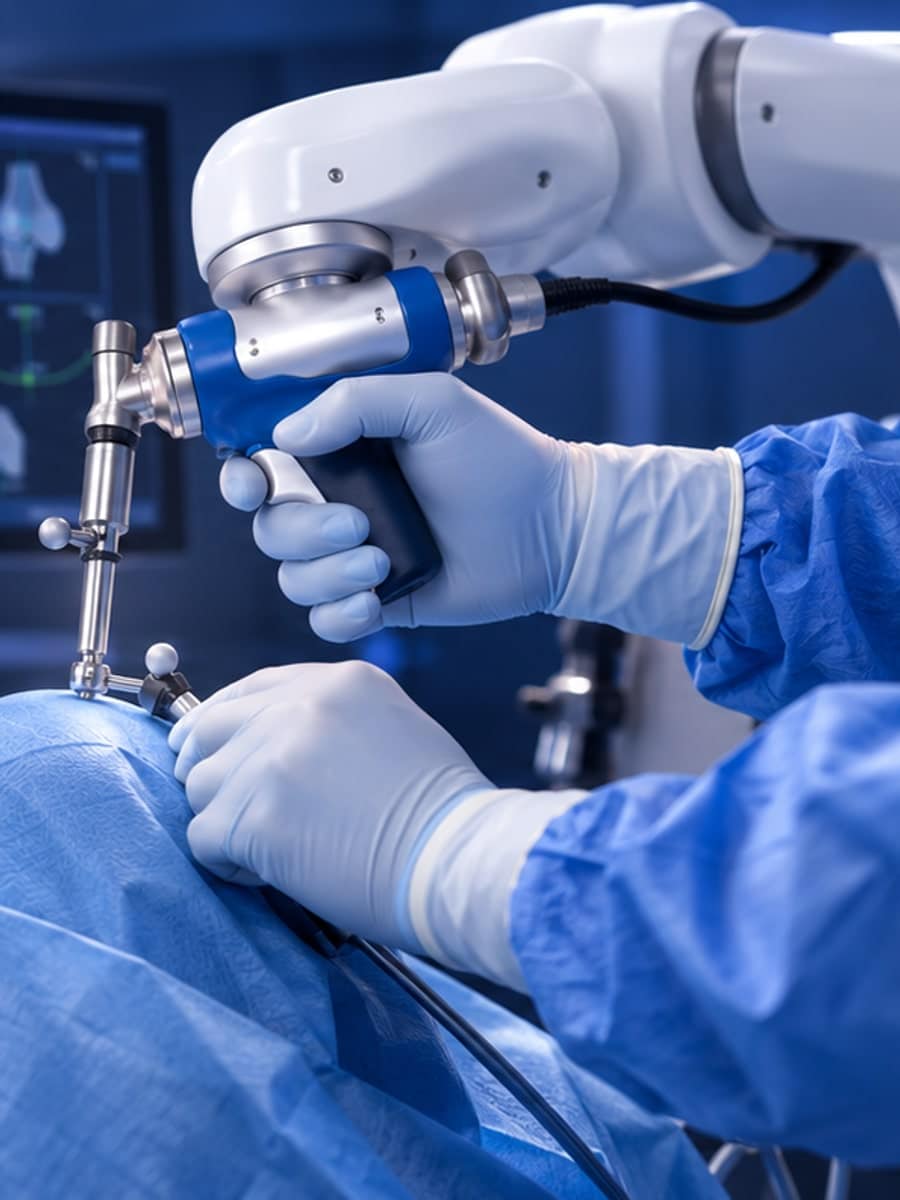
Robotic knee replacement uses computer planning and a surgeon-controlled robotic tool to help position the implant. It can improve accuracy. But large trials in 2026, one of them Australian, found no clinically important advantage in patient-reported outcomes at one and two years in the groups studied. 1,2 Dr Yas Edirisinghe, specialist orthopaedic surgeon in Adelaide, uses robotic systems every week. His view: accuracy is excellent, and it is not what decides your result. The plan is.
Last reviewed October 2026
Is it better?
More accurate, yes. A better result is not automatic.
Robotic systems can deliver the planned position more accurately. Major trials have not shown a clinically important improvement in how the knee feels. 1,2,3
Read whyIs it for me?
If only part of your knee is worn, ask about a partial replacement.
The pattern of wear matters. A robot can help deliver a partial replacement precisely, but suitability needs an individual assessment. 4,18
Read whyShould I look for a surgeon who does robotic surgery?
Look for a surgeon who plans the knee to your anatomy.
The robot does not choose the operation, the implant, or the alignment. The surgeon does.
Read why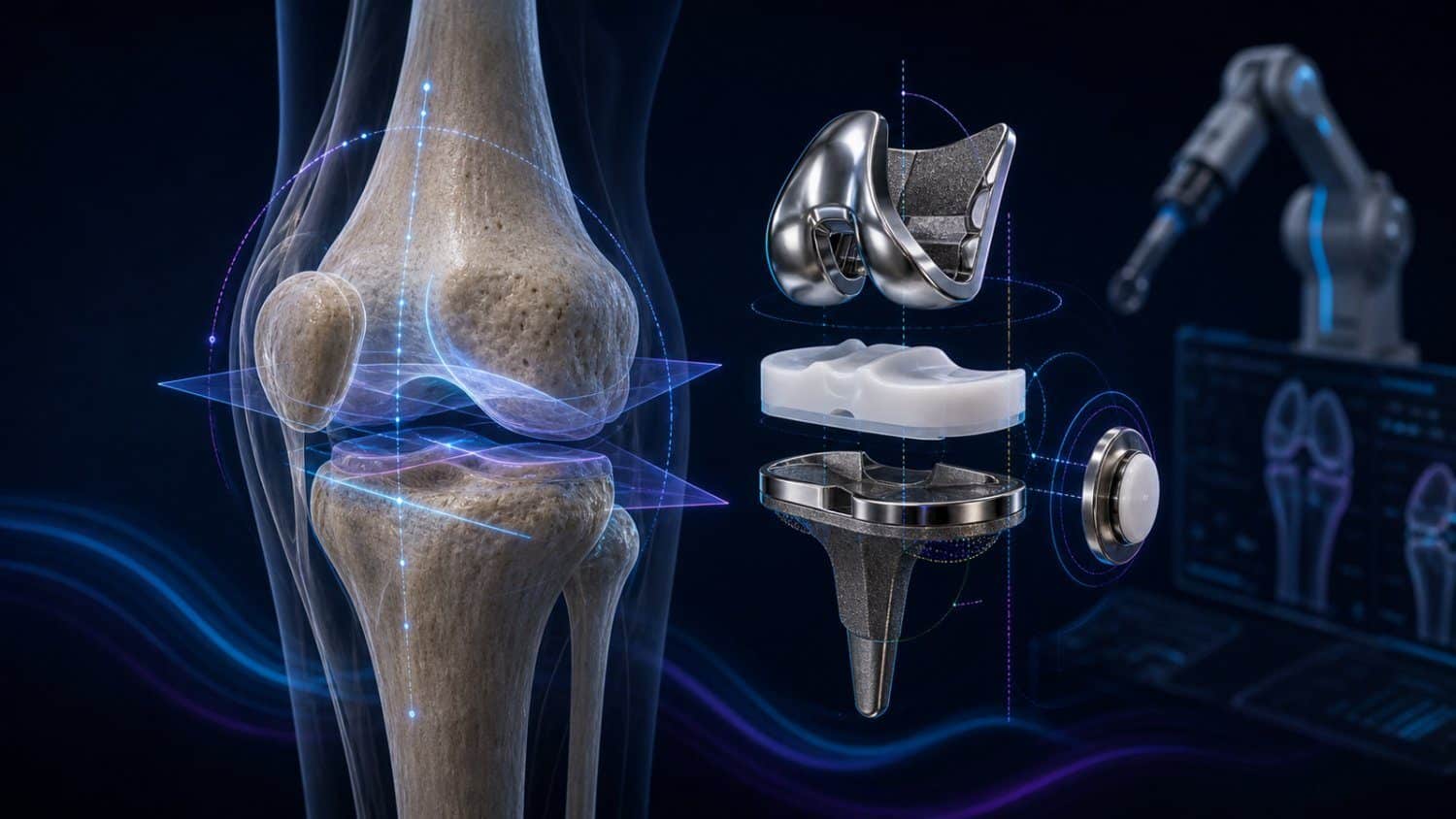

Understand the technology
What robotic knee surgery actually is
The word “robot” makes people picture a machine doing the operation on its own. That is not what happens.
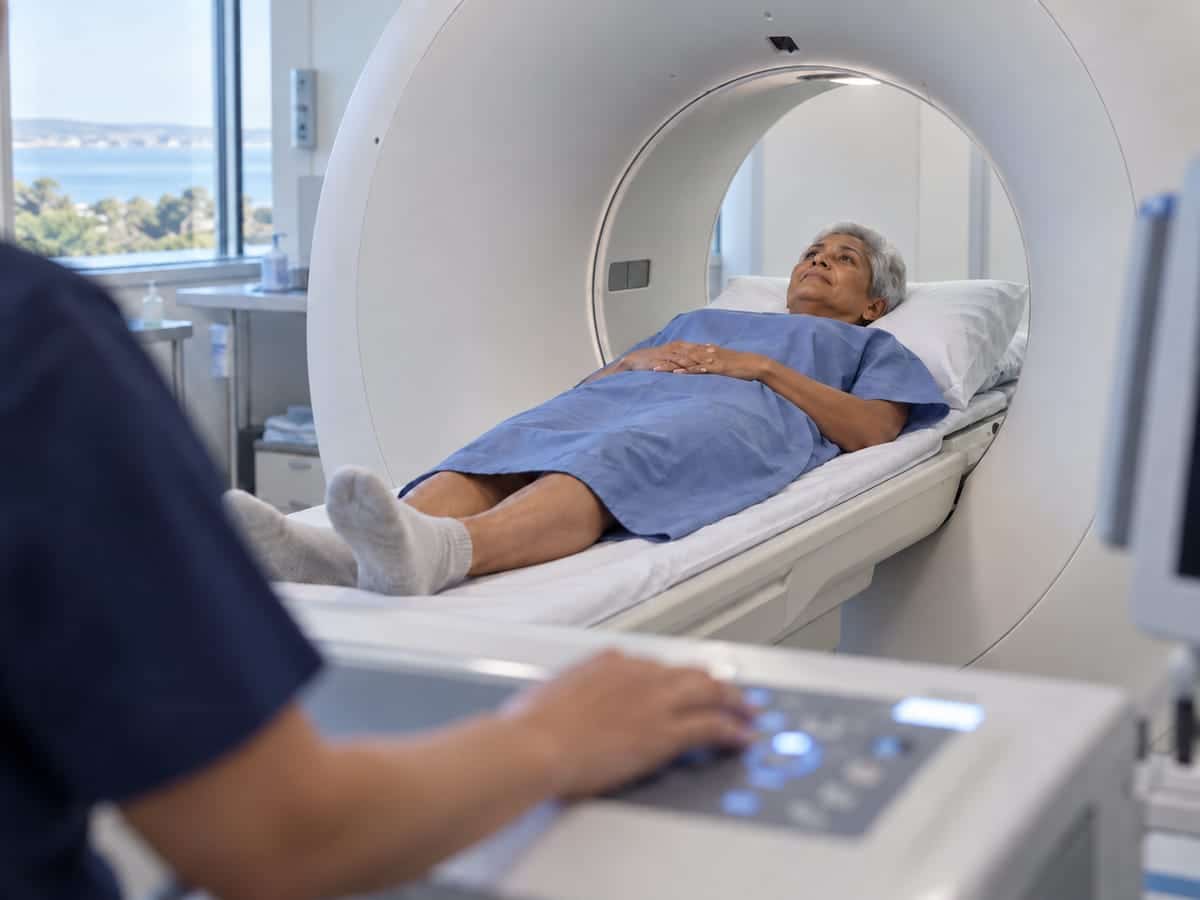
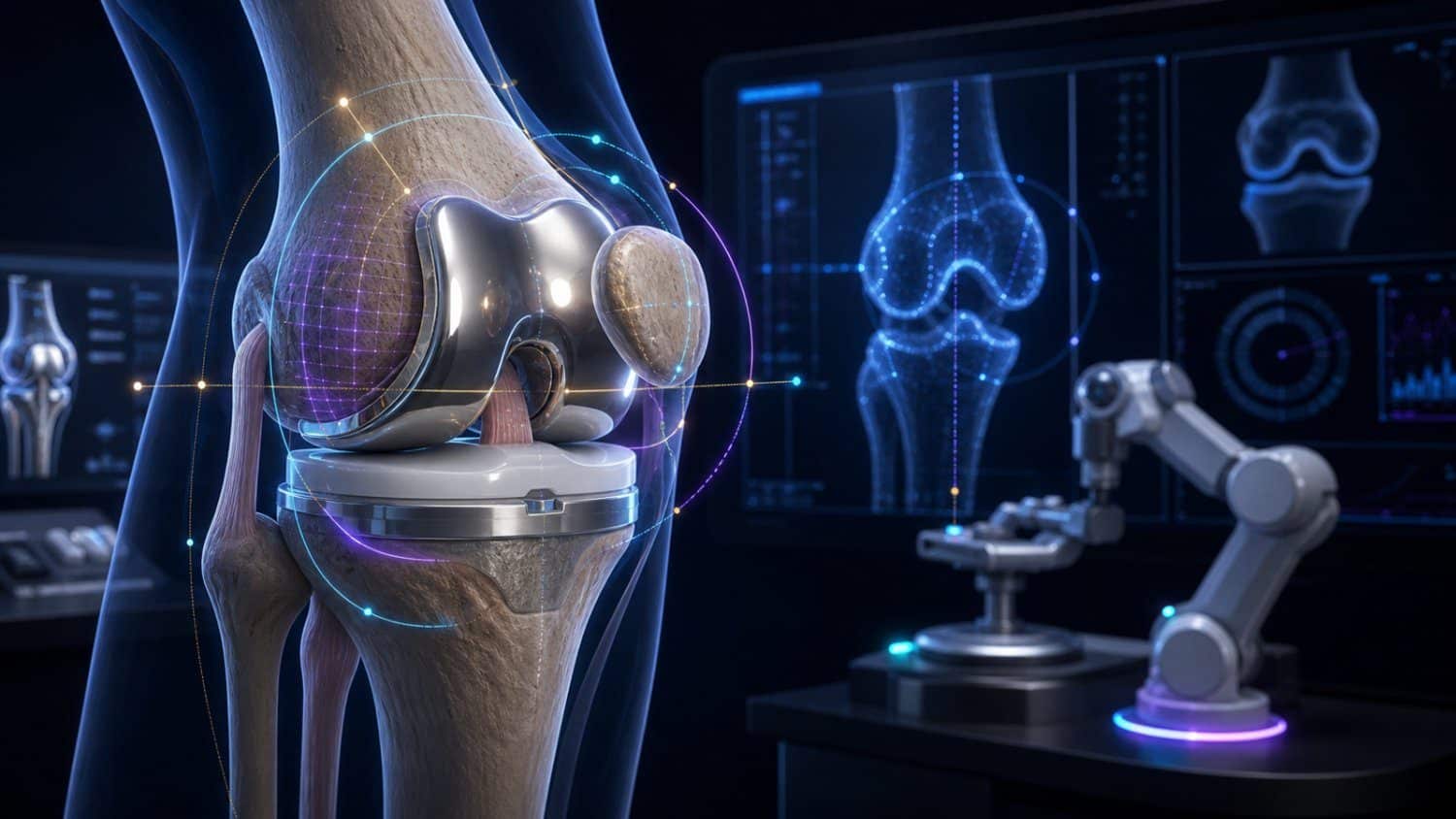
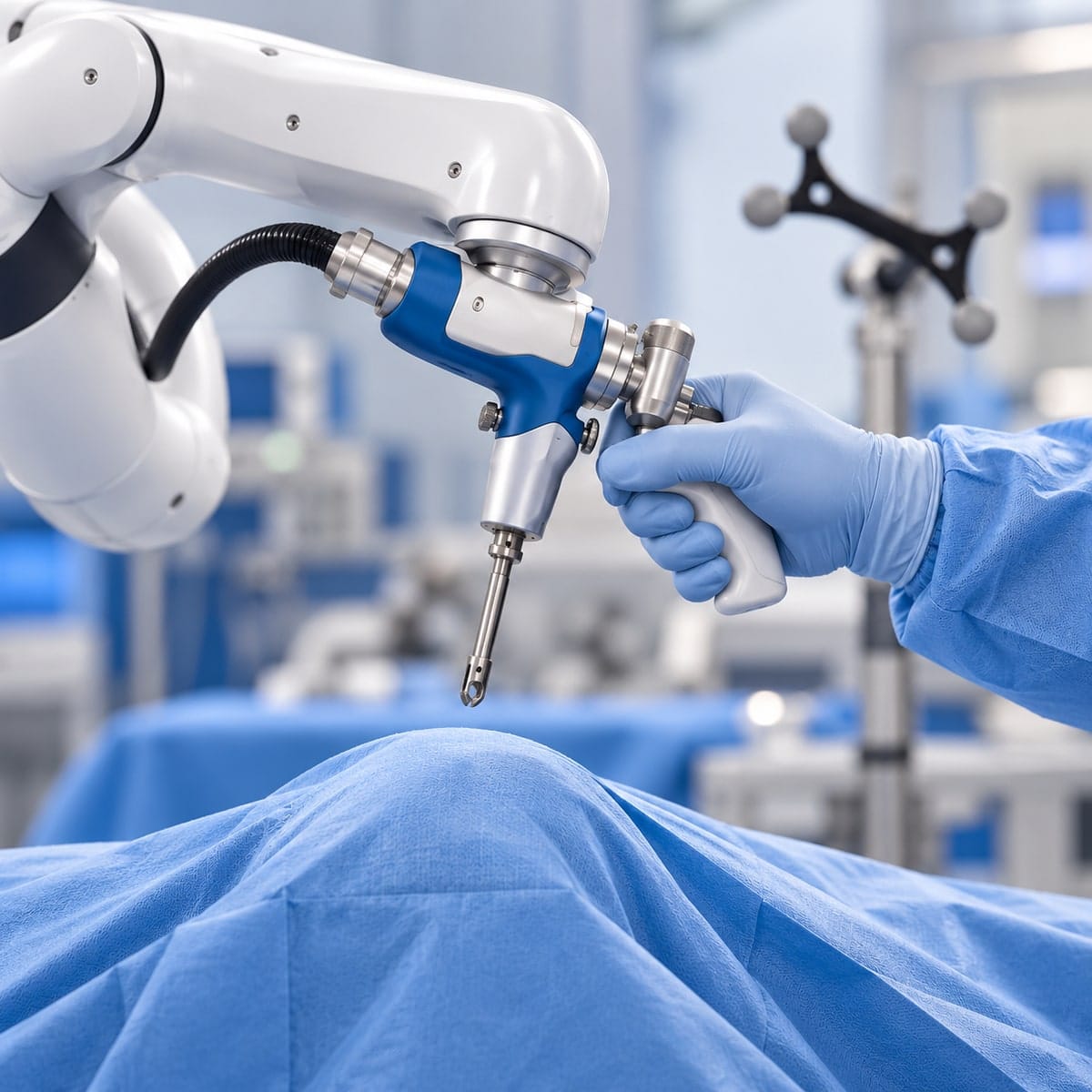
Before surgery. With some systems you have a CT scan; with others the surgeon maps the knee in the operating theatre. From this, the surgeon builds a plan on a screen: where the worn bone will be removed, which size implant fits, and the angles it will sit at. This is done by the surgeon, not the robot.
During surgery. The system helps the surgeon carry out that plan. Some use an arm to guide a saw or position a cutting guide. Others use a handheld robotic instrument. The safeguards differ between systems; the surgeon remains in control and checks the cuts and the knee throughout.
The surgeon’s job does not get smaller. The surgeon opens the knee, checks the ligaments and adjusts the plan if needed. He also checks the balance: how tight or loose the knee feels as it bends and straightens. The technology assists. The surgeon makes every decision.
What the robot does, and doesn’t do
| The robot does | The robot does not |
|---|---|
| THE ROBOT DOESHelp reproduce the planned implant position more accurately 3 | THE ROBOT DOES NOTDecide whether you need a partial or a total replacement |
| THE ROBOT DOESProvide measurements to help assess ligament balance | THE ROBOT DOES NOTChoose the operation or the alignment it sits at |
| THE ROBOT DOESProvide guidance or cutting safeguards, depending on the system | THE ROBOT DOES NOTBalance the ligaments on its own |
| THE ROBOT DOESRecord measurements from planning and surgery | THE ROBOT DOES NOTGuarantee a smaller scar or a faster recovery 1,2 |
A brief history
Where it came from, and where it is now
Selected international milestones. Launch and adoption dates differ by country.
Robotics entered joint replacement with hip surgery in 1992. Mako partial knee procedures began in 2006, and its total knee application followed around 2016. ROSA, CORI and VELYS expanded the options between 2019 and 2021. 5,6,7,8
Australia has adopted robotic knee surgery widely. In 2024, about 42 in every 100 total knee replacements recorded by the Australian joint registry used a robot. 9
The registry also tracks redo operations. Its 2025 lay summary reports no difference in revision rates with robotic assistance. This does not establish that robotic and non-robotic knees will last equally long over decades; the evidence is still developing. 10
Four systems. Different tools.
Meet the robots
There is no single “knee robot”. The systems differ in how they plan and how they help prepare the bone. Each system is designed to assist the surgeon. Hardware and software evolve. 5,7,8,11
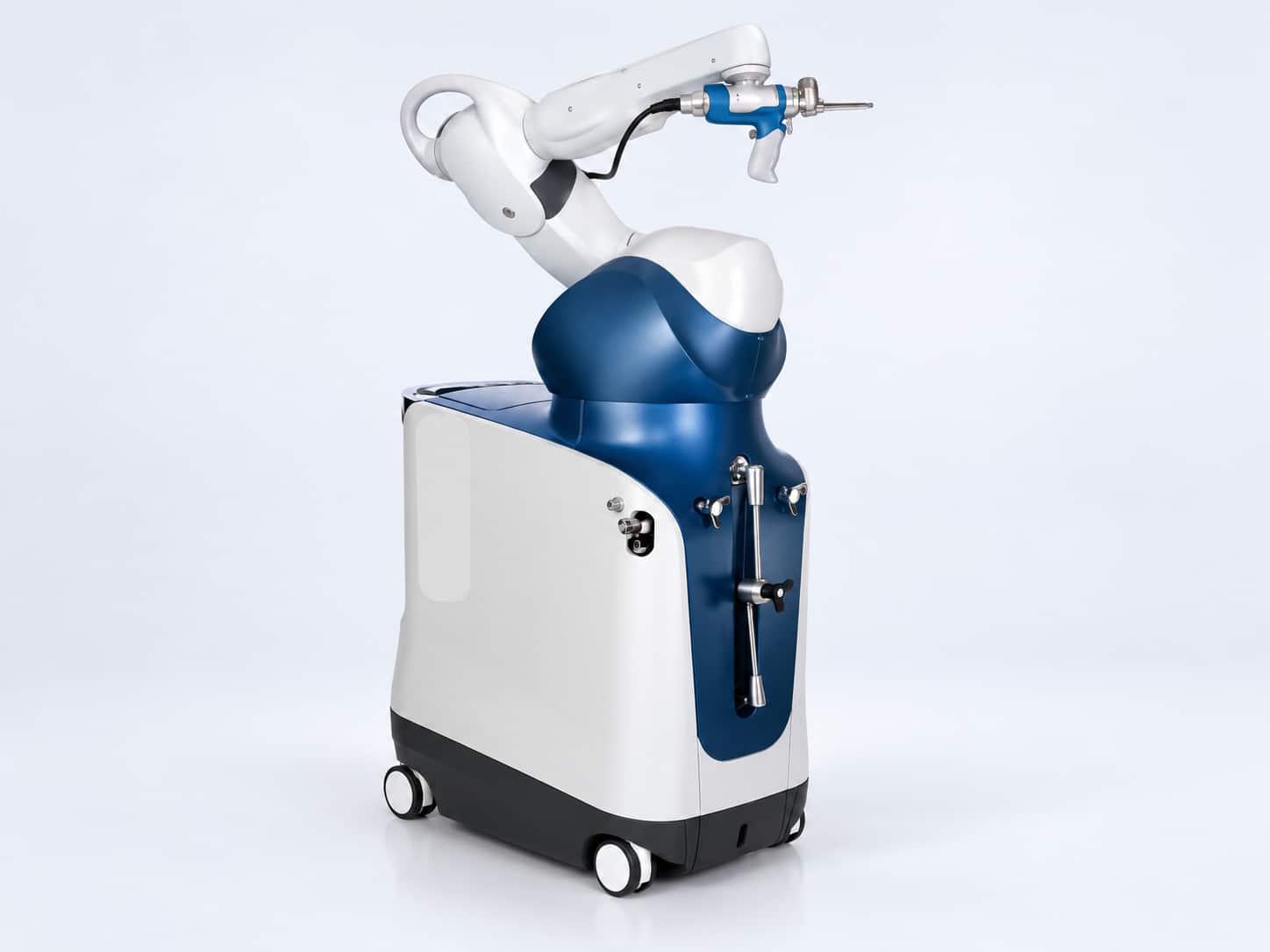
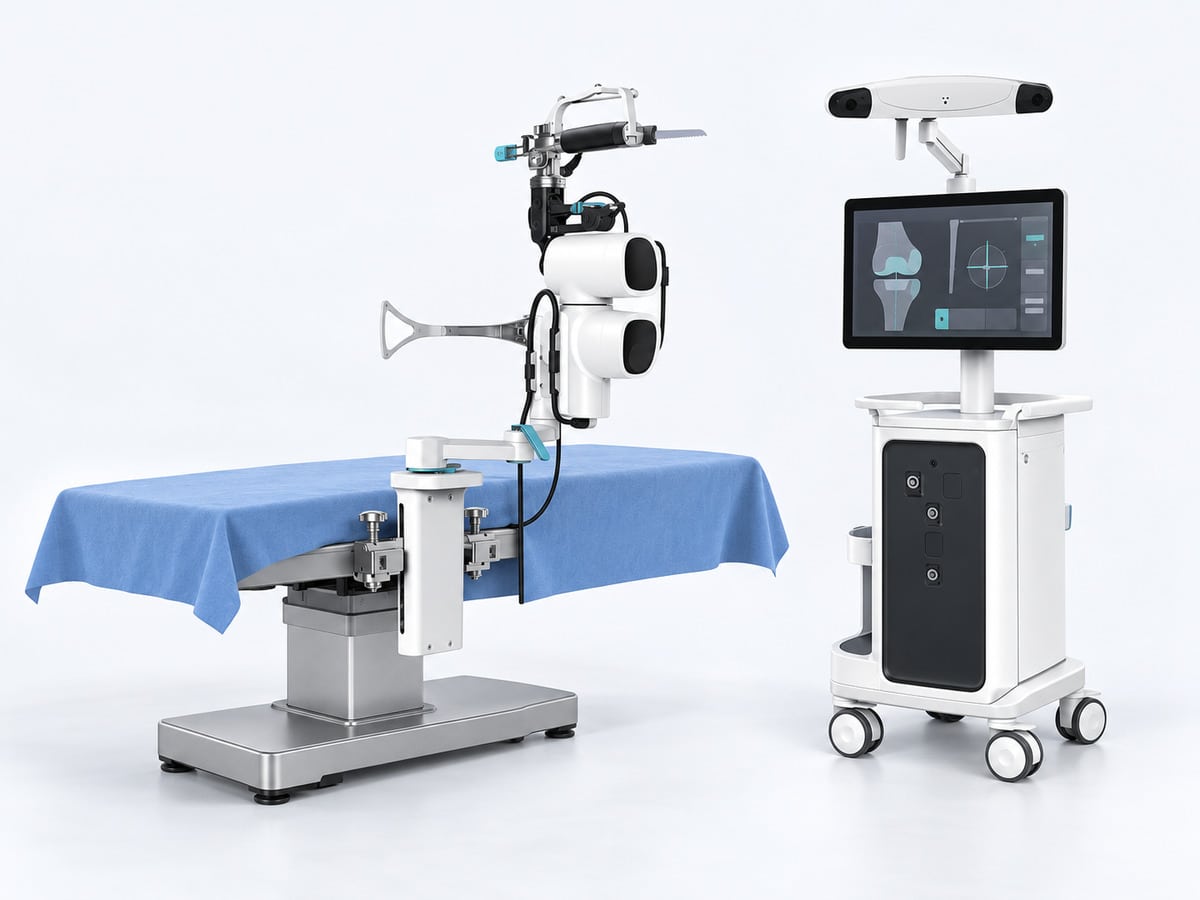
Mako · Stryker
MakoStryker
Plans from a CT scan before surgery. A cart-mounted robotic arm provides a virtual boundary to help the surgeon prepare the bone within the plan. Mako is used for both partial and total knee replacement.
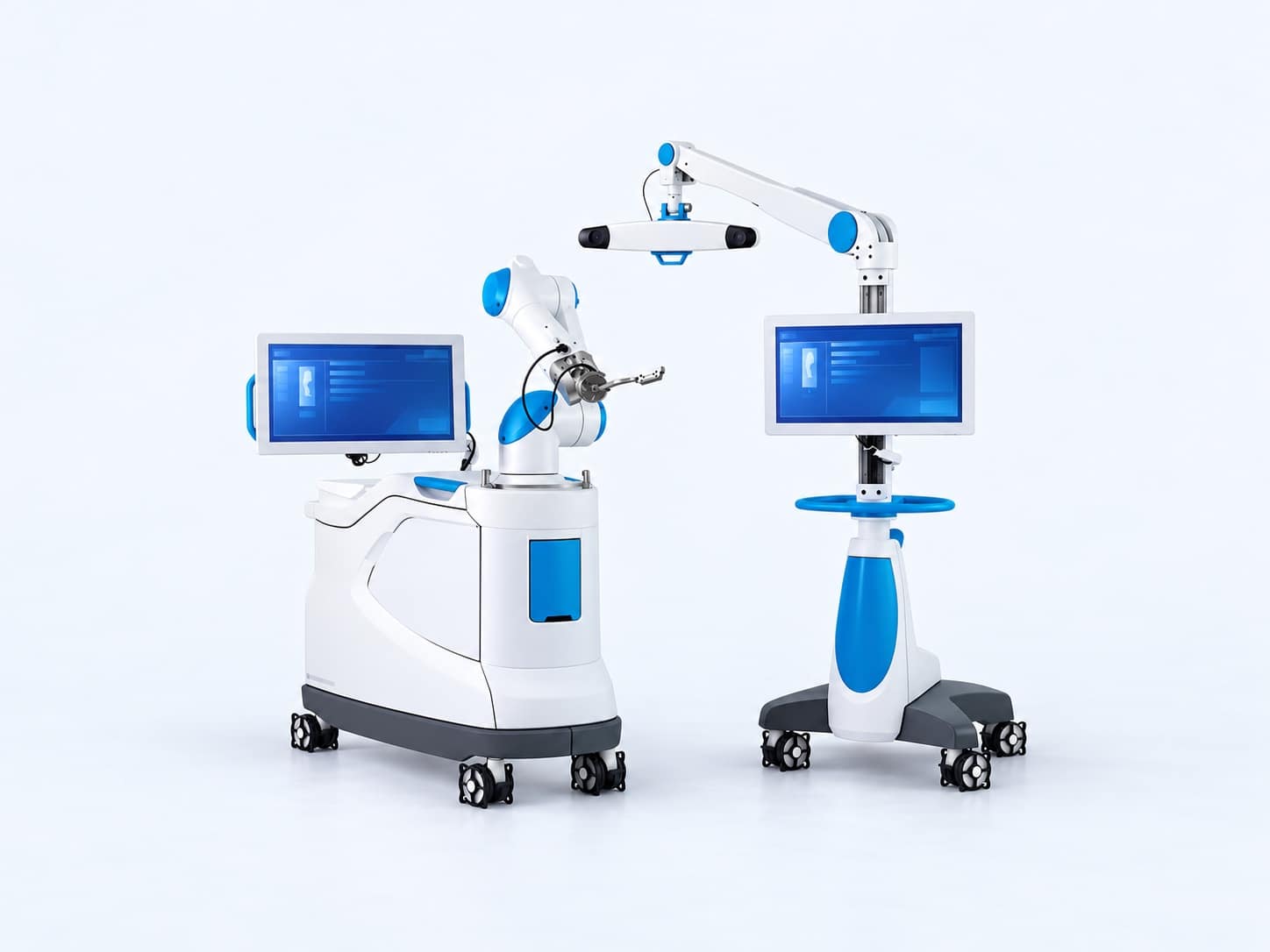
VELYS · DePuy Synthes
VELYSDePuy Synthes
The compact robotic device attaches to the operating table. No pre-operative CT scan is needed for this workflow; the surgeon maps the knee in theatre. The system helps position and control the saw to follow the plan.
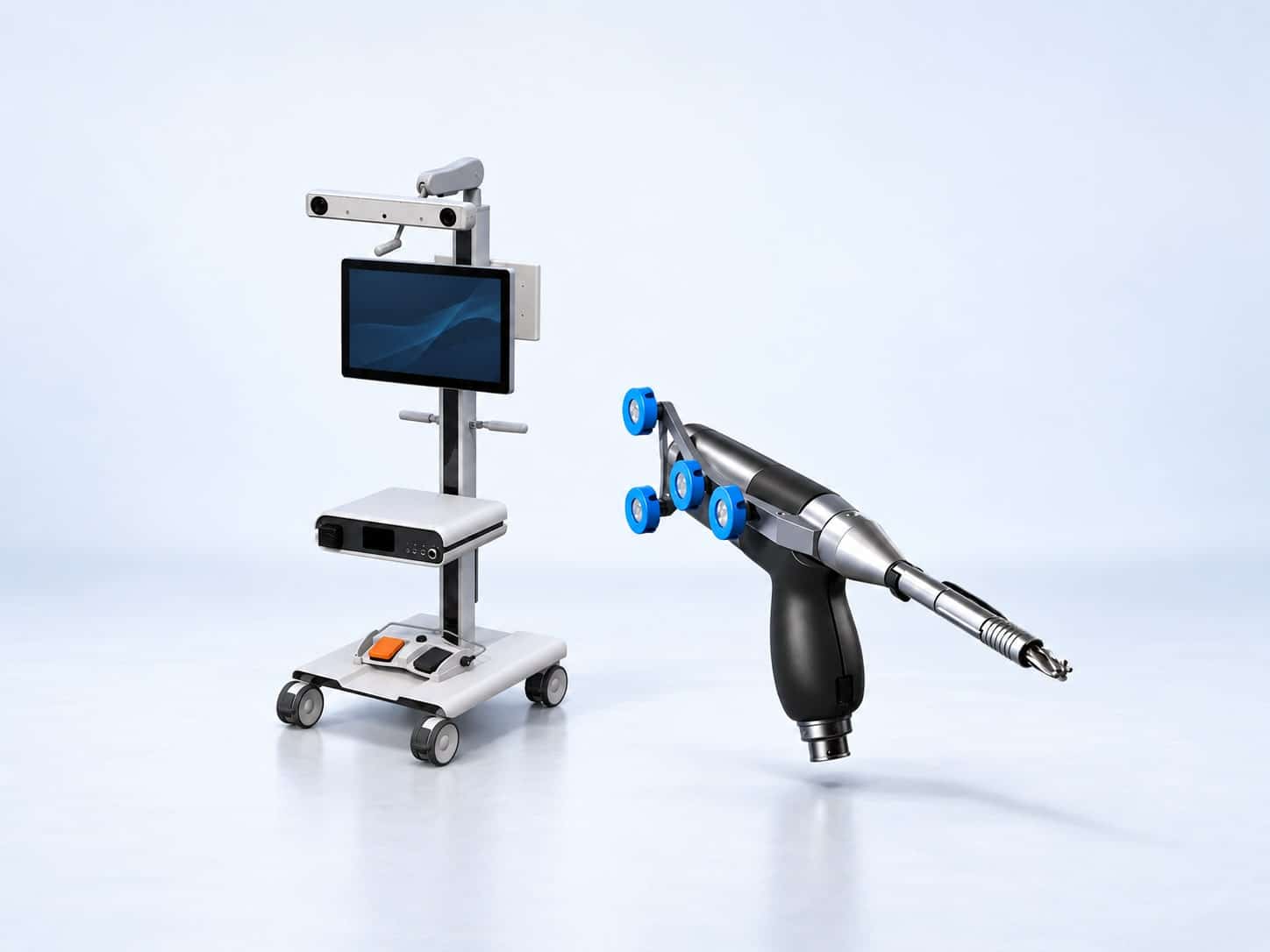
ROSA · Zimmer Biomet
ROSAZimmer Biomet
A robotic arm on a cart positions the cutting guide. Planning can use X-rays or mapping in theatre, depending on the workflow. The surgeon makes the bone cuts through the guide.
CORI · Smith+Nephew
CORISmith+Nephew
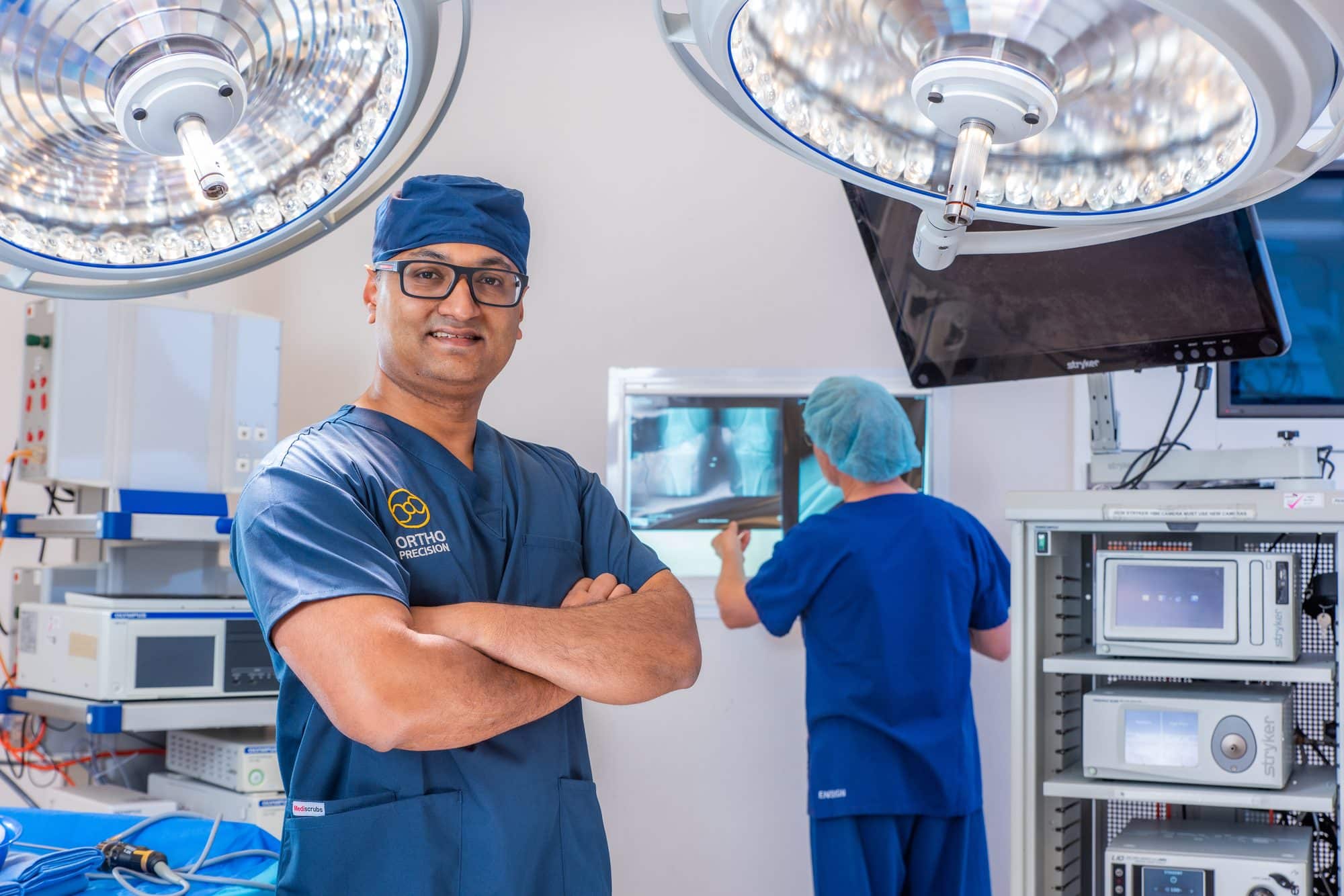
A compact cart supports a surgeon-controlled handheld robotic instrument. The burr configuration shown here helps remove bone within the plan, without a pre-operative CT scan. Newer configurations also offer a robotic saw.
Reference-informed illustrations, not manufacturer photographs or engineering drawings. Configurations and relative scale vary.
A 2024 comparison of 50 Mako and 50 ROSA procedures found similar accuracy for the radiographic measures studied. It was not a randomised comparison of all four systems, and does not establish that every system performs identically. 11
Which systems Dr Yas uses
Dr Yas is trained on, and operates with, two robotic systems: Mako and VELYS. He uses Mako for partial knee replacements, where its CT-based planning and virtual boundary suit the fine work involved. For total knee replacements he uses either system; which one depends on your knee and on the hospital where your surgery is done. Each has strengths. The plan starts with your knee, mapped and assessed against your own anatomy.
The evidence, in plain words
Accuracy is not the outcome
I use robotic systems every week. The accuracy is excellent. It is not what decides your result.
— Dr Yas Edirisinghe
Specialist orthopaedic surgeon, hip & knee
The UK trial
339 patientsAcross 10 hospitals and 33 surgeons. No clinically important improvement in joint awareness at one year with Mako. 1
The Australian trial
303 patientsRobotic versus computer-navigated surgery. No significant difference in the main patient-reported outcome at two years. 2
The registry
Revision ratesThe 2025 Australian registry lay summary reports no difference in redo rates with robotic assistance. 10
The long view
15 yearsOne observational study found no survival advantage from being within 3° of neutral alignment. It was not a trial of robotics. 12
These findings do not mean accuracy is unimportant. They show that greater technical precision does not, by itself, guarantee a knee that feels better. Choosing an appropriate operation and plan remains essential.
A bad plan in is a bad knee out.
Judgement means understanding your anatomy, your joint line, your ligaments and which operation your knee needs. Dr Yas brings that approach to his clinical work and to teaching as Director of Orthopaedic Surgeon Training for the Northern Adelaide Local Health Network (NALHN). Recovery also depends on your health, expectations and rehabilitation.
Alignment and balance, made for your knee
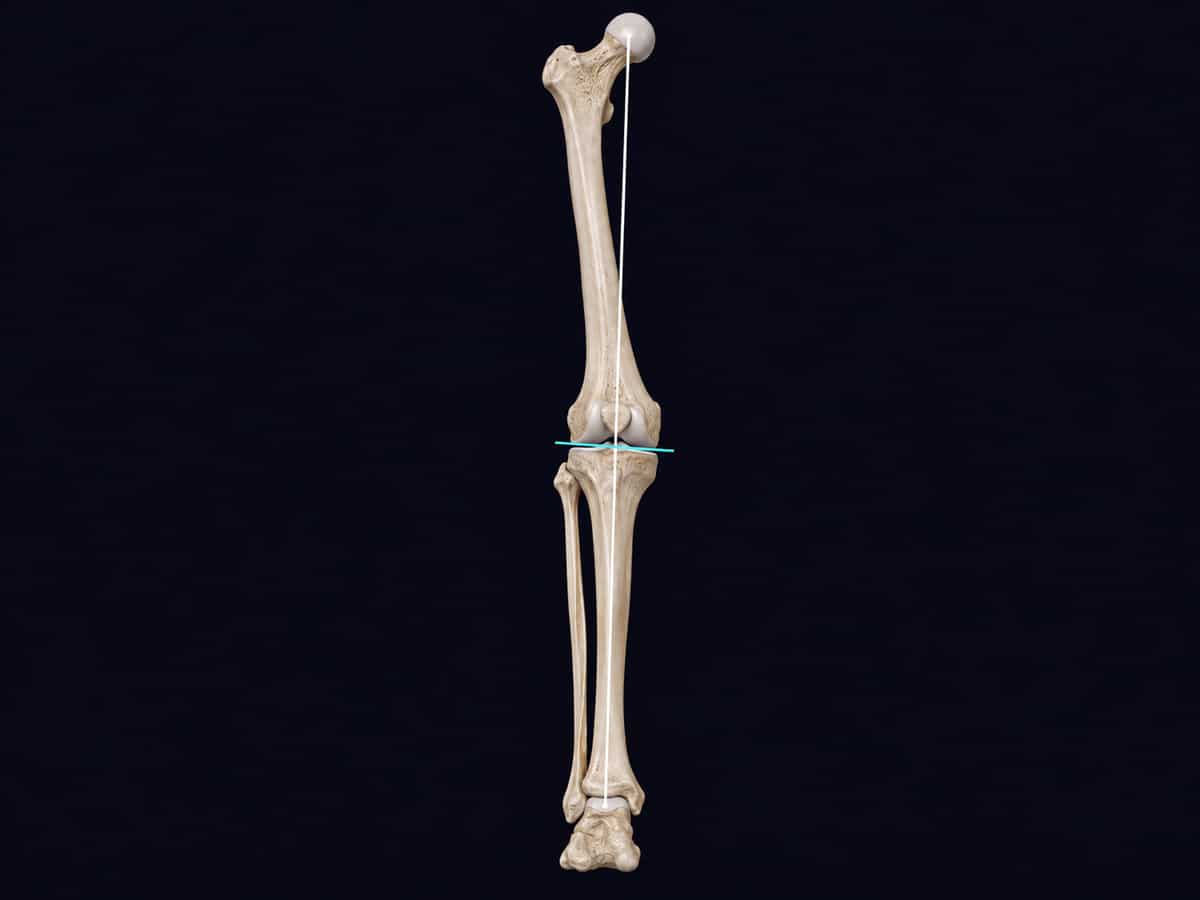
Alignment means the angle and position of the new knee parts. Your knee has its own shape and natural angles.
Dr Yas plans both the alignment and balance around your knee. Where it suits you, he uses an approach called kinematic alignment. This aims to follow your knee’s natural angles.
The aim is a knee that feels steady and moves as naturally as possible for you.
What does knee balance mean?
Your knee has strong bands called ligaments. They join bone to bone and act like straps that help hold the knee steady.
 Thigh boneInner
ligamentOuter
ligamentShin boneSmall
outer bone
Balance is about how tight or loose those straps are as your knee bends and straightens. Too tight, and movement can feel stiff. Too loose, and the knee can feel wobbly. 24
The two side ligaments shown here help stop the knee from wobbling from side to side. 25
Dr Yas checks this as he bends and straightens your knee during surgery. He adjusts how the new parts sit and, when needed, the tissues around them. The aim is enough support to feel steady, with enough give to move.
The art is in finding the right feel
Measurements guide the plan. The skill lies in knowing what they mean for your knee. Dr Yas brings the science, his experience and the feel of your knee together. This is where knee surgery is as much an art as a science.
A commonly cited historical estimate.
Rates vary between studies.
“I don’t accept that number.”
— Dr Yas Edirisinghe
“In my experience, many of those knees had an operation that didn’t fit the knee: a total replacement where a partial would have done, or a standard alignment on a knee that was never standard. The robot can’t fix that. Choosing the right operation and the right plan can. That is the whole job.”
The total knee pathway
Robotic total knee replacement: what it involves
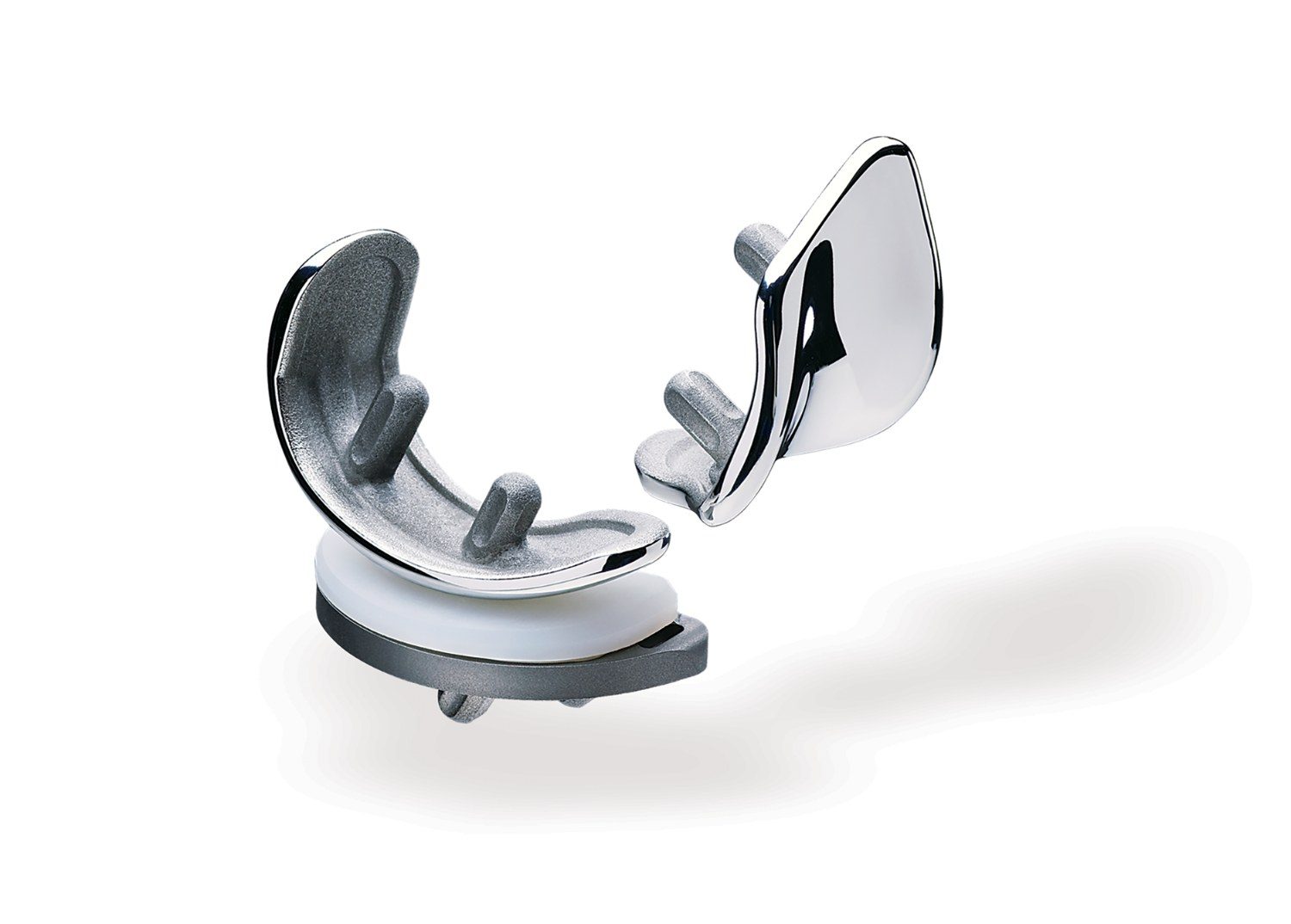
A total knee replacement resurfaces the ends of the thigh and shin bones with metal components and a plastic bearing. The kneecap may also be resurfaced. The decision depends on the pattern of arthritis and the condition of the whole knee.
With a robot, the sequence is:
- 1
Scan and map. A CT scan of your leg with Mako, or mapping in theatre with VELYS. Either way, the surgeon builds a model of your knee.
- 2
Plan. The size and position of the new parts are planned on screen. Dr Yas aims for alignment and balance that suit your knee’s own shape and movement.
- 3
Deliver. The surgeon uses the robot to help place the new parts as planned. He checks how tight or loose the knee feels as it bends and straightens, and adjusts where needed.
- 4
Recover. Walking usually starts the same day or the next. Many people are home in two to three days, depending on their recovery and support at home.
Does the robot make the operation smaller? Not necessarily. It generally requires a similar incision, with additional tracker pins placed in the bones. The number and position of small pin incisions depend on the technique. 15
Does it make recovery faster? Not reliably on its own. One single-surgeon study found earlier recovery and a shorter hospital stay. 16 Larger trials have not established a clinically important overall patient-reported benefit at one or two years. 1,2 The operation chosen, your health and your rehabilitation all matter.
The partial knee pathway
Food for thought: when only part of your knee is worn
Most patients searching for a robotic knee are thinking about a total replacement. Before you settle on that, one fact is worth knowing.
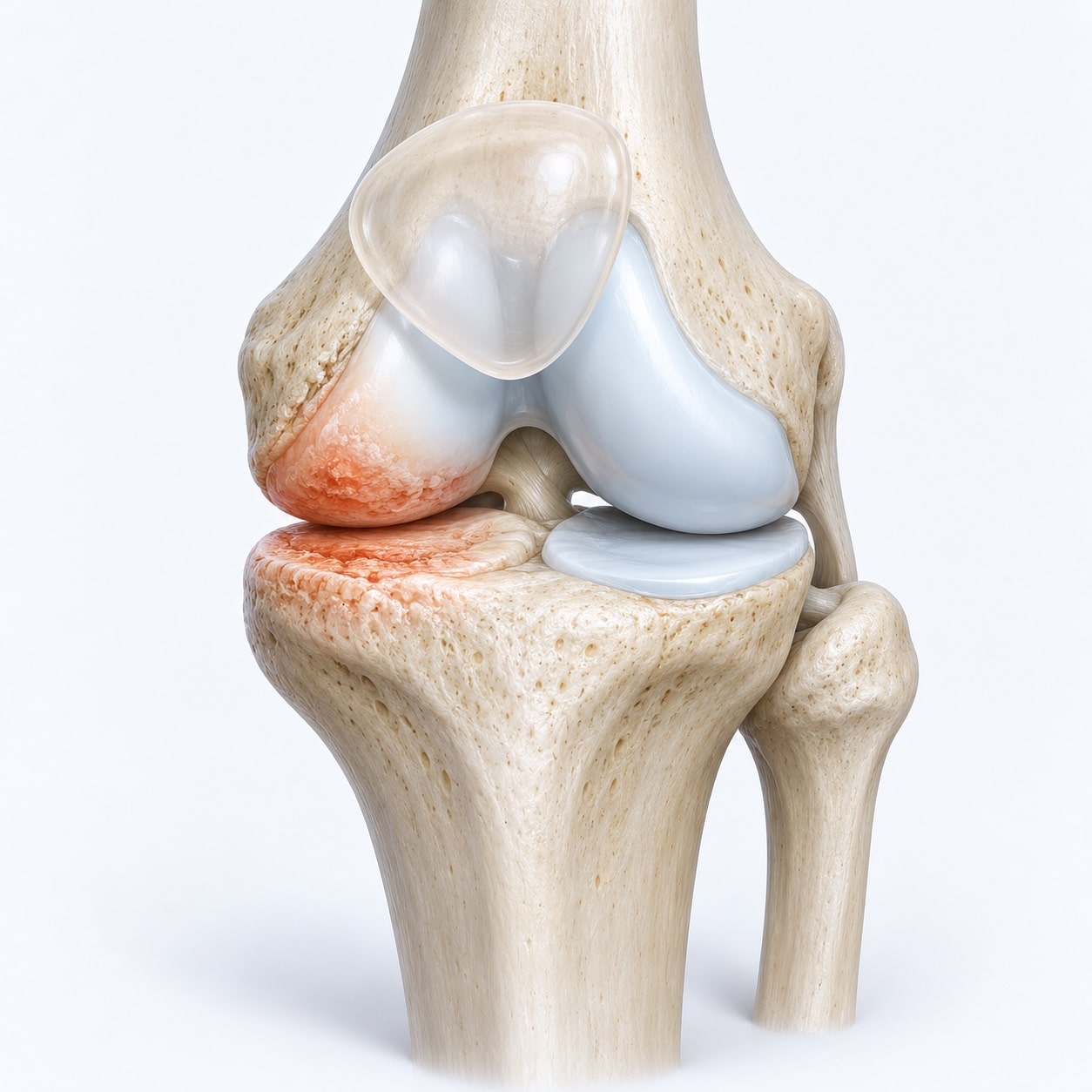
In a review of people with knee osteoarthritis, about 17 in 100 had wear in all three compartments. About half had one compartment affected and a third had two. 4
This does not mean the other 83 in 100 are suitable for a partial replacement. Symptoms, ligament function, the pattern of wear and other findings also matter.
Replace the worn part, where appropriate
A partial knee replacement resurfaces the affected compartment and preserves more of the natural knee. Partial knees typically recover quicker than a total, and feel more natural. These advantages need to be weighed against the possibility of further surgery. 17
Precision matters in a partial replacement. Studies report more accurate implant positioning with robotic assistance; some also report fewer re-operations, including a five-year randomised trial. That does not guarantee a better result for every patient. 18,19,20
What if two compartments are worn?
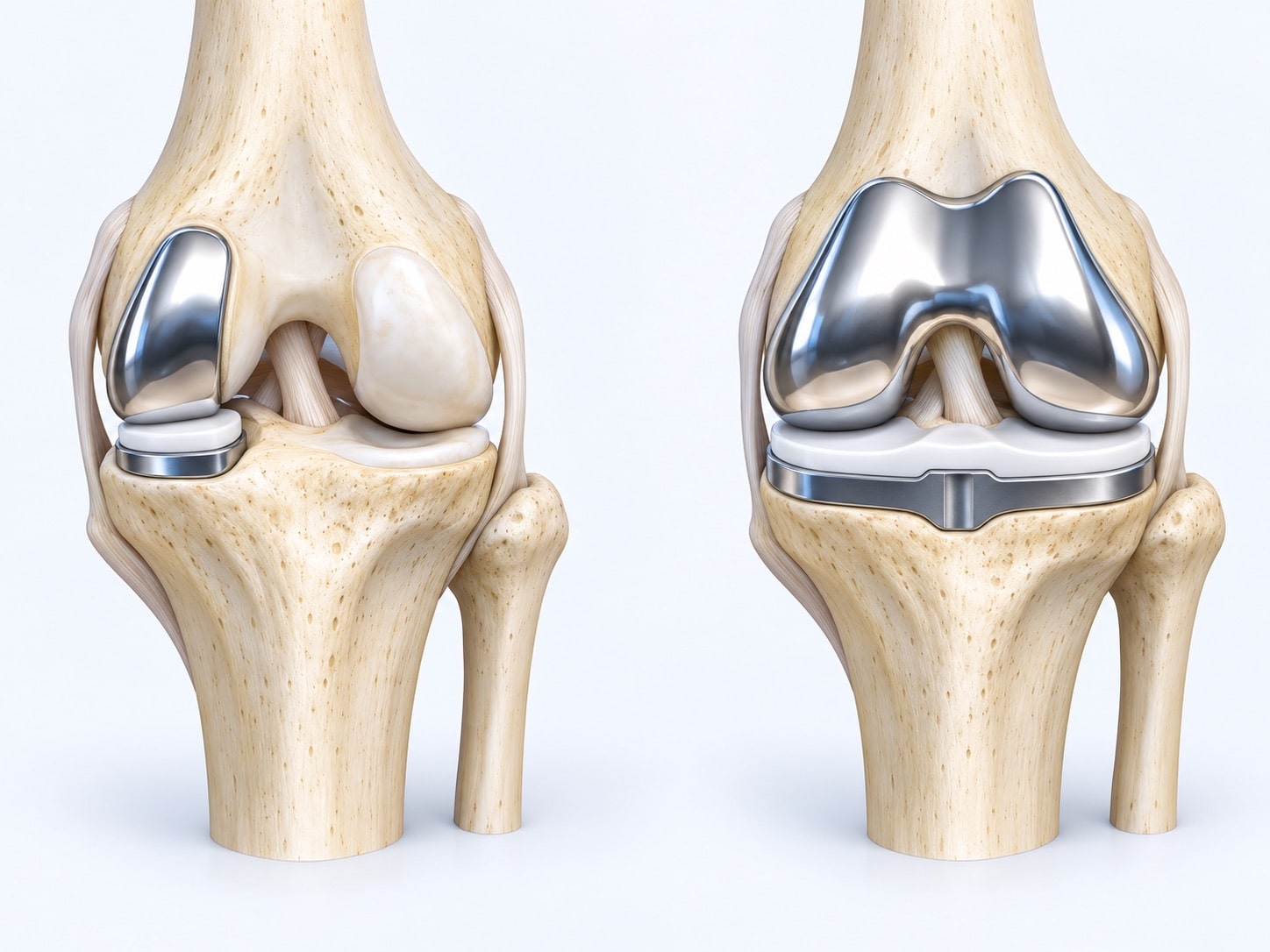
Dr Yas regularly performs partial knee replacements and uses Mako for them. In selected patients, two worn compartments can be resurfaced while preserving the remaining healthy compartment. Robotic planning can assist this work; it is not the only way to perform it.
The combination depends on where the wear is. The illustration shows an inside-compartment and kneecap replacement. The trial cited here studied a different combination—inside and outside compartments—and assessed preservation of anatomy. 21
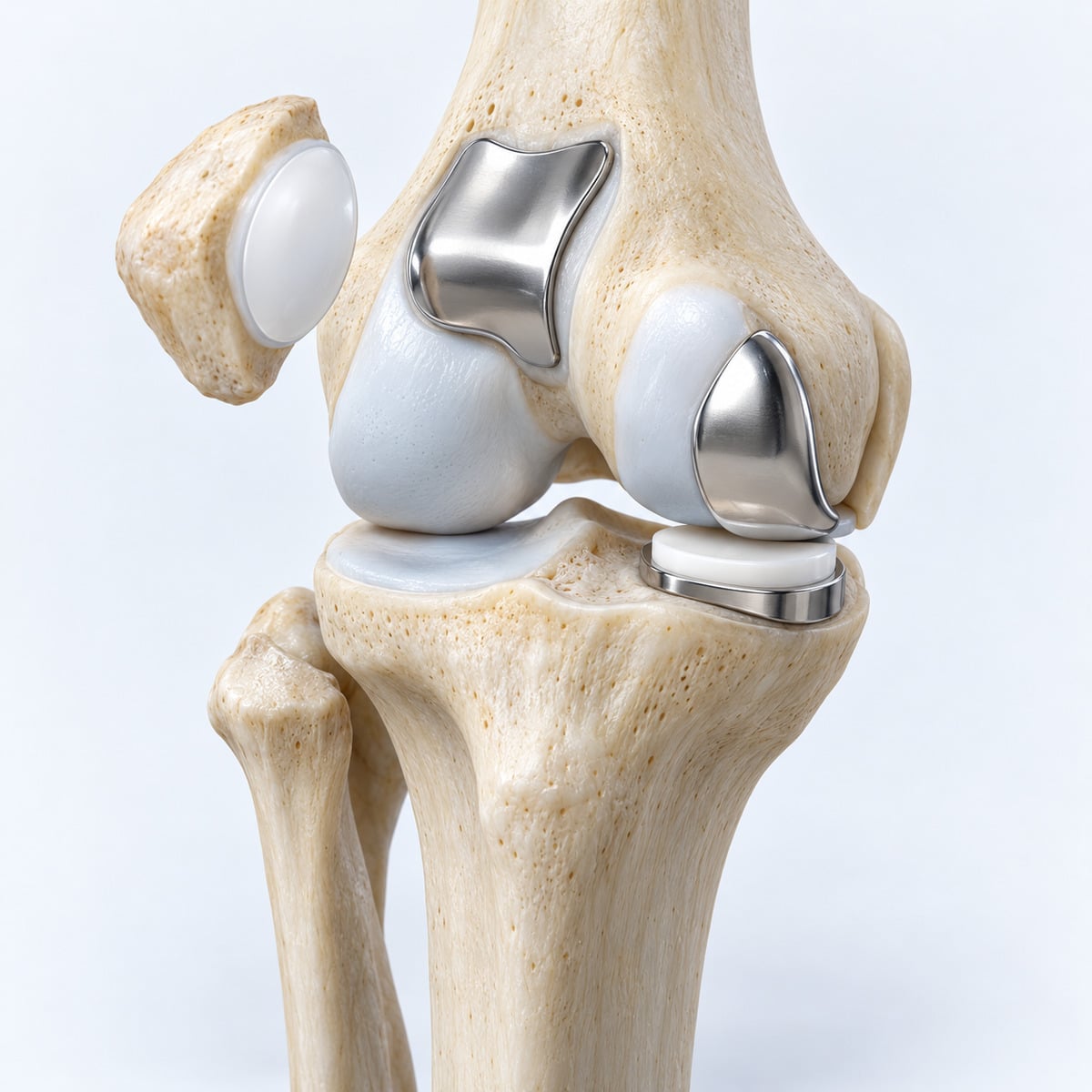
“Nobody pulls every tooth for one filling. If one part of your knee is worn, ask whether the whole knee needs replacing.”
Dr Yas’s approach
Your four-step robotic plan
1. Map your knee
Scan or in-theatre mapping. A model of your knee, not an average one.
2. Plan to your anatomy
Choose the right operation. Plan how the new parts line up and how the knee is held steady, to suit you.
3. Deliver with the robot
Follow the plan. Check how the knee feels as it bends and straightens. Adjust where needed.
4. Recover with a plan
Early walking and physiotherapy. Review at six weeks and three months.
Recovery is a process
Recovery, honestly
These are typical milestones, not deadlines. Your recovery plan is adjusted to your knee, your health and how you are progressing.
Day 1
Usually up with a frame or sticks, with support from the team. Pain relief is tailored to you and may include a nerve block and tablets.
Week 2
Walking short distances and working on knee bend. Dr Yas checks the wound at two weeks. The stitches are absorbable, so there is nothing to take out. Many people are cleared to drive from this point, once they are off strong painkillers and can brake comfortably.
Week 6
Many people are reducing walking aids, using a stationary bike and returning to light work. Progress varies.
3 months
Many daily activities are easier. Some swelling and stiffness can still be present.
1 year
The knee can continue to feel more natural for a year or more. 22

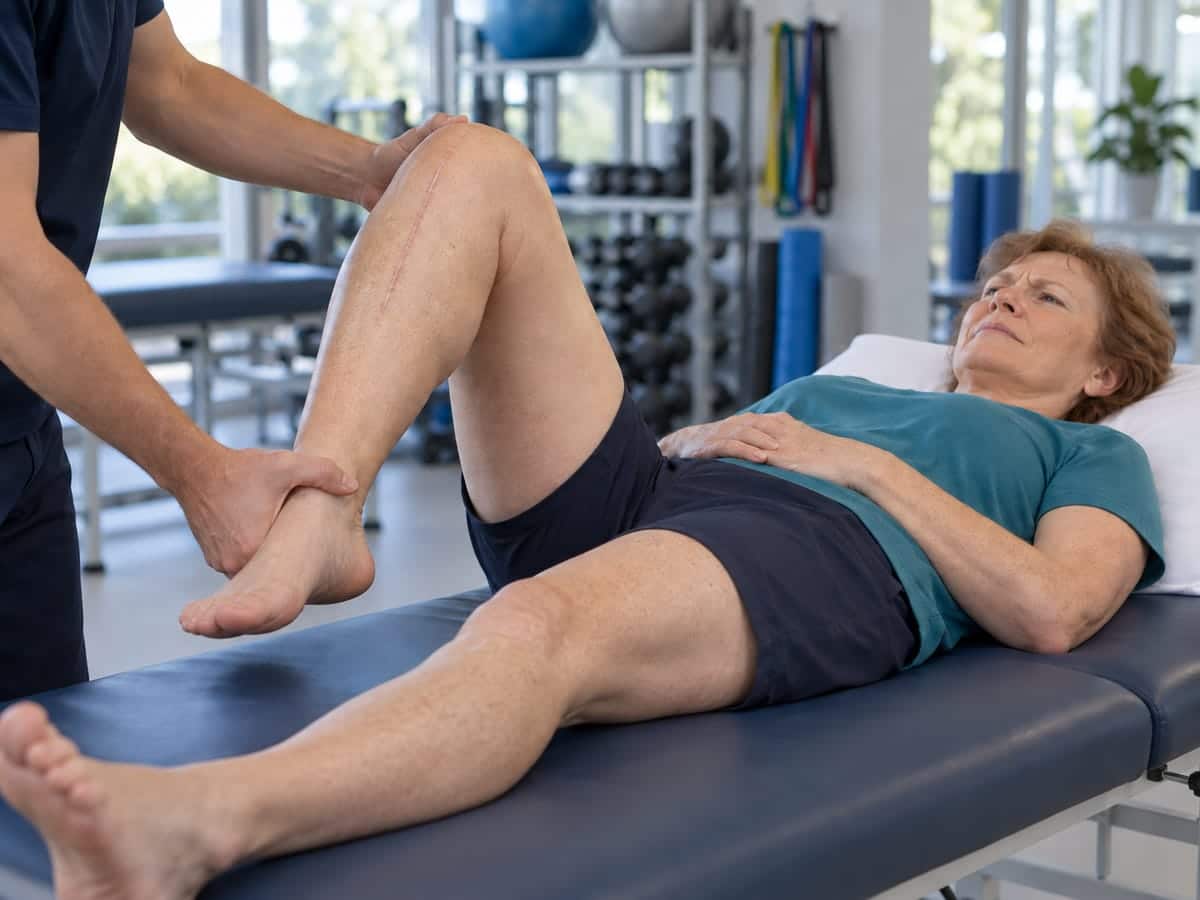

Partial knees often recover sooner than total knees. Robotic assistance alone does not establish a faster recovery timetable. 1,2
Fees & insurance
What it costs you
There is no extra surgeon’s fee for using the robot. Dr Yas honours your current insurance arrangements, and you will have a written estimate before anything is booked. Health-fund benefits, hospital charges and other providers’ fees depend on your cover and care.
Fees & billing →A conversation starts here
Not sure which operation your knee needs? Ask.
Send Dr Yas a question about your knee. He reads every one. No records to send: if you come in, he obtains your X-rays and history himself.
Ask Dr Yas a question
Start with a question about your knee and the options you are considering.
Common questions
Your questions, answered
Does the robot do the operation?
No. The surgeon plans and performs the operation. The robotic system assists with measurements and bone preparation. Different systems guide a saw, position a cutting guide or control a handheld instrument.
Which robot is best?
There is no well-established overall winner for every patient and every outcome. A 2024 comparison of Mako and ROSA found similar accuracy on the measures studied. 11 The appropriate operation and plan matter more than choosing a brand.
Is robotic knee replacement covered by my health fund?
Cover depends on your policy, waiting periods and hospital arrangements. There is no extra surgeon’s fee for using the robot. The rooms provide a written estimate so you can check your benefits and any out-of-pocket costs.
Is the scar smaller?
Not necessarily. The main incision is usually similar, with additional small incisions for tracker pins. The exact arrangement varies.
Do I need a CT scan?
With Dr Yas’s Mako workflow, yes. With VELYS, no; the knee is mapped in theatre.
When can I drive after a knee replacement?
Many of Dr Yas’s patients are cleared to drive from two weeks, once they are off strong painkillers and can bend the knee and brake comfortably. He checks this at the two-week wound review.
Is recovery faster?
Not reliably because of the robot alone. Recovery depends on the operation, your health, pain control and rehabilitation.
How long will it last?
Many total knee replacements last 20 years or more. 23 Available registry comparisons have not shown lower revision rates with robotic assistance; decades-long results for current robotic systems are not yet established. 10
Can a robot be used for a partial knee?
Yes. Dr Yas uses Mako for partial knee replacements. Robotic assistance can help position the components accurately; suitability for a partial replacement still needs an individual assessment.
Can it be used if I am a bigger person, or my knee is very bent?
It may be possible. Body size, deformity, previous surgery, implant needs and the system’s capabilities all affect the plan. Read about knee replacement with a higher body weight →
Can it be used for a redo (revision) operation?
Sometimes, for part of the operation. Many revisions need additional or different tools, depending on bone loss, the existing implant and the reconstruction required. Revision & reconstruction →
References
- Parsons H, Metcalfe A, Griffin J, et al. Robotic-assisted versus conventional total knee replacement (RACER-Knee): a multicentre randomised trial. Lancet 2026;408:924–934. Source ↗
- MacDessi SJ, Wernecke GC, et al. Robotic-assisted surgery and functional alignment in total knee arthroplasty: the RASKAL registry-nested 2 × 2 factorial randomized trial. Bone Joint J 2026;108-B:622–633. Source ↗
- Ruangsomboon P, et al. Clinical and radiological outcomes of robotic-assisted versus conventional total knee arthroplasty: a systematic review and meta-analysis of randomized controlled trials. Acta Orthop 2023;94:60–79. Source ↗
- Stoddart JC, Dandridge O, Garner A, Cobb J, van Arkel RJ. The compartmental distribution of knee osteoarthritis: a systematic review and meta-analysis. Osteoarthritis Cartilage 2021;29:445–455. Source ↗
- Lonner JH. A personal journey through, and review of, the landscape of surgical robotics in knee arthroplasty: my transition from Mako to NAVIO and finally to the ROSA Knee System. J Orthop Exp Innov 2022;3(1). Source ↗
- Stryker. Mako SmartRobotics: platform and clinical history. Manufacturer information. Source ↗
- Smith+Nephew. Launch of Real Intelligence and the CORI Surgical System. 14 July 2020. Source ↗
- DePuy Synthes / Johnson & Johnson MedTech. VELYS Robotic-Assisted Solution: Australian product brochure. See also Mater Hospital’s report of first Australian use in November 2021. Source ↗
- Hoskins W, Gusho C, Bingham R, et al. Does transitioning to robotic-assisted total knee arthroplasty change surgeon revision risk? JBJS Open Access 2026 — reporting AOANJRR data: 41.9% of Australian TKA recorded as robotic-assisted in 2024. Source ↗
- Australian Orthopaedic Association National Joint Replacement Registry. 2025 Annual Report, Lay Summary Supplementary Report, pp 21–23. Source ↗
- Rajgor HD, et al. Mako versus ROSA: comparing surgical accuracy in robotic total knee arthroplasty. J Robot Surg 2024;18:33. Source ↗
- Parratte S, Pagnano MW, Trousdale RT, Berry DJ. Effect of postoperative mechanical axis alignment on the fifteen-year survival of modern, cemented total knee replacements. J Bone Joint Surg Am 2010;92:2143–2149. Source ↗
- Bourne RB, Chesworth BM, Davis AM, Mahomed NN, Charron KDJ. Patient satisfaction after total knee arthroplasty: who is satisfied and who is not? Clin Orthop Relat Res 2010;468:57–63. Source ↗
- Gunaratne R, Pratt DN, Banda J, Fick DP, Khan RJK, Robertson BW. Patient dissatisfaction following total knee arthroplasty: a systematic review. J Arthroplasty 2017;32:3854–3860. Source ↗
- Redefining knee arthroplasty: does robotic assistance improve outcomes beyond alignment? An evidence-based umbrella review. J Clin Med 2025;14:2588. Source ↗
- Kayani B, Konan S, Tahmassebi J, Pietrzak JRT, Haddad FS. Robotic-arm assisted total knee arthroplasty is associated with improved early functional recovery and reduced time to hospital discharge. Bone Joint J 2018;100-B:930–937. Source ↗
- Tripathy SK, Varghese P, Srinivasan A, et al. Joint awareness after unicompartmental knee arthroplasty and total knee arthroplasty: a systematic review and meta-analysis of cohort studies. Knee Surg Sports Traumatol Arthrosc 2021;29:3478–3487. doi:10.1007/s00167-020-06327-4 Source ↗
- Bell SW, Anthony I, Jones B, MacLean A, Rowe P, Blyth M. Improved accuracy of component positioning with robotic-assisted unicompartmental knee arthroplasty. J Bone Joint Surg Am 2016;98:627–635. Source ↗
- Batailler C, White N, Ranaldi FM, et al. Improved implant position and lower revision rate with robotic-assisted unicompartmental knee arthroplasty. Knee Surg Sports Traumatol Arthrosc 2019;27:1232–1240. Source ↗
- Banger M, Doonan J, Rowe P, Jones B, MacLean A, Blyth MJB. Robotic arm-assisted versus conventional medial unicompartmental knee arthroplasty: five-year results of a randomised controlled trial. Bone Joint J 2021;103-B:1088–1095. Source ↗
- Banger MS, Johnston WD, Razii N, et al. Robotic arm-assisted bi-unicompartmental knee arthroplasty maintains natural knee joint anatomy compared with total knee arthroplasty: a randomised controlled trial. Bone Joint J 2020;102-B:1511–1518. Source ↗
- Carlson VR, Post ZD, Orozco FR, Davis DM, Lutz RW, Ong AC. When does the knee feel normal again? A cross-sectional study assessing the Forgotten Joint Score in patients after total knee arthroplasty. J Arthroplasty 2018;33:700–703. Source ↗
- Evans JT, Walker RW, Evans JP, Blom AW, Sayers A, Whitehouse MR. How long does a knee replacement last? Lancet 2019;393:655–663. Source ↗
- American Academy of Orthopaedic Surgeons. Revision Total Knee Replacement. OrthoInfo. Patient explanation of ligament balance, stiffness and instability. Accessed October 2026. Source ↗
- American Academy of Orthopaedic Surgeons. Combined Knee Ligament Injuries. OrthoInfo. Anatomy and function of the medial and lateral collateral ligaments. Accessed October 2026. Source ↗
General information to support a discussion with your treating team. Illustrations simplify anatomy and equipment; they do not show an individual treatment plan.