

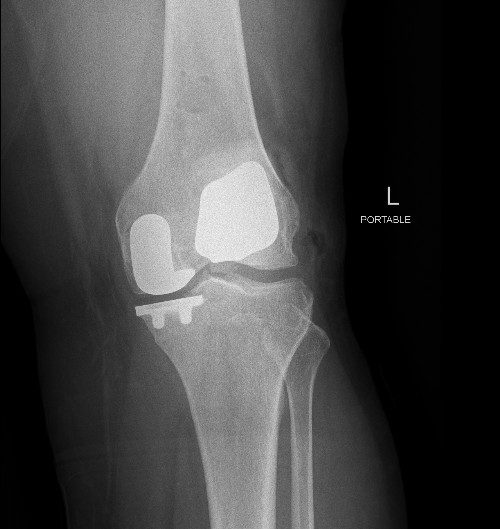
When arthritis affects only one part (compartment) of the knee, a partial — or unicompartmental — replacement can resurface just that area, leaving the healthy cartilage and your own ligaments intact. For the right knee, this can mean a more natural feel and a faster recovery than a full replacement. This is one of Dr Yas’ signature areas, planned to your individual anatomy.
What a partial replacement is
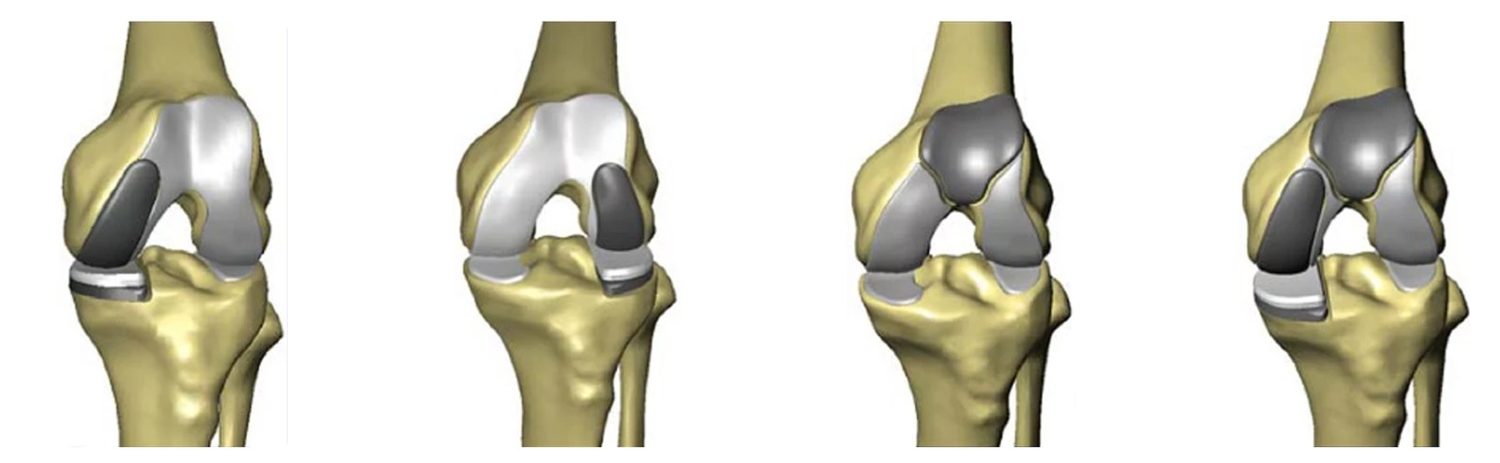
The knee has three compartments. When arthritis affects only one of them, a partial replacement resurfaces just that compartment, leaving the healthy cartilage and ligaments untouched.
It is a smaller operation than a full replacement, designed to preserve as much of your own knee as possible.
Who it suits
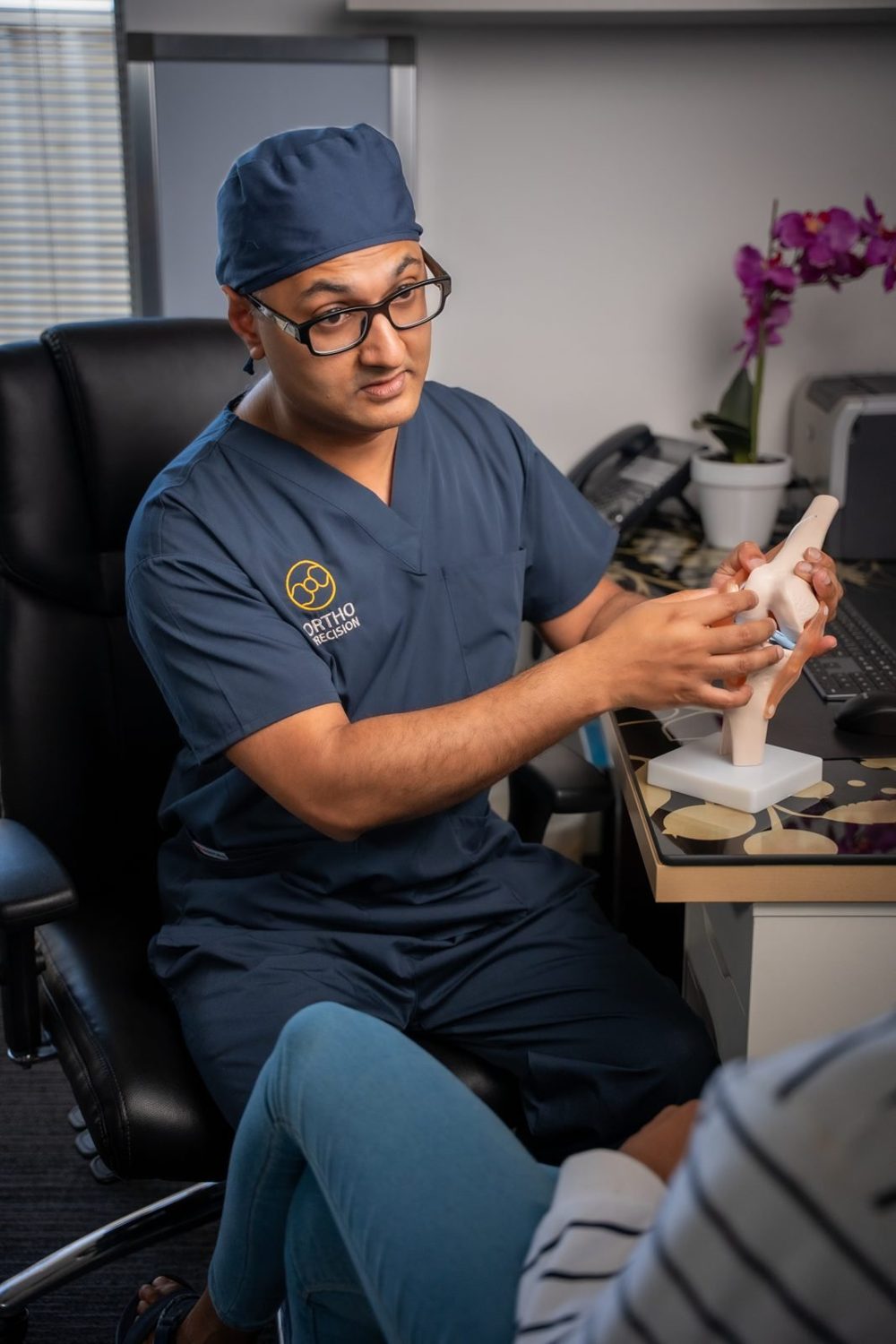
A partial replacement suits knees where the wear is confined to one compartment and the ligaments are sound. It is often well suited to younger and active people, and weight is assessed individually rather than used as an automatic barrier.
The benefits — a "lower dose" of surgery
A partial replacement is, in plain terms, a much smaller "dose" of surgery than a full knee replacement. Because only the worn compartment is resurfaced, far less of the knee is opened and disturbed — a full replacement involves more extensive dissection of the soft tissues around the joint.
Less disturbance generally means less swelling, less pain and a quicker recovery. By keeping the healthy parts of your knee and your own ligaments, a partial also tends to feel more like your natural knee. These are general patterns rather than guarantees, and Dr Yas will explain what is realistic for your knee.
How Dr Yas personalises it
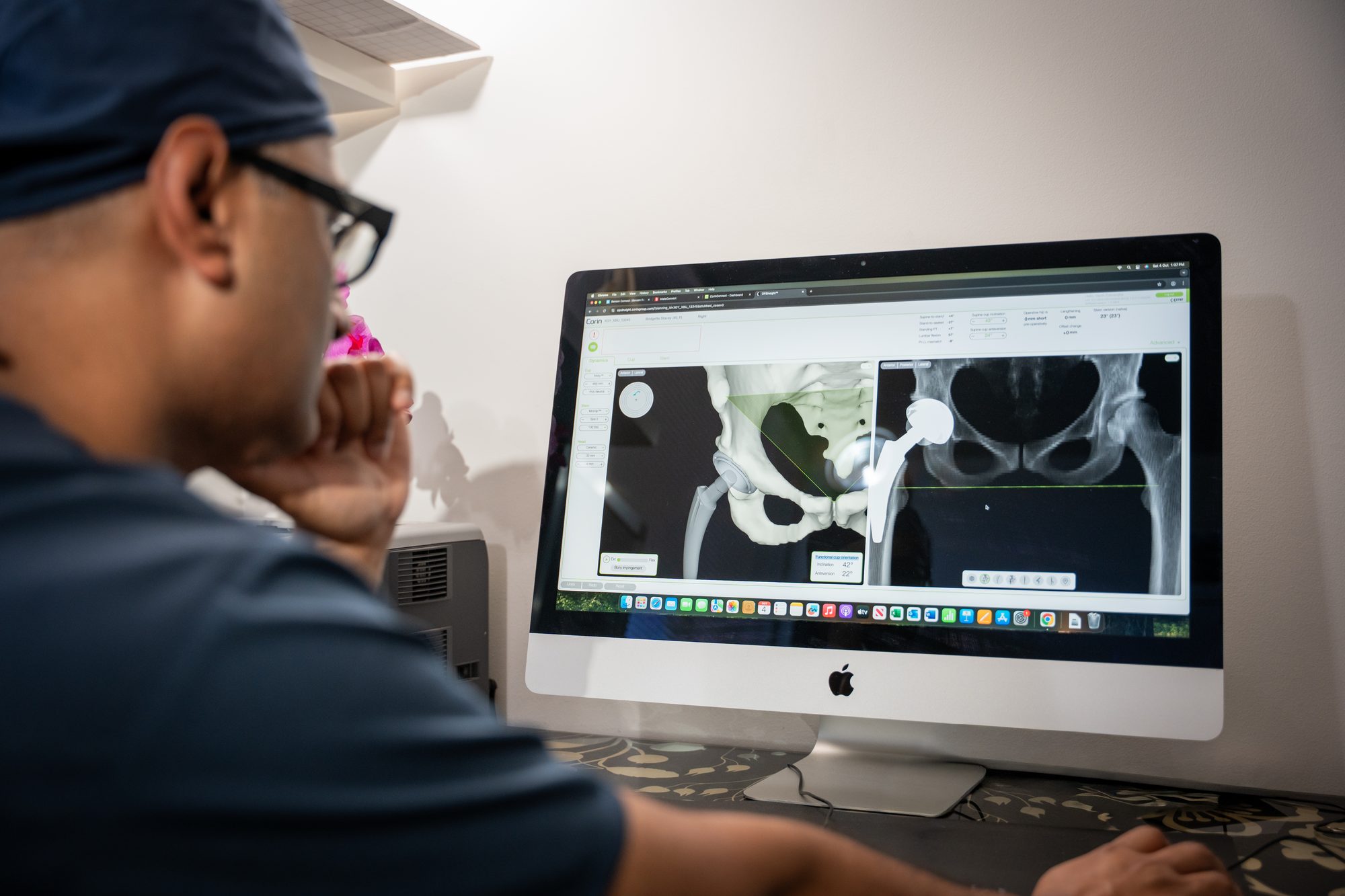
A partial replacement only works well when it is placed accurately. Dr Yas plans each one to your individual anatomy — including bespoke positioning and, where suitable, bicompartmental solutions — and uses robotic precision to carry the plan out.
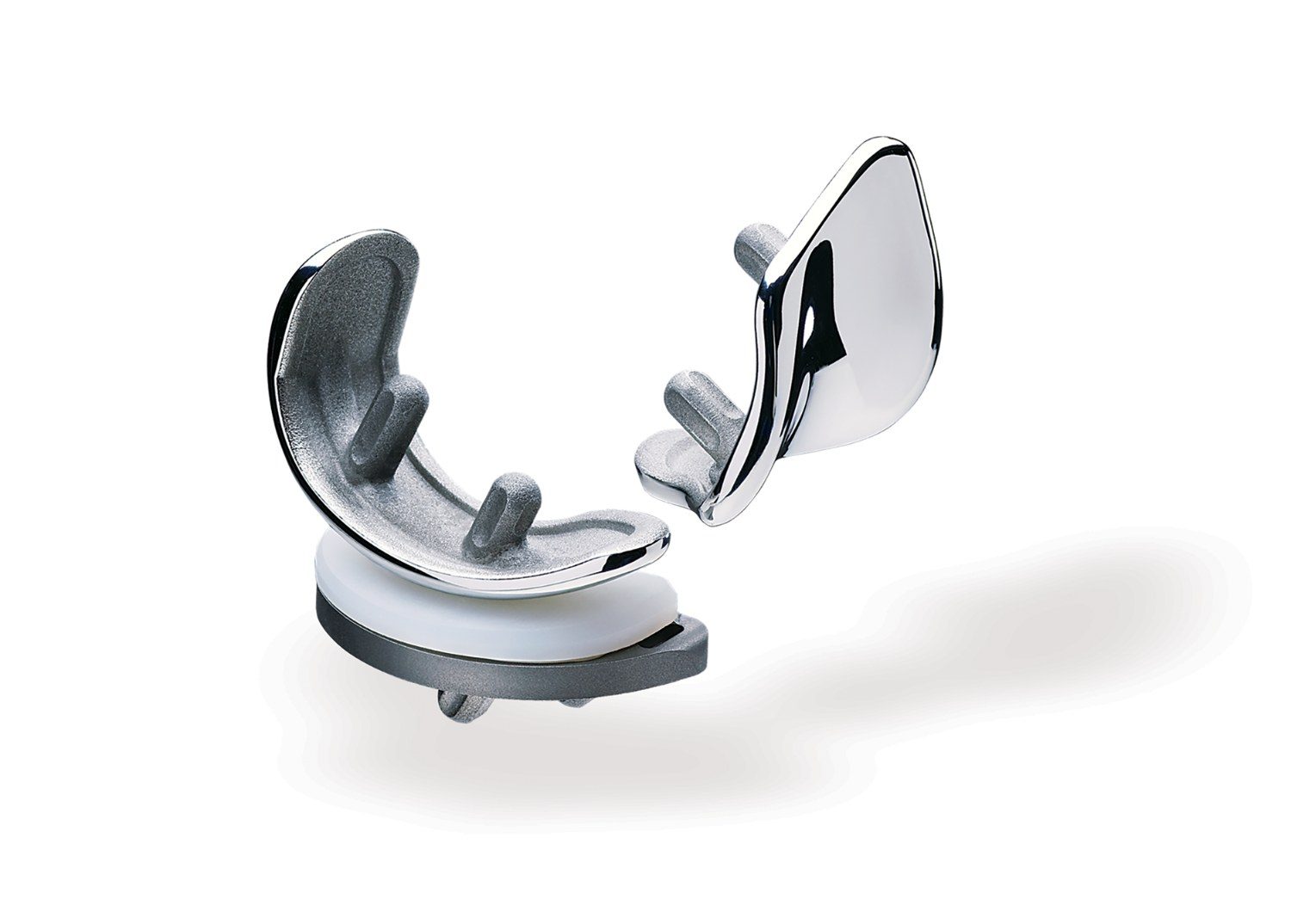
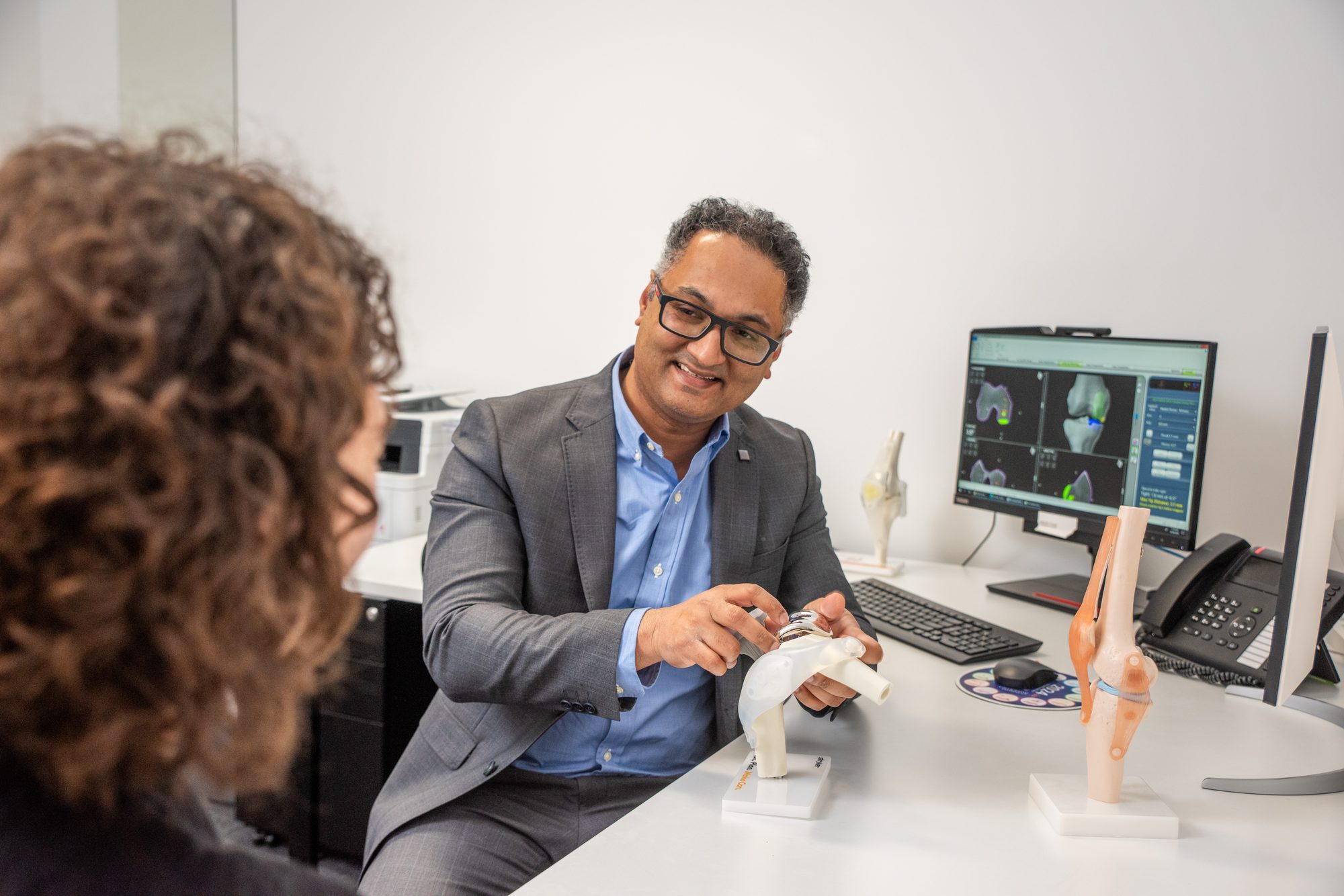
The components shown resurface only the worn compartment — a metal surface and a smooth bearing — leaving the healthy parts of your knee, including your own ligaments, intact.
Your recovery roadmap
A typical guide — individual recovery varies, and Dr Yas will tailor yours.
Key takeaways
Common questions
Request a consultation
Send a few details and the rooms will be in touch within one business day.
Request a consultation
Send a few details and the rooms will respond. A GP referral helps but is not required to enquire.
"*" indicates required fields
More on knee conditions & treatments
Explore the four pillars
Want surgery designed for your anatomy, not the average?
Joint-preserving partial replacement where suitable, personalised total replacement with kinematic alignment and robotic precision, and direct anterior hip surgery — matched to your joint, not a standard mould.
Had a replacement that still doesn’t feel right?
When a replacement hasn’t worked out there is often a specific reason — and a specific solution. An independent review: examination, imaging reviewed, and a written summary of your options.

Been told you’re too young, too heavy, or to just wait?
Dr Yas reviews each patient case by case and recommends the operation that fits the joint — not the other way around. Higher-BMI patients considered on their individual merits, not declined on weight alone.
Been told nothing more can be done?
Specialist revision hip & knee surgery, partial-to-total conversion with modern bone-preserving technique, and complex reconstruction after trauma — including limb-preserving surgery — considered case-by-case.

Latest insights from Dr Yas
Plain-language articles on modern hip & knee surgery — written to help you make an informed decision.


- Australian Orthopaedic Association National Joint Replacement Registry (AOANJRR). Hip, Knee & Shoulder Arthroplasty: 2024 Annual Report. Adelaide: AOA; 2024. aoanjrr.sahmri.com
- Liddle AD, Judge A, Pandit H, Murray DW. Adverse outcomes after total and unicompartmental knee replacement in 101,330 matched patients: a study of data from the National Joint Registry for England and Wales. The Lancet. 2014;384(9952):1437–1445.
How bad is your knee, really?
Answer 12 quick questions based on the assessment developed at the University of Oxford — used by surgeons and joint registries worldwide — and see your score out of 48 instantly.