
Knee · Total knee replacement
Total knee replacement in Adelaide
What it is. What it involves. What to expect. And who looks after you, from your first visit to your last.
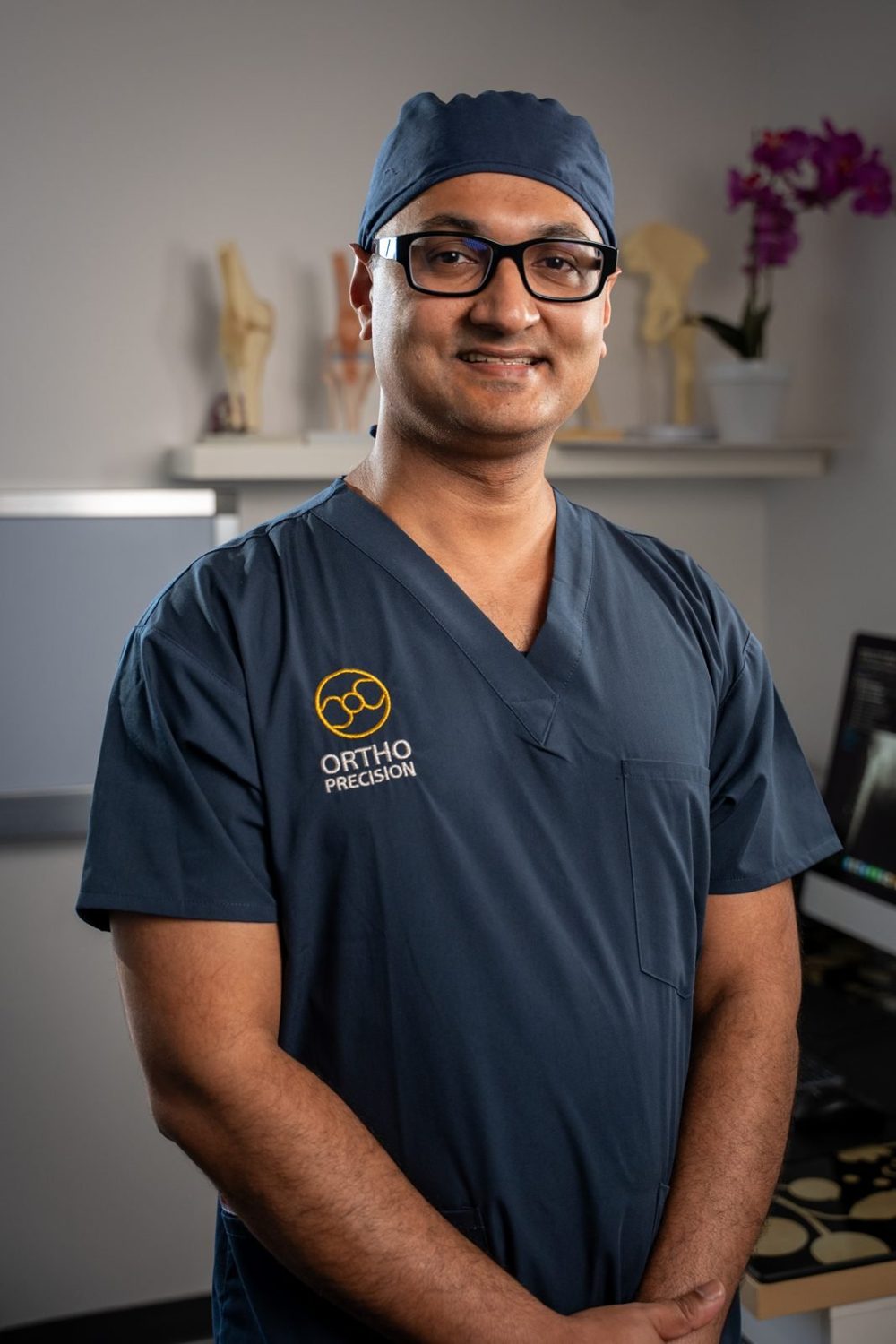
If you need a knee replacement, this page tells you what it is, how it is done, and what the weeks and months after it look like. A total knee replacement resurfaces the worn parts of your knee with metal and a tough plastic. Your ligaments, your muscles and almost all of your bone stay. Dr Yas Edirisinghe is a specialist orthopaedic surgeon in Adelaide. His practice is hip and knee surgery only — from keyhole surgery to knee replacement to the redo operations other surgeons refer in. Every knee replacement he does is planned for you: your own anatomy, your needs, and the things you want to get back to. It is delivered with robotic assistance. And it is Dr Yas who looks after you at every step: before surgery, in theatre, on the ward, and in every week of your recovery.
MBChB · MSurg · FRACS · FAOrthA · Specialist orthopaedic surgeon, hip & knee · Director of Orthopaedic Surgeon Training, NALHN
Key points
- A total knee replacement resurfaces the worn parts of the knee with metal and a tough plastic. The ligaments, muscles and almost all of the bone stay.
- It is for knee arthritis that has worn the joint through and is limiting your life, once the simpler treatments have stopped helping.
- Every knee replacement Dr Yas does is robotic-assisted and planned for you: your anatomy, your needs, and the things you love to do. The robot does not do the operation; he does.
- His practice is hip and knee surgery only, and all of it: keyhole and ligament surgery, partial and total knee replacement, hip replacement, and revision. One surgeon, start to finish.
- He performs more than 200 hip and knee replacements a year, including about 50 redo operations, and is Director of Orthopaedic Surgeon Training for the Northern Adelaide Local Health Network.
- Most people walk the same day and many are driving at two weeks. Modern knee replacements last: nine in ten are still in place at 20 years. 1,2
What does a knee replacement involve?
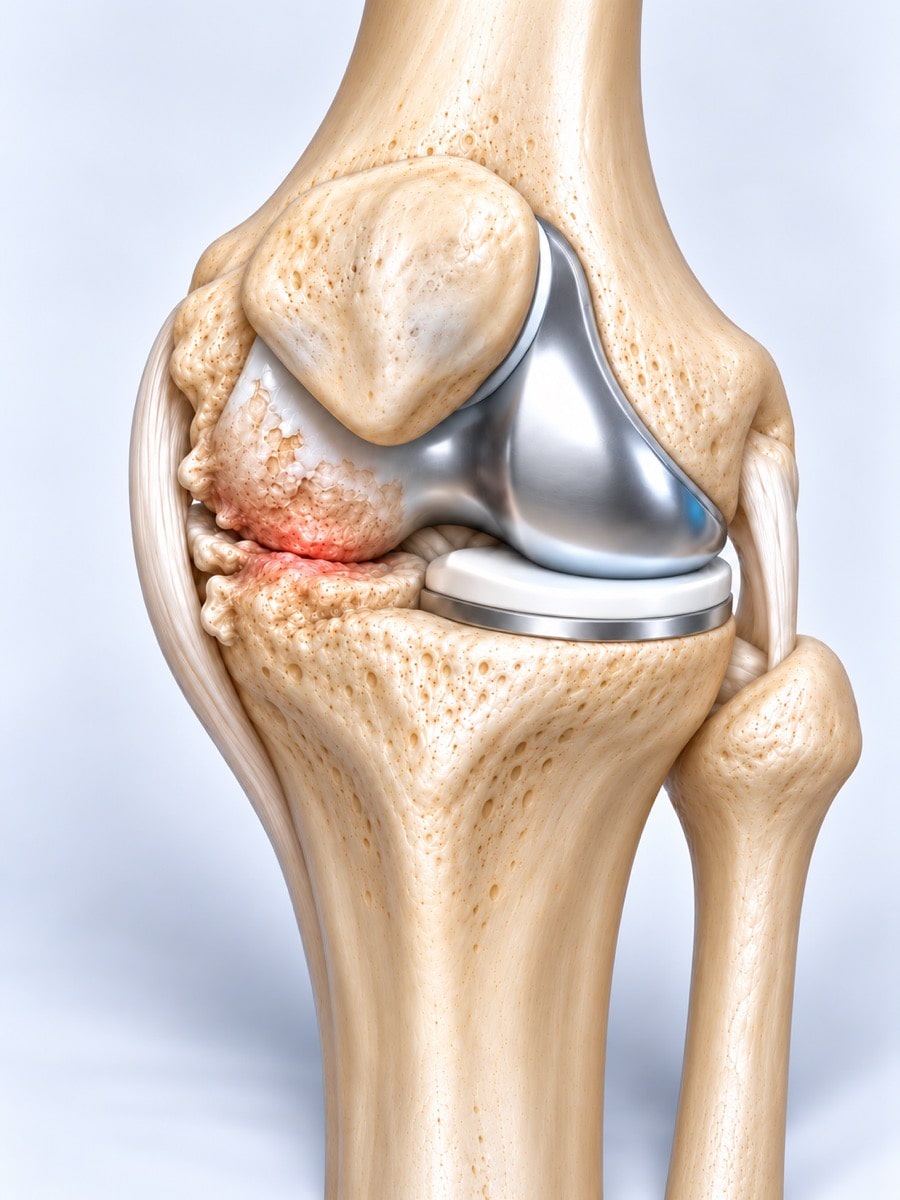
A thin layer of worn bone is taken off the end of the thigh bone and the top of the shin bone.
Metal caps go on, with a tough plastic between them. The kneecap is usually resurfaced too. Your ligaments and muscles stay.
Read why ↓Will it feel like my own knee?
Closer than it used to.
Dr Yas plans each knee to your own natural alignment and leaves the ligaments at their own tension, so the knee is built to feel like yours. About one person in five is not fully satisfied after a knee replacement. That number is the whole reason he plans the way he does. 3,4
Read why ↓How long will it last?
Longer than you have probably been told.
Across nearly 300,000 knees, 93 in 100 were still in place at 15 years and 82 in 100 at 25. 1 For most people, that is the rest of their life.
Read why ↓Exclusively hip and knee. Comprehensively.
Dr Yas's practice is hip and knee surgery only — and all of it. Keyhole and ligament surgery. Partial and total knee replacement. Hip replacement. The redo operations other surgeons refer in. One surgeon, from your first visit to your last review, and for anything that comes up in between.
Your knee, your needs, your operation
"Your knee replacement, planned around your unique joint and your unique needs — so your new knee feels as natural as it possibly can."
— Dr Yas Edirisinghe
No two knees are the same, and no two lives are. So the first thing Dr Yas asks is not "which implant". It is: what do you want to be able to do? Walk the dog. Garden. Play golf. Get down on the floor with the grandchildren. Keep working. Keep playing sport.
Then he looks at your knee — the shape of the bones, the way the ligaments hold it, how the kneecap tracks, what the X-rays and scans show — and he puts the two together. Every option is on the table, including the ones that are not surgery. Often a smaller operation is the better one, because it keeps more of your own knee and more of the way it naturally moves. If an operation is the right step, it is chosen for your anatomy, your needs and the things you love to do — not taken off a menu.
"The operation should fit the knee and the person. Never the other way round."
— Dr Yas Edirisinghe
Choose your path
 My whole knee is worn and I want to understand the operationread on
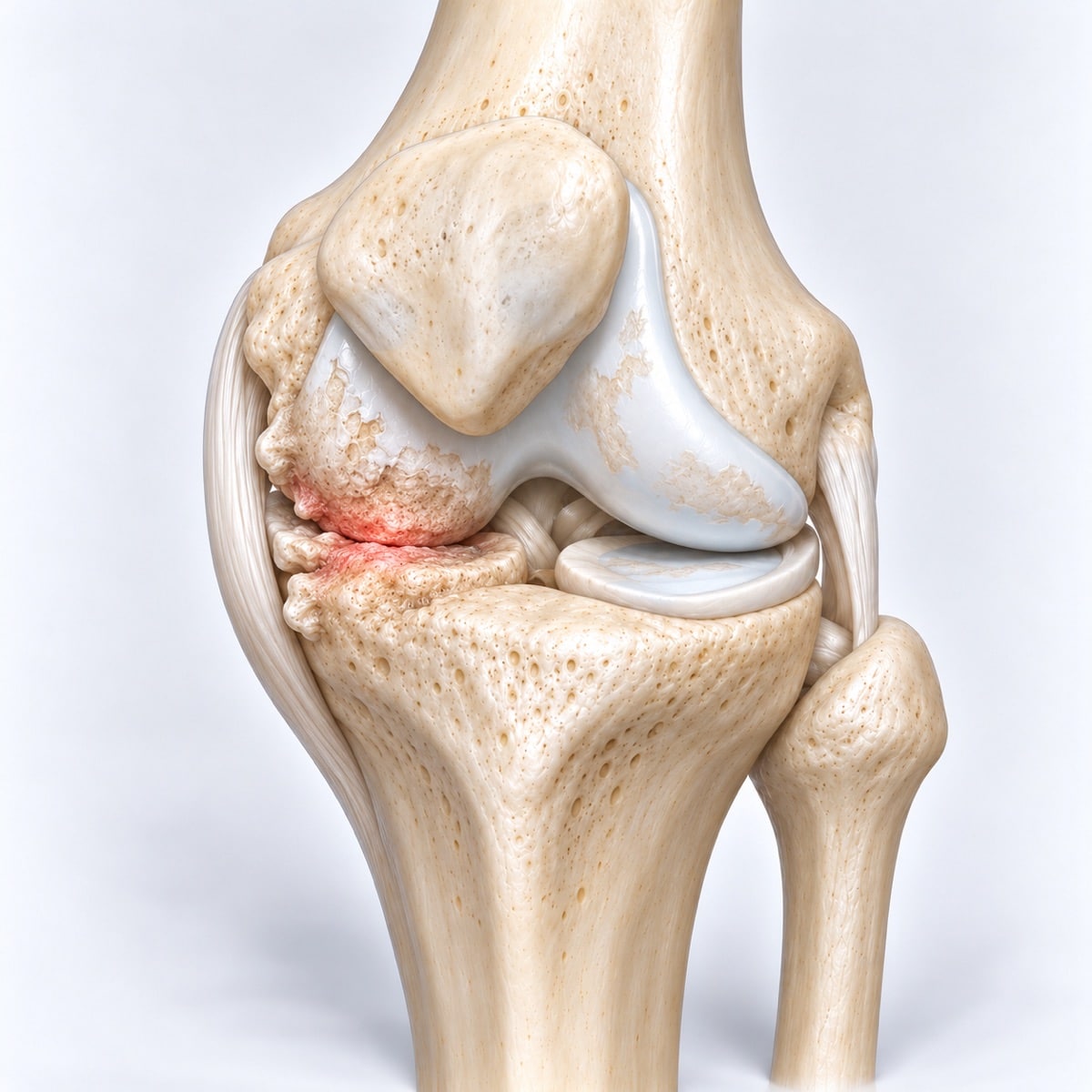 Only part of my knee is wornPartial knee replacement
 I have a higher body weight and want to know my optionsHip or knee replacement with a BMI over 40
 I've already had a knee replacement and it still hurtsDoes your knee replacement still hurt?
What a total knee replacement actually is
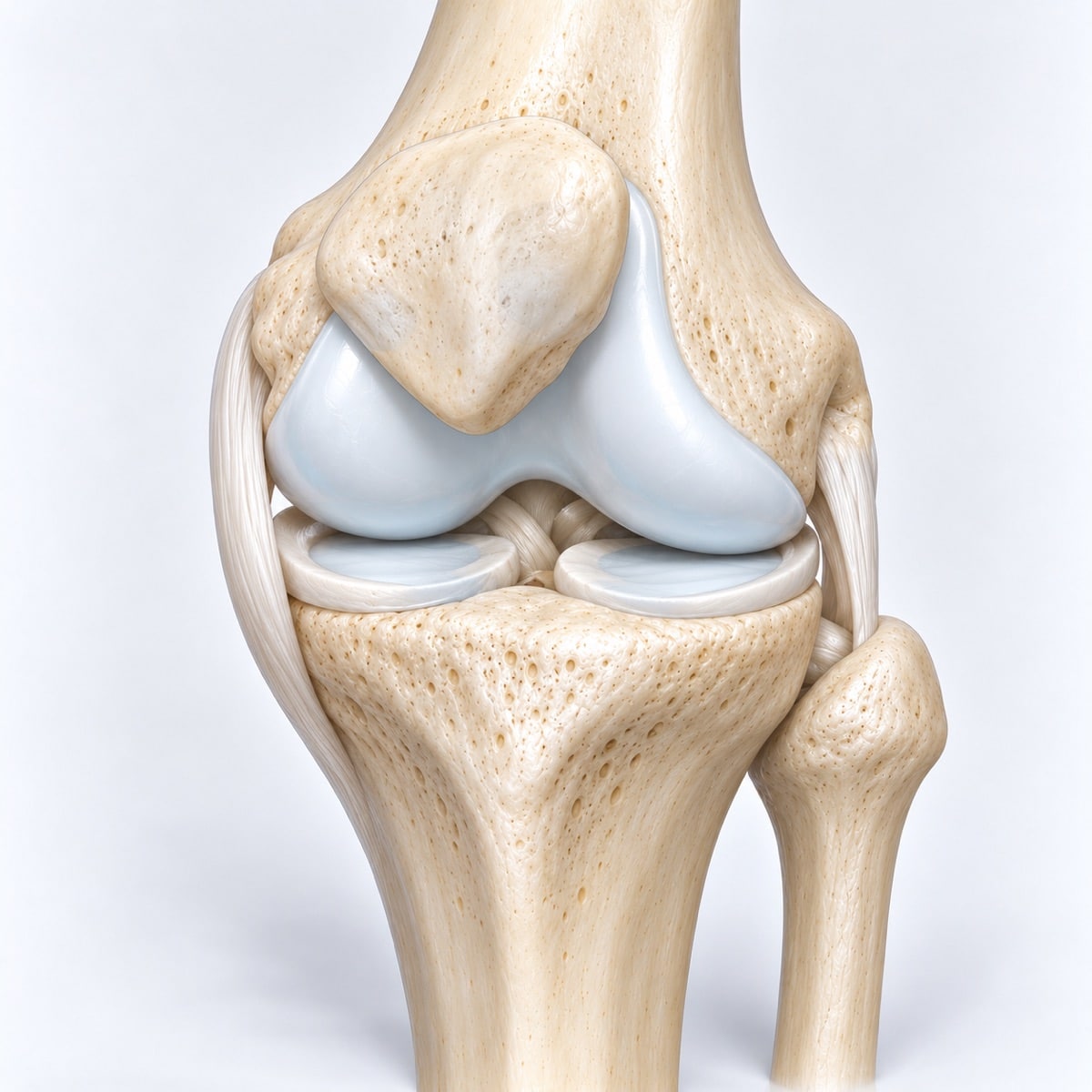
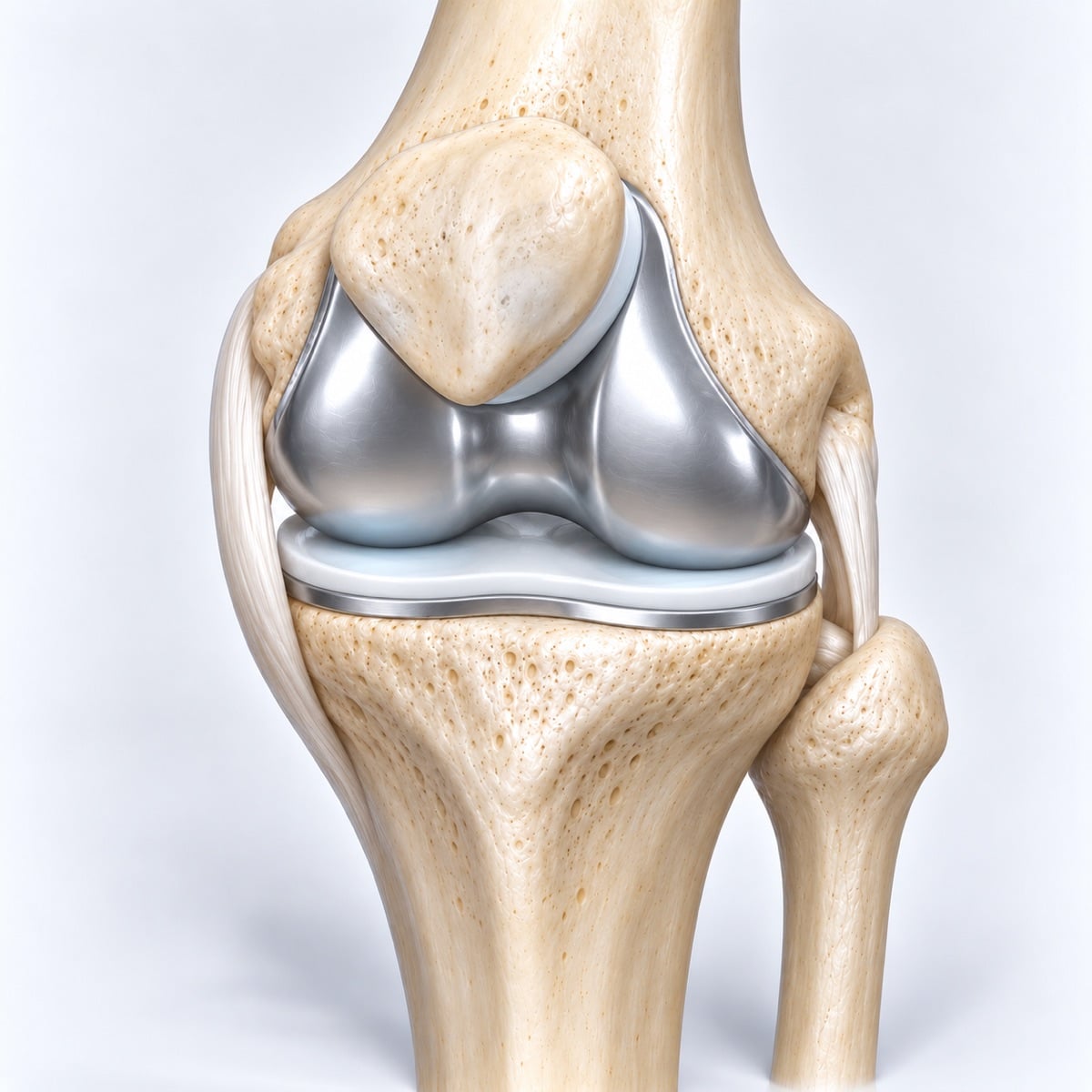
Your knee has three parts: the inside, the outside, and the groove behind the kneecap. Each part is lined with cartilage. Cartilage is the smooth white layer that lets bone glide on bone. Arthritis wears that layer away. When it is gone, bone grinds on bone. That is what people mean by "bone on bone", and it is the pain, the swelling and the stiffness you feel.
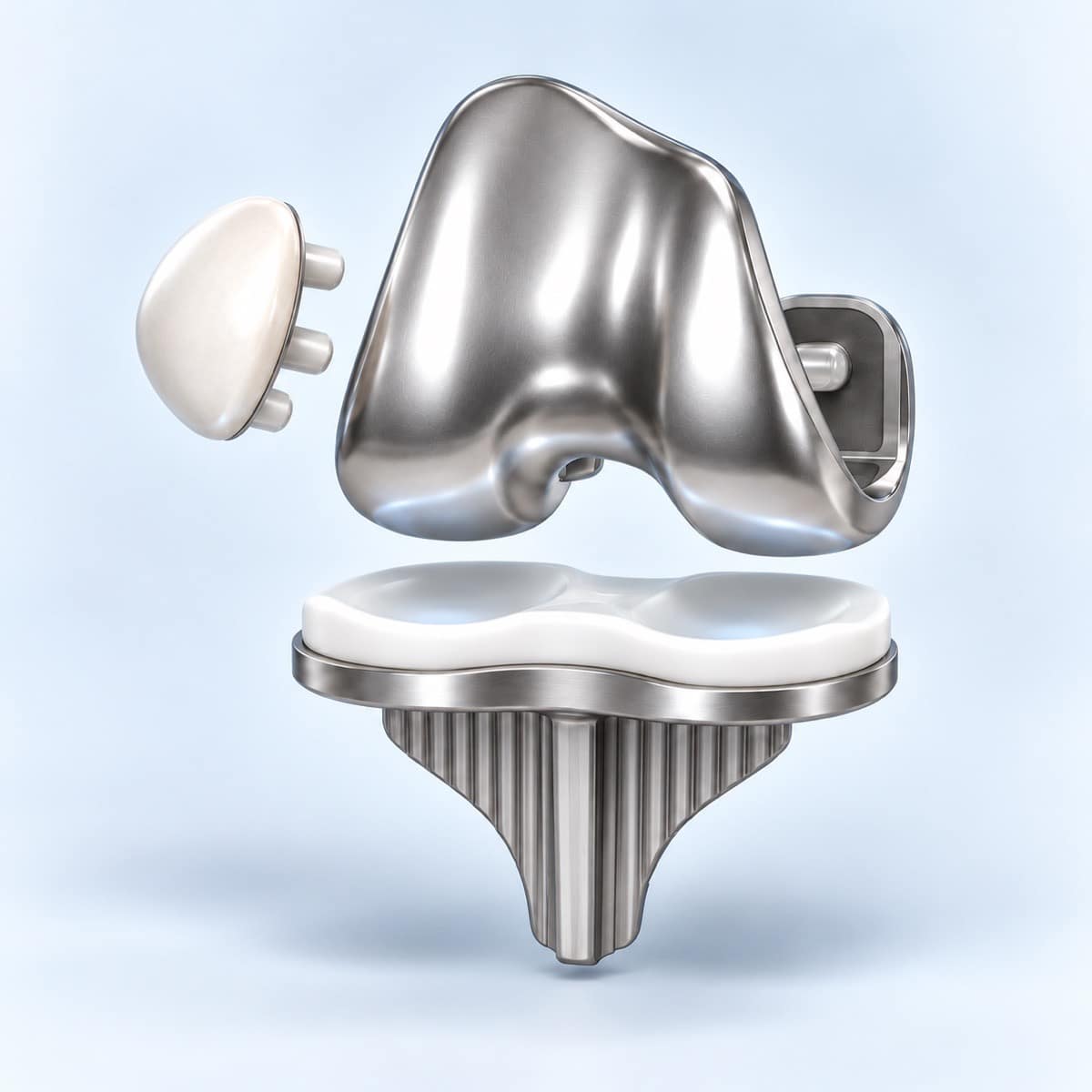
A total knee replacement does not take your knee out. It resurfaces it. A thin layer of worn bone is taken off the end of the thigh bone and the top of the shin bone. Metal caps are fixed in their place, with a tough plastic between them. The back of the kneecap is usually resurfaced too. Your ligaments, your muscles and most of your bone stay. The new surfaces glide where the old ones ground.
What is replaced, and what stays
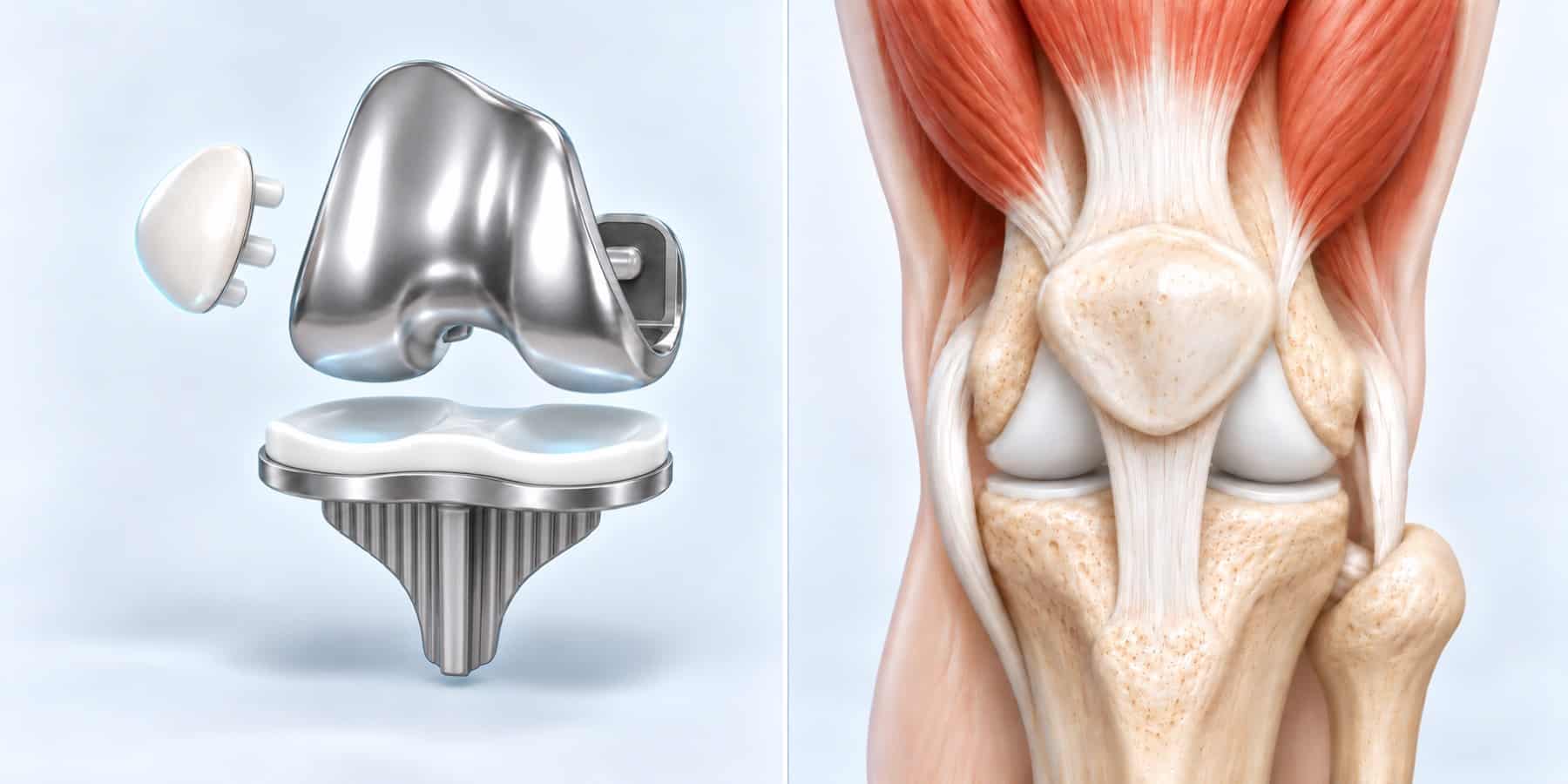
| Replaced | Stays yours |
|---|---|
| The worn surface of the thigh bone (a metal cap) | Your ligaments, which Dr Yas leaves at their natural tension |
| The worn surface of the shin bone (a metal tray and a plastic bearing) | Your muscles and tendons |
| Usually, the back of the kneecap (a plastic button) | Almost all of your bone; only a few millimetres of worn surface is removed |
You may also hear it called a total knee arthroplasty, TKR or TKA, or knee resurfacing. They all mean the same operation. It is one of the most common operations in Australia. More than 80,000 knee replacements were recorded by the national joint registry in the past year. 2
When a knee replacement is the right step

Many people do not know they need a knee replacement. They know their knee hurts, that it keeps them awake, or that they have stopped doing things they used to do. A knee replacement is the step for when arthritis has worn the joint through and is running your life, and the simpler treatments have stopped helping.
The signs that usually mean it is the right step:
- Knee pain that limits walking, stairs or getting out of a chair
- Pain at rest or at night that wakes you
- Stiffness and swelling that do not settle with rest or anti-inflammatories
- A knee that is bending into a bow leg or a knock knee
- Physiotherapy, weight management and injections no longer giving relief
- An X-ray taken standing up that shows the joint space has gone

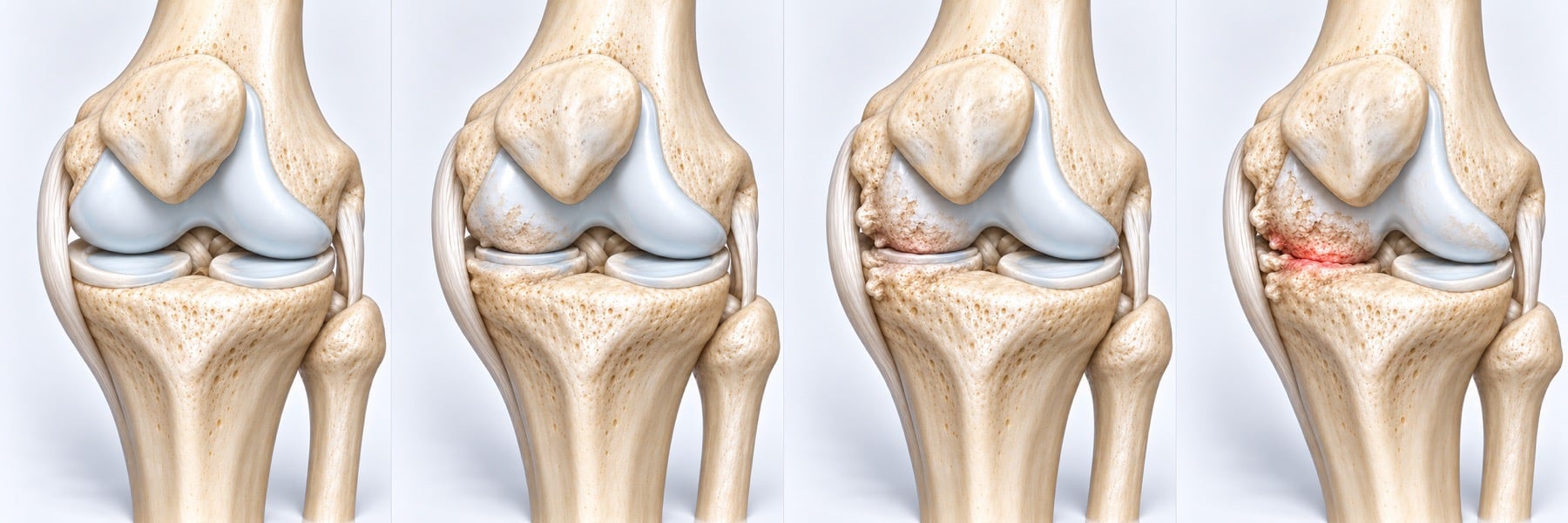
What the X-ray grade means.
Radiologists grade knee arthritis from 1 to 4. Grades 3 and 4 mean the joint space is largely gone and the bone has started to change shape. Grade 4 is what most people call "bone on bone". That is usually where the conversation about surgery starts, but only if your symptoms match. Some people with a grade 4 X-ray manage well for years. Some with a grade 3 cannot walk to the letterbox. The person, not the picture, decides. Dr Yas looks at the X-ray with you on the screen and explains what it shows.
Younger and active?
Age is no longer the barrier it once was. A modern knee replacement can outlast you. For a younger knee where the wear is in one part only, Dr Yas's preference is a partial replacement rather than a total: it keeps your own ligaments and the way your knee naturally moves, and it feels more natural. And it keeps your options open. If another part of that knee wears years later, Dr Yas does not take the partial out and start again. He resurfaces the new part and leaves the good part alone. Your knee stays your knee. Partial knee replacement → Knee pain in younger and active adults →
What to try first, and what the evidence says
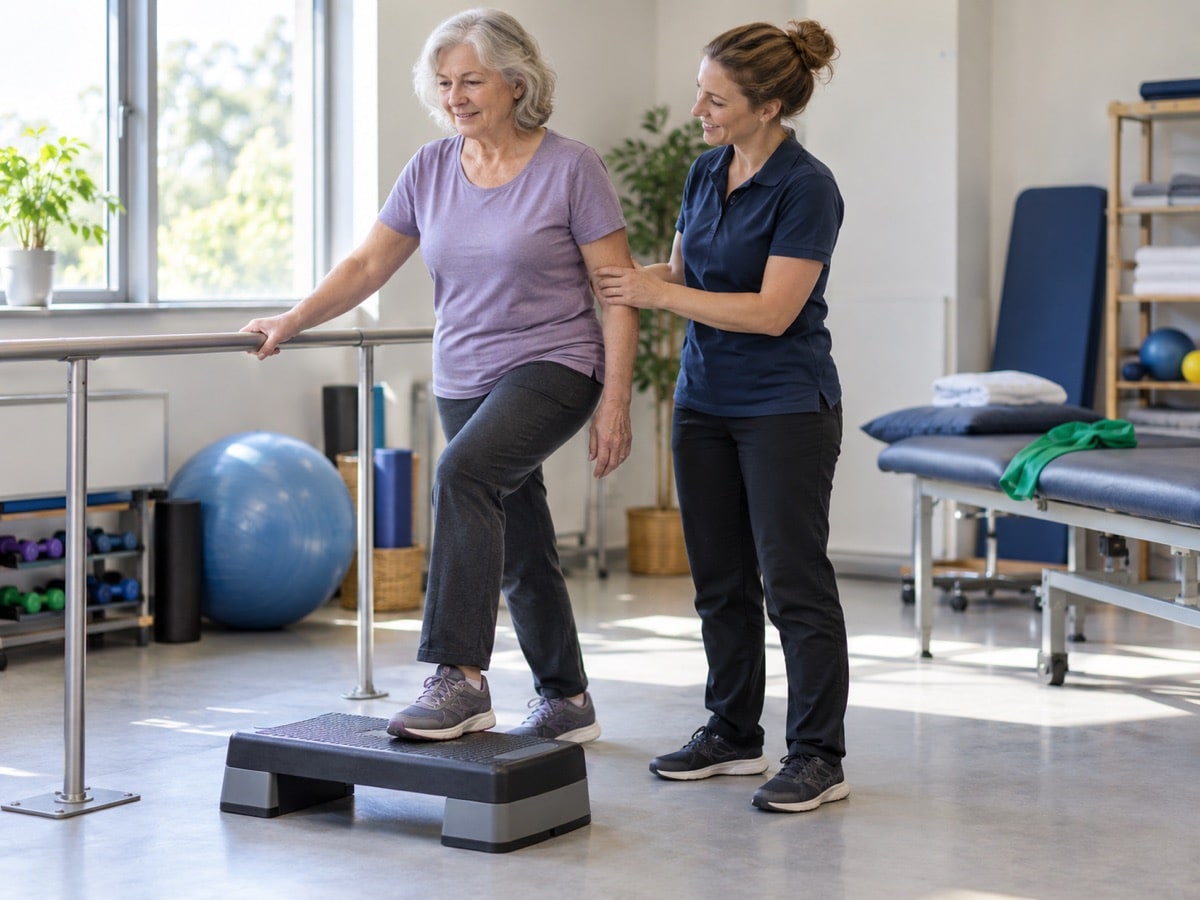
Most people with knee arthritis should try the simpler things first, and many never need an operation. Keeping the leg strong with physiotherapy. Keeping weight down where that is realistic. Changing the activities that flare the knee. Simple pain relief and anti-inflammatories. A walking stick on bad days. All of these help, and Dr Yas will talk you through them before he talks about surgery.
Injections are where honest advice matters. A cortisone injection can settle a flare for a few weeks or months. Gel (hyaluronic acid) injections are widely sold and widely advertised, and the largest Australian trial found no real benefit over a placebo injection. Dr Yas explains which is which so that you and your GP can decide together. Joint injections — the honest guide →
Sometimes the right answer is a very specific physiotherapy plan, built for your knee, rather than an operation at all. Dr Yas works with a small group of hand-picked physiotherapists and will set that plan up with them if it is the better path.
When these measures no longer control the pain and the arthritis is affecting your daily life, a knee replacement becomes a reasonable thing to discuss. That discussion is a conversation, not a sales pitch.
How Dr Yas plans your knee
Two ways to line up your new knee
A knee replacement needs a plan for how it will line up and move. A standard approach follows a set target. Dr Yas uses kinematic alignment to build a personal plan around your knee's natural shape and how you move.
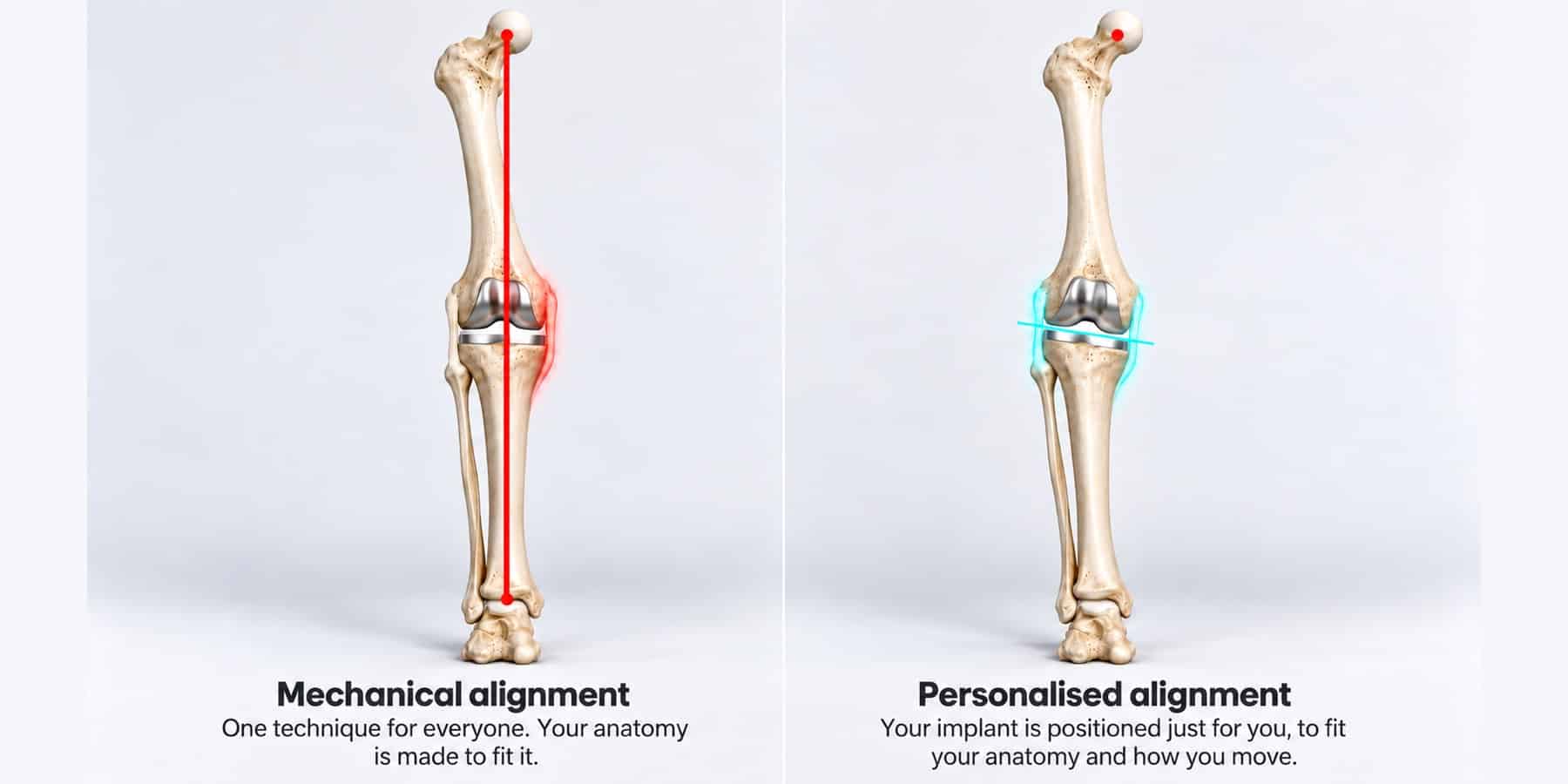
Mechanical alignment — the standard way.
The new knee is set to a straight line drawn from the hip, through the knee, to the ankle. It is the same line for everyone. To make the bone fit that line, the ligaments on one side often have to be cut and loosened. It is a sensible average. But most knees are not average. A natural knee sits at a slight angle, and the angle is different in every person.
Personalised kinematic alignment — Dr Yas's approach.
Dr Yas starts with your unique anatomy: the natural shape, angle and joint line of your knee. He uses your scans and the checks made during surgery to understand how your knee moves and how its ligaments balance. Then he brings his experience and the art of knee surgery to the plan, choosing where each implant should sit to suit you. Your anatomy guides the approach, with a plan made for your knee and the way you move.
The trials that compare these methods find that, across everyone in the trial, the methods feel much the same. Dr Yas's view is that the gain is in the knees that are far from average — and a trial average hides exactly those people. how robotic planning and alignment work, in full →
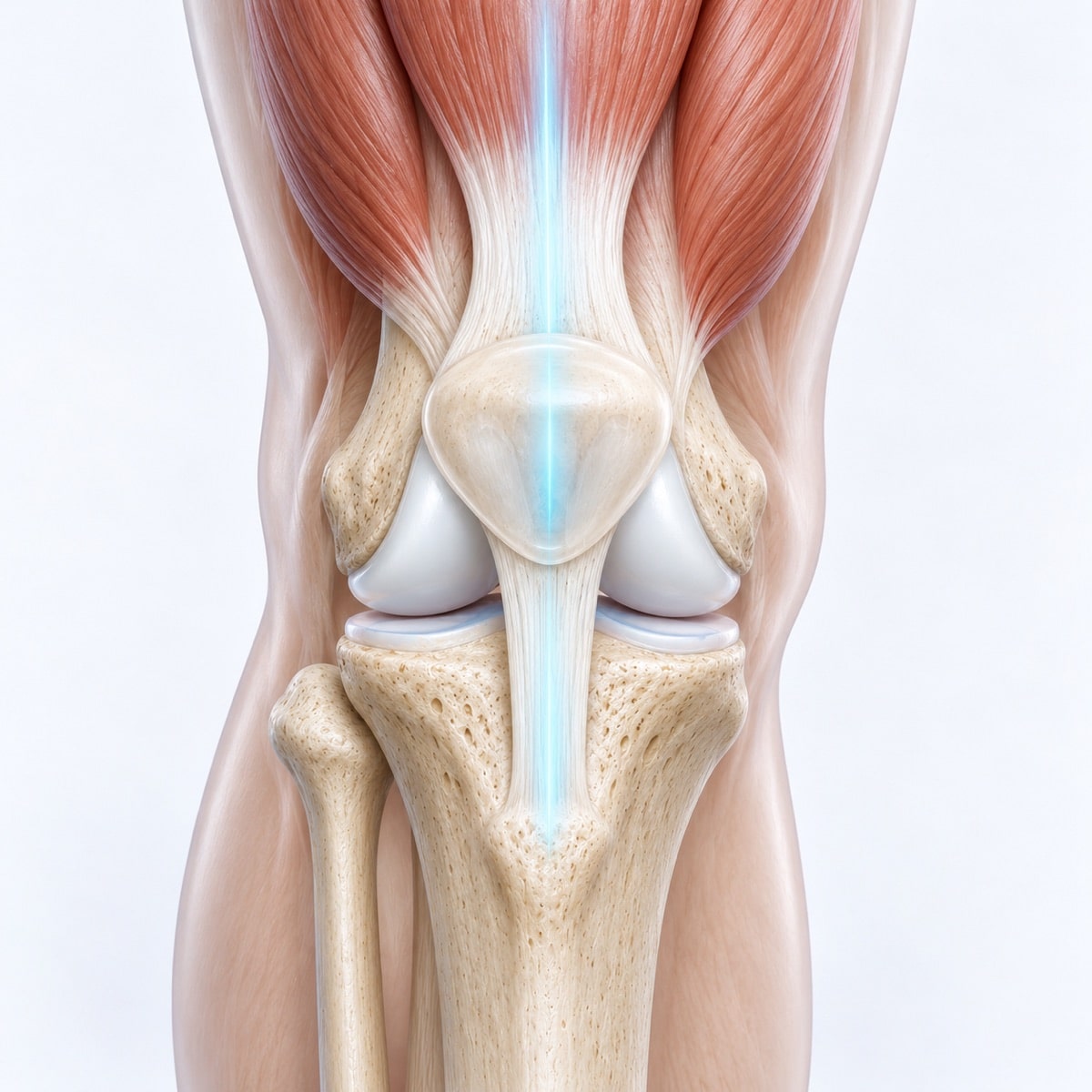
The kneecap, and the muscle that pulls it
A knee can be well put together and still hurt if the kneecap does not run straight in its groove. The kneecap is pulled by the big thigh muscle (the quadriceps), and the line of that pull is different in every person. Dr Yas has a particular interest in how the thigh muscle and the kneecap line up. Every plan he makes checks how your kneecap will track once the new surfaces are in, and the implant is positioned so that it does.
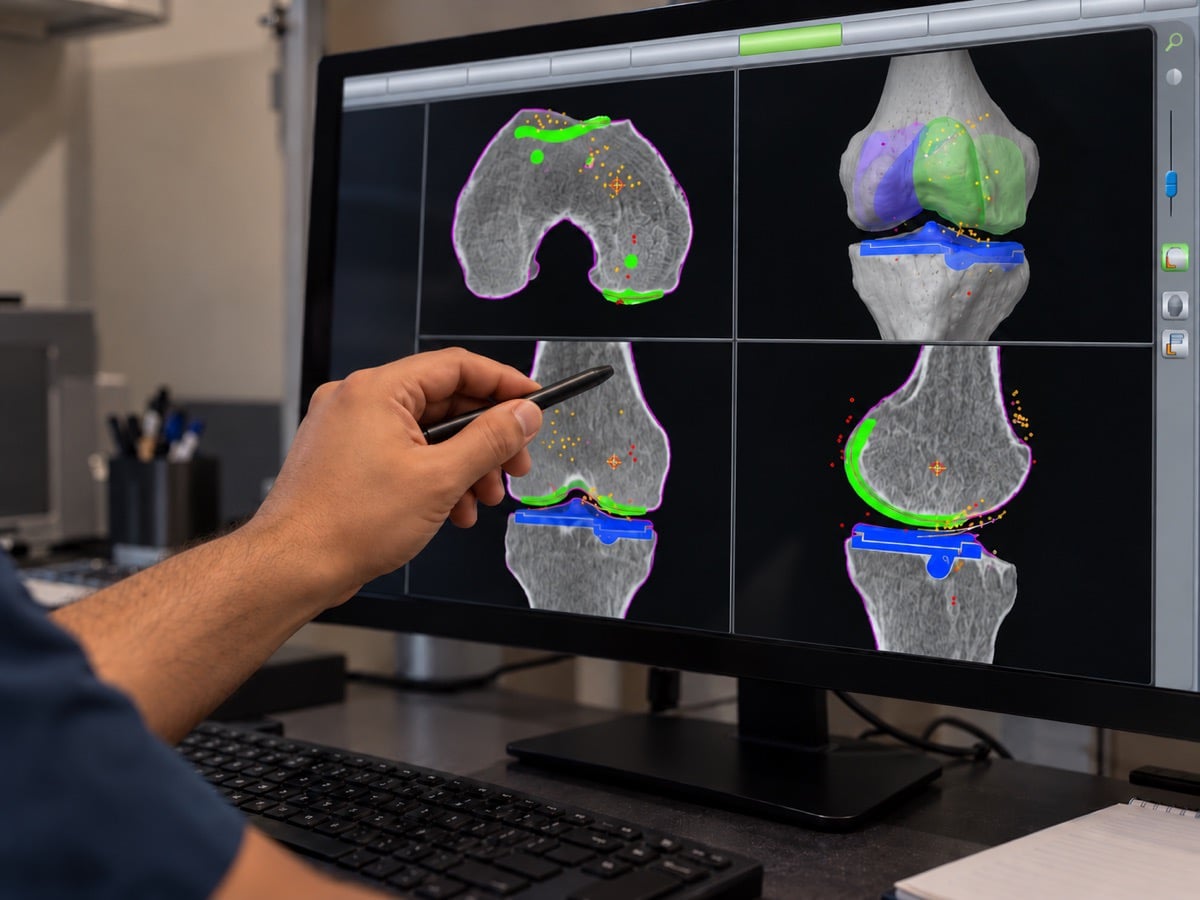
Your knee, in 3D, before the first cut.
Before surgery, your knee is scanned. From that scan, Dr Yas builds a plan of your knee on a screen: the size of each implant, where it will sit, and the angles it will sit at. This is the step that decides your result, and it is done by the surgeon, not the machine.
The robot delivers the plan. The surgeon finishes the knee.
Every knee replacement Dr Yas does is robotic-assisted. The robotic arm holds the saw to the plan and will not let a cut stray from it. But a robot only does what it is told. The balance of the ligaments, the tracking of the kneecap and the final feel of the knee come from the surgeon's judgement, in theatre, on your knee. That judgement is built on more than 200 joint replacements a year. There is an art to it, and no machine supplies it.
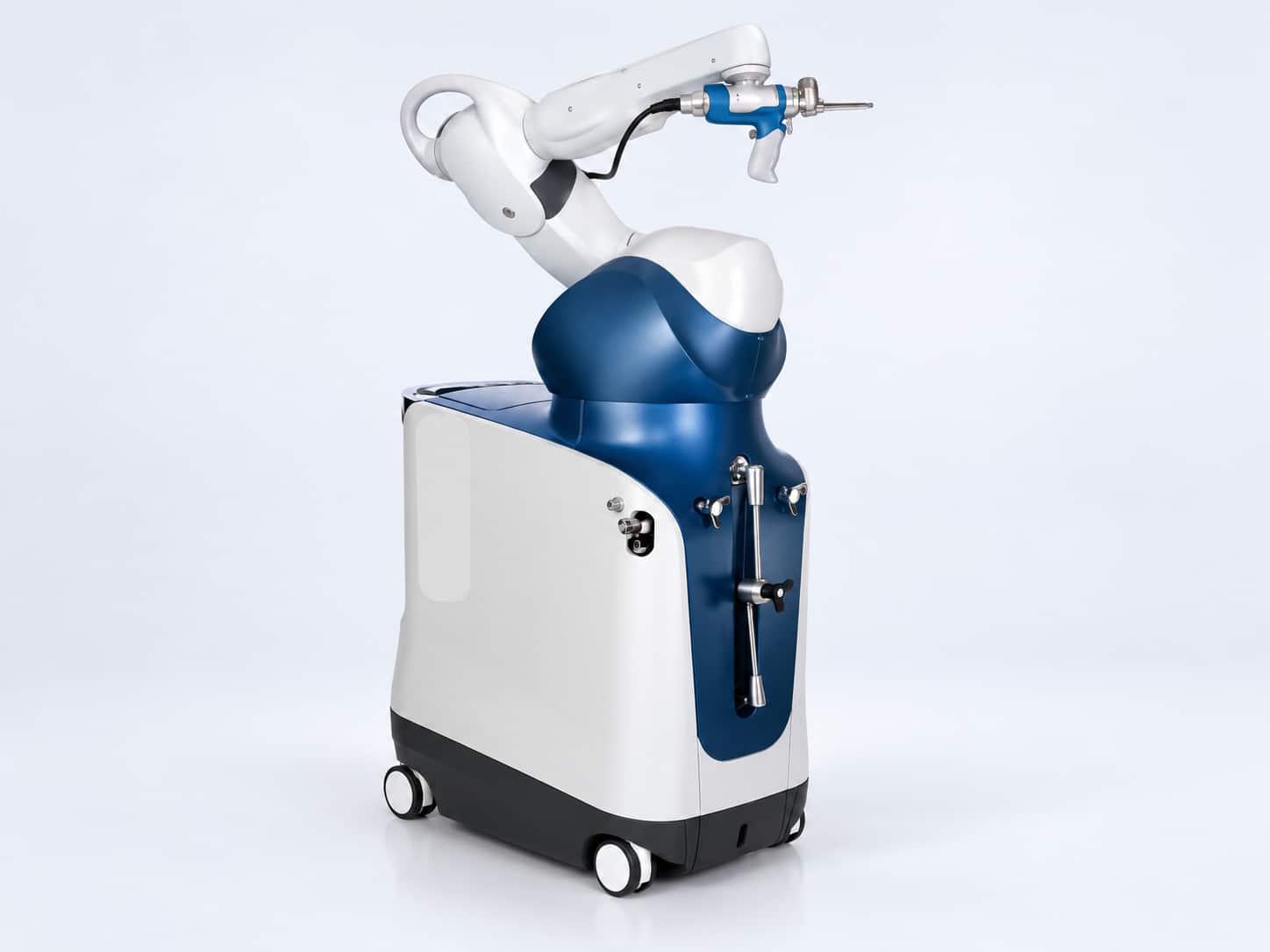
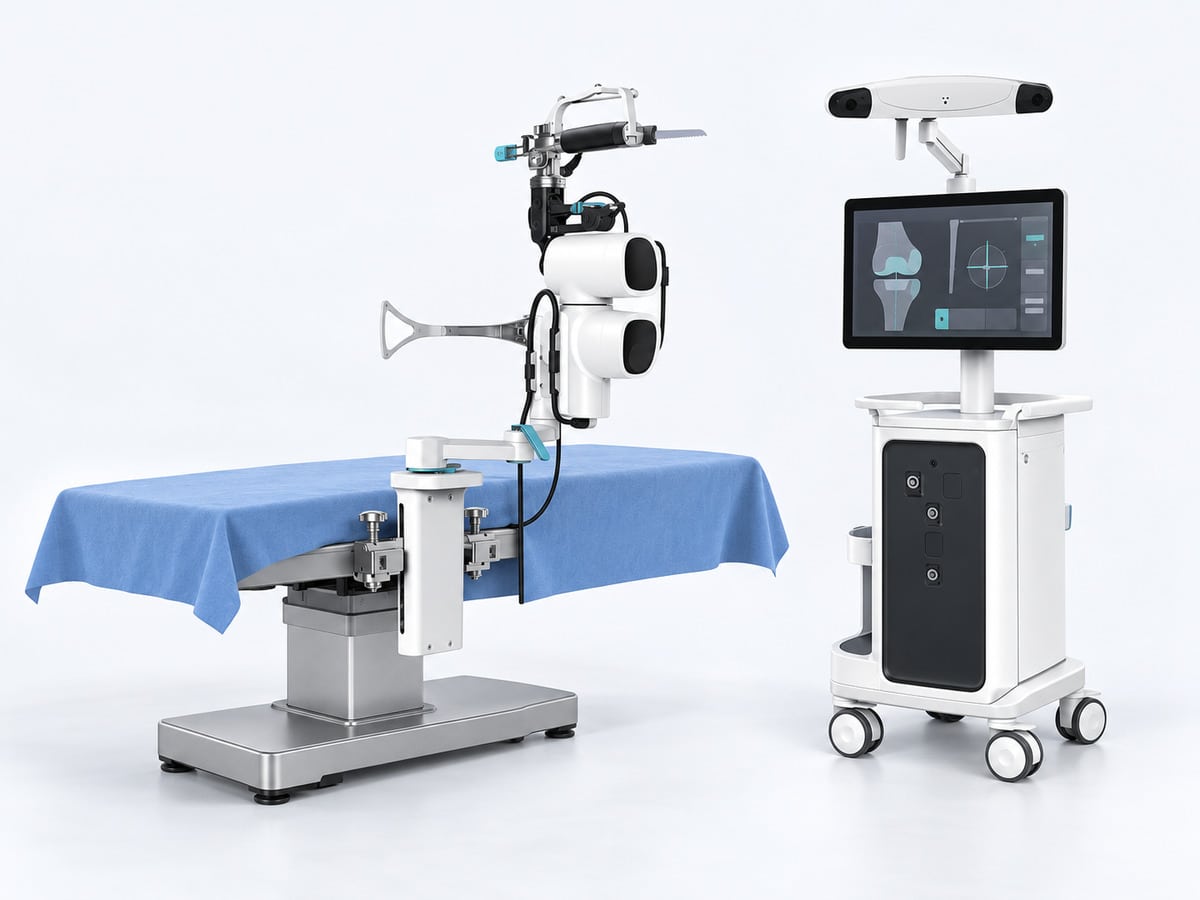
Is a robotic knee replacement actually better? Which systems, what the trials really show, and whether it is for you. The full, honest answer is on its own page."Accuracy is not the outcome. A bad plan in is a bad knee out. The plan is where the knee is won."
— Dr Yas Edirisinghe
The implants
| Part | Material | Note |
|---|---|---|
| Thigh-bone cap | Cobalt-chrome alloy | |
| Shin-bone tray | Titanium or cobalt-chrome | |
| Bearing | Highly cross-linked polyethylene | The modern plastic. It is why wearing out is now uncommon |
| Kneecap button | Polyethylene | Usually resurfaced |
| Registry | Every implant Dr Yas uses is tracked for life by the Australian joint registry |
The cut in the skin: does it matter?
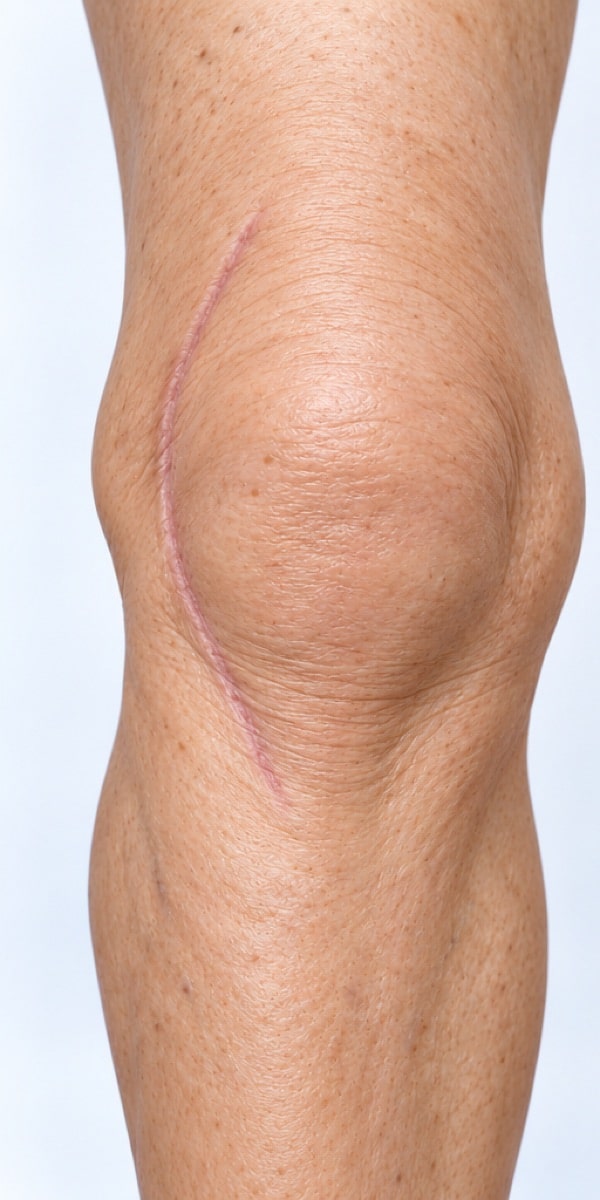
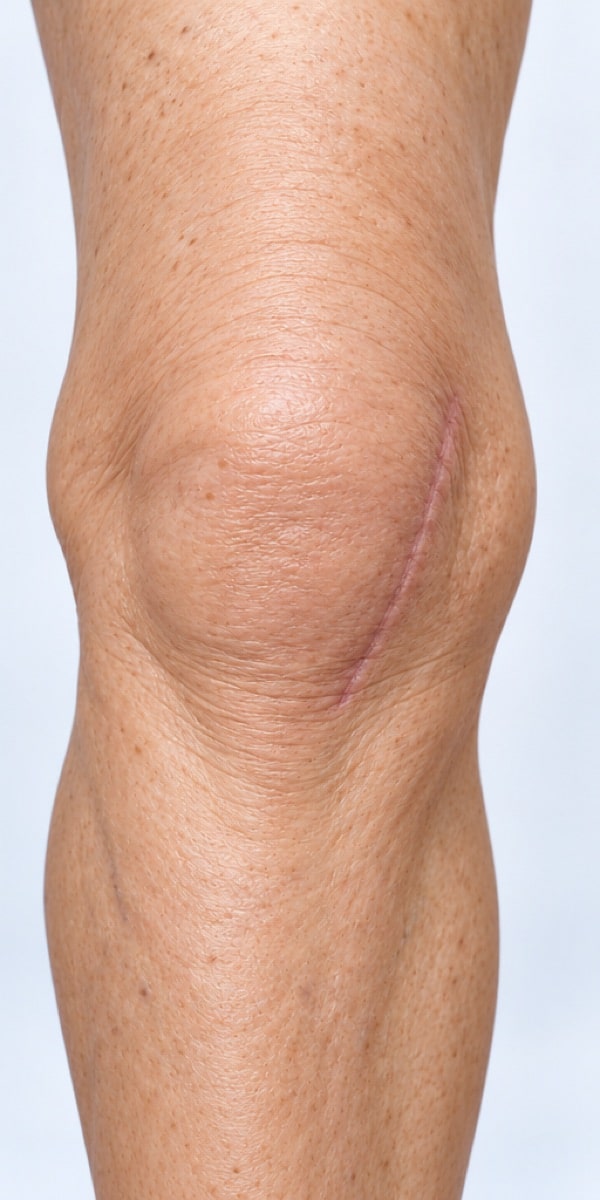
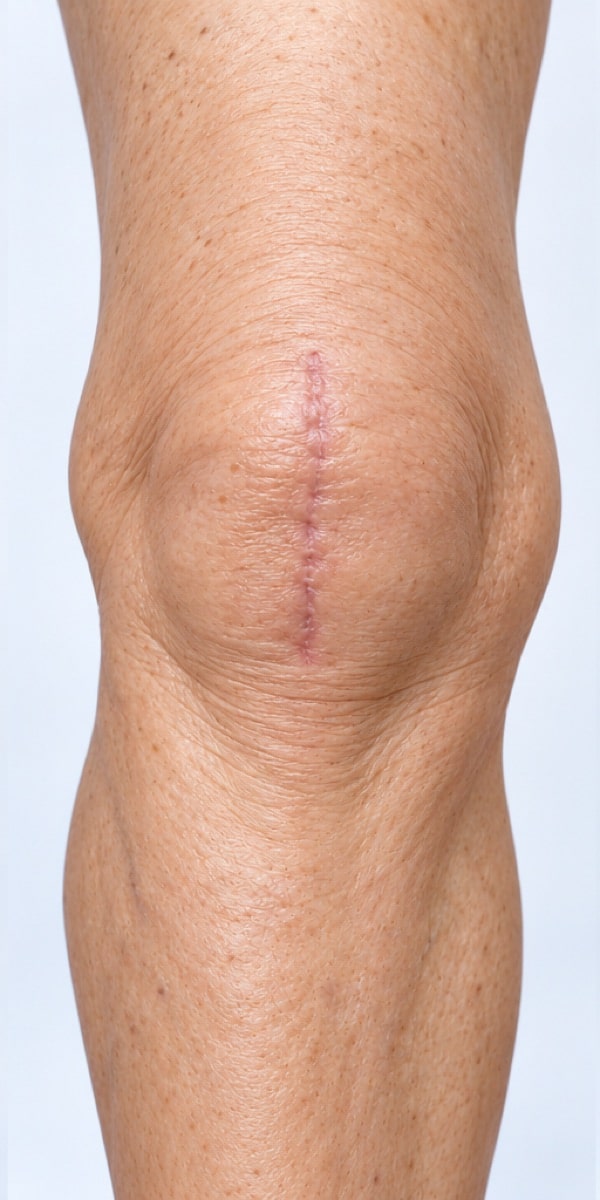
You may have read that where the cut is made on the skin, straight down the middle or curved to the outer side, changes how your knee turns out. The studies say it does not. In trials where the same person had one knee done with a straight cut and the other with a curved outer cut, kneeling, movement, pain and the scar were the same at a year, and people had no preference between their two knees. 7,8 What you feel is what is underneath the skin: how the knee is planned, lined up and balanced. The skin cut is not where the result is decided.
Dr Yas can do the operation through any of them: a straight cut down the middle, a cut that curves to the outer side, a cut angled to the inner side, or one that goes under the fascia. All have their pros and cons. His usual choice is a short, straight cut down the middle of the knee. It is noticeably shorter than a standard knee replacement scar; in the United States this is often called a "mini" approach. A curved or angled cut has to travel around the kneecap, so it is not shorter, and on the research it does not leave a better-looking scar either: at a year, people cannot tell the two apart. 7,8,9 A short cut is not a magic trick in its own right, though. The large review of shorter cuts found slightly better bending early on, and otherwise the same results. 10
One honest point. Every knee replacement leaves a patch of numb skin to the outer side of the scar, because a small skin nerve crosses the front of the knee. Some surgeons prefer an outer cut to make that patch smaller, and that is a fair reason. The trials are mixed: some find the outer cut gives less numbness early on, others find no difference, and in one trial the short cut recovered its feeling fastest of all. 7,8,9 By a year, most people have most of their feeling back whichever cut was used, and the numb patch does not change how the knee works.
If the shape of your scar matters to you, say so at your consultation, and Dr Yas will plan it with you. It is your knee. But it is not the thing that decides your result. The plan is.
"One in five aren't happy. I don't accept that."
1 in 5

About one person in five is not satisfied after a total knee replacement. In one study of 1,703 knees, 19% were unhappy a year on. Reviews of the world's results land in the same place. 3,4
"I don't accept that number. In my experience, many of those knees had an operation that didn't fit the knee: a total replacement where a partial would have done, or a standard alignment on a knee that was never standard. The robot can't fix that. Choosing the right treatment and the right plan can. That is the whole job."
— Dr Yas Edirisinghe
In Dr Yas's experience, the knees that disappoint usually share one of a few stories. The implant was lined up to an average instead of to the person. The ligaments were not balanced to that person's knee. The kneecap was never made to track. The pain was coming from the hip or the back, not the knee, so a new knee could not fix it. Or the knee would have done better with a specific physiotherapy plan than with an operation at all. None of these is bad luck. Each is a decision, and each is made before the first cut. That is why the planning on this page takes the time it does.
Food for thought: does the whole knee need replacing?
Most people searching for a knee replacement are thinking of a total replacement. Before you settle on that, one fact is worth knowing.
If only part of your knee is worn, a partial knee replacement resurfaces just that part. The rest of your knee, including the ligaments, stays exactly as it was. Partial knees typically recover quicker than a total and feel more natural. 12 They suit younger knees especially well, and they keep the future open: if another part of the knee wears years later, Dr Yas resurfaces that part and leaves the rest alone, rather than taking everything out and starting again. There is an art to doing partials well, and it comes with doing many of them: Dr Yas does a high number of partial knee replacements, and the first question he asks of every knee is which operation it actually needs.
"Nobody pulls every tooth for one filling. If one part of your knee is worn, ask whether the whole knee needs replacing."
Dr Yas's 4-step knee plan
1. Map your knee — twice.
A scan before surgery, and mapping in theatre on the day. Dr Yas uses both, and checks one against the other. A 3D model of your knee, not an average one.
2. Plan to your anatomy and your needs.
Partial or total. Your natural alignment. Your ligaments left at their own tension. Your kneecap made to track. Chosen for what you want to do.
3. Deliver with the robot, finished by the surgeon.
The robot makes the cuts to the plan. The balance, the kneecap and the final feel of the knee come from Dr Yas's judgement, built on hundreds of joints a year.
4. Recover with Dr Yas.
Walking on day one. A hand-picked physiotherapist from the start. A direct line to Dr Yas between visits. Reviews with him at two weeks, six weeks and three months.
What to expect, from your first visit to recovery — and who you see at every step

First visit
Dr Yas examines your knee, looks at your X-rays with you on the screen, and asks what you want to get back to. He talks through every option, including the ones that are not surgery. If a knee replacement is the right step, the planning starts: a scan, and a check of your general health. You do not need to bring anything; he obtains your X-rays and history himself.
Surgery day
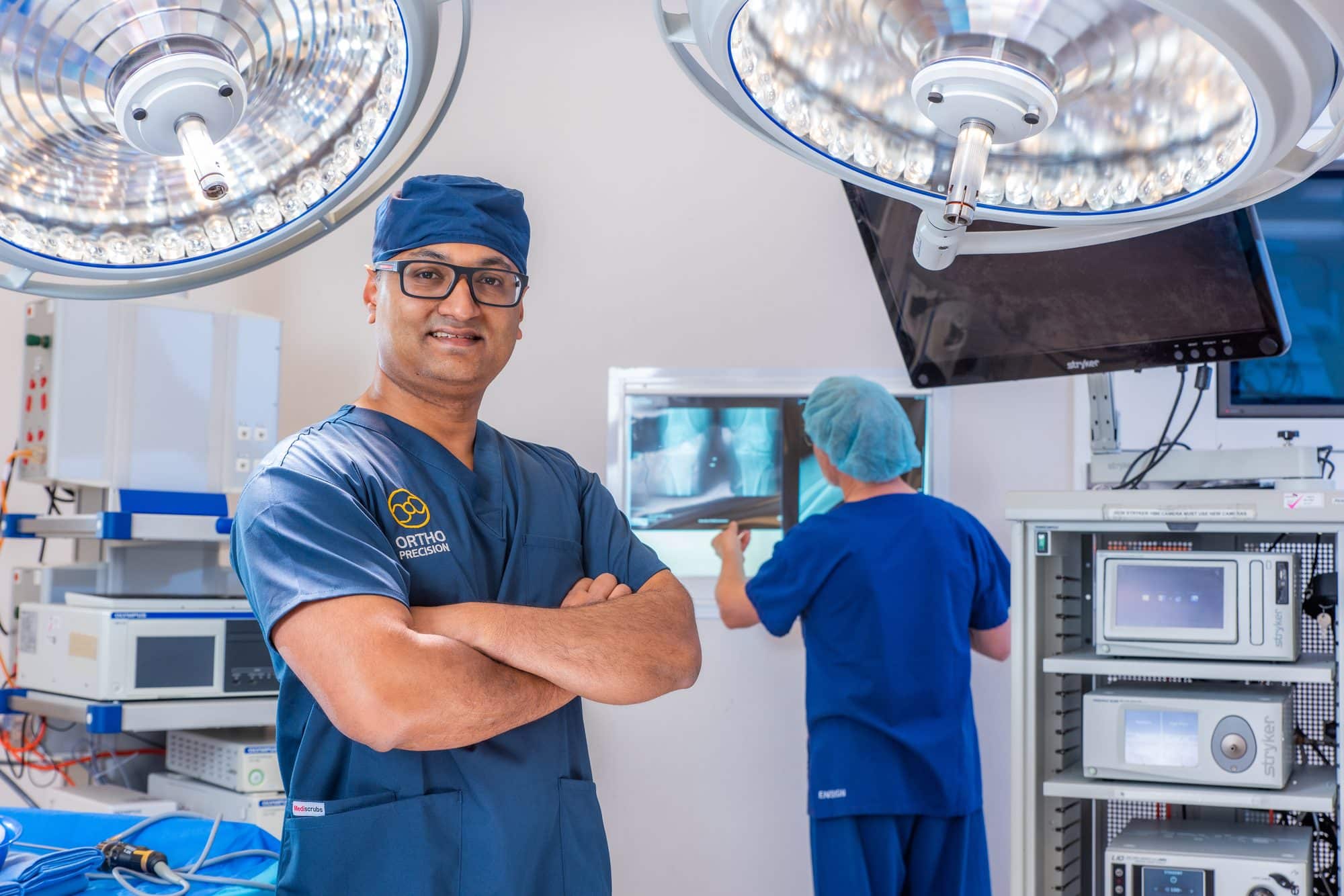
Most knee replacements are done under a spinal anaesthetic with a nerve block, so you wake comfortable. Dr Yas does the operation himself. He sees you before theatre and on the ward afterwards.


In hospital
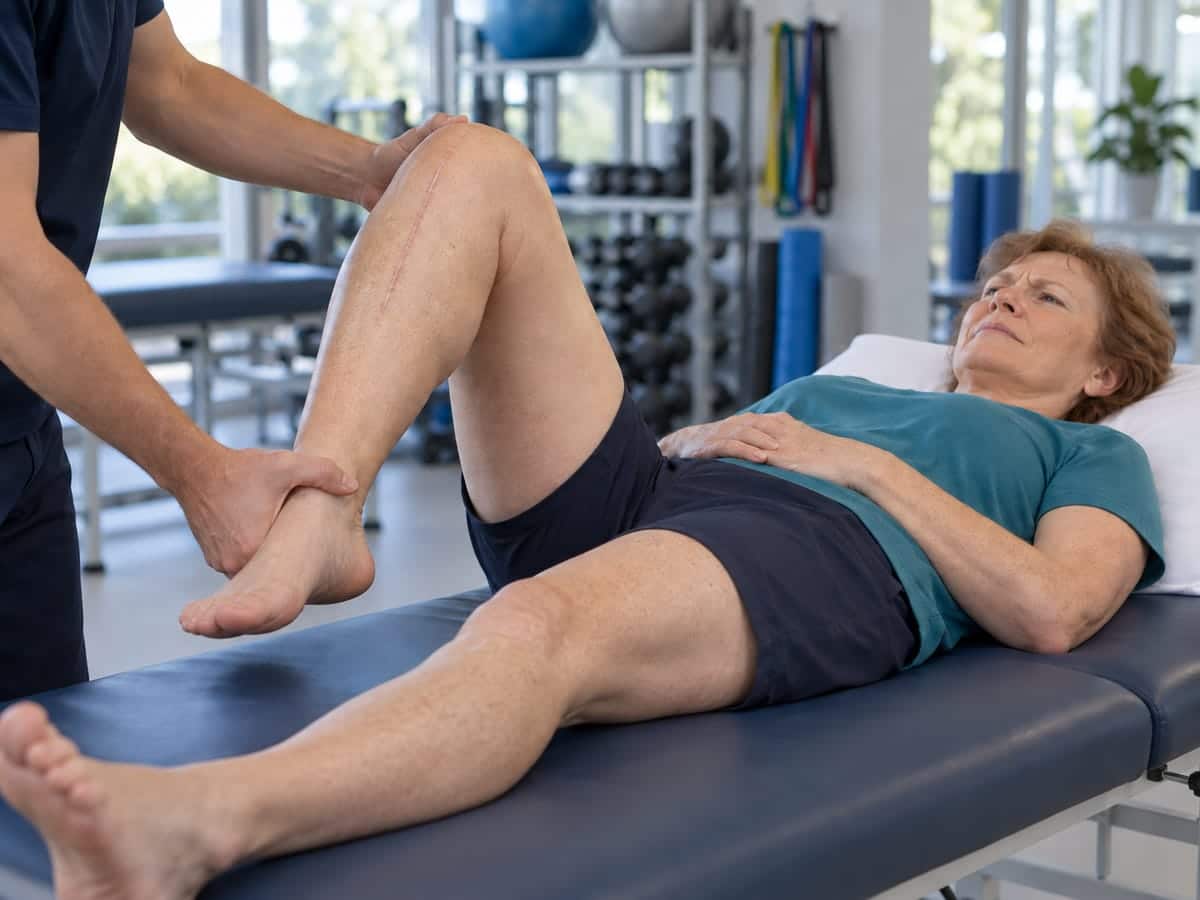
Physiotherapy from day one. You can go home the next day if that is right for you — but nobody is rushed. Most of Dr Yas's patients stay two to three nights, so that your pain is settled, you are walking safely, and your physio plan is in place before you go home.
Week 2
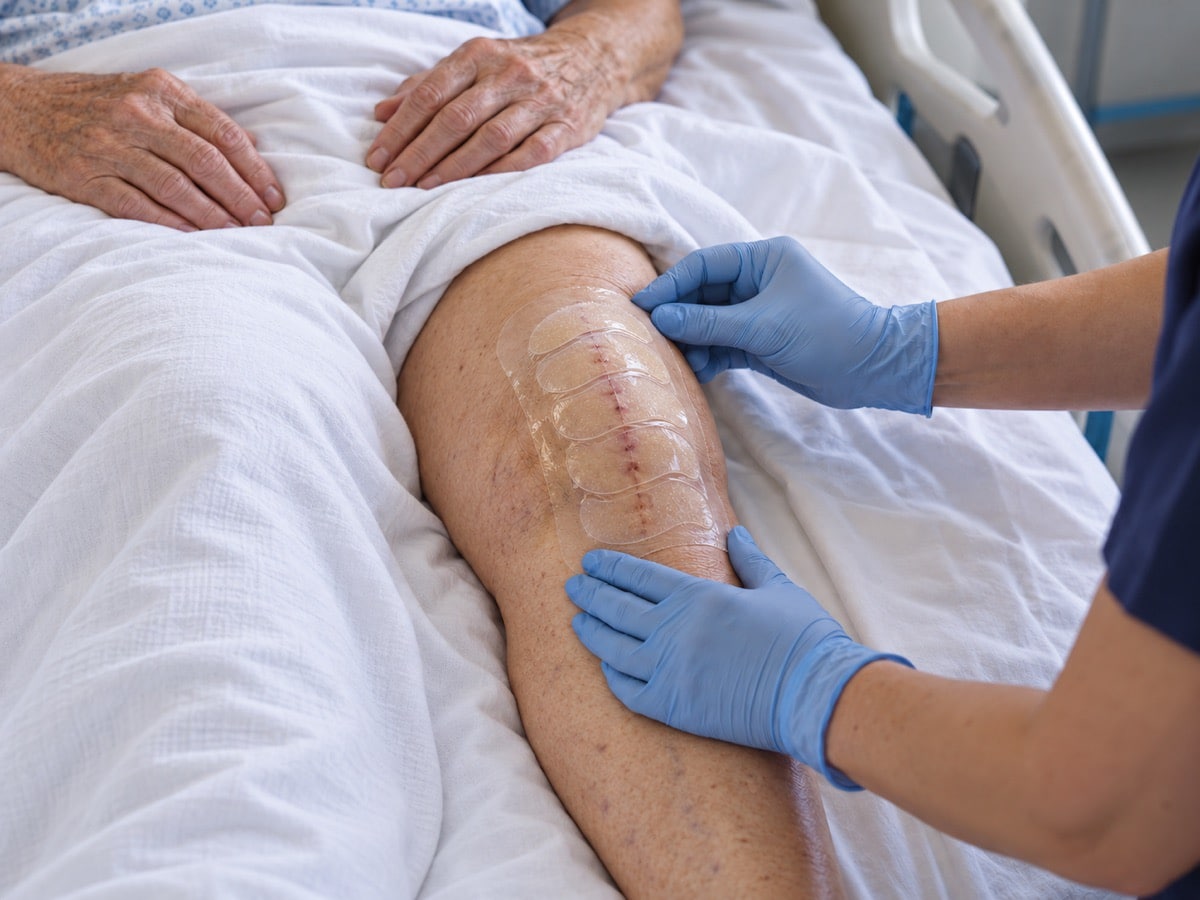
Wound check with Dr Yas. The stitches are under the skin and dissolve, so there is nothing to take out. Many people are cleared to drive from this point, once they are off strong painkillers and can brake comfortably.

Week 6
Walking without aids for most. Stationary bike. Back to light work. Review.

3 months
Back to most daily activities. Some swelling and stiffness is still normal. Review.
6–12 months
The knee keeps settling and feeling more natural for a year or more. 13 Walking, cycling, swimming and golf are well supported. Running and high-impact sport are a conversation.
After you go home: you are not on your own
The weeks after a knee replacement are where good care shows. This is what Dr Yas's private patients have:

A direct line to Dr Yas.
Through the patient portal you can send him a photo, a question or a worry at any time, and he answers. If you need a script, you ask him, not a call centre.
One surgeon.
Dr Yas did your operation, and Dr Yas is the one who sees you at every review. He is involved in every part of your care, not just the day in theatre.
A hand-picked physiotherapist.
Dr Yas works with a small group of physiotherapists he knows and trusts. Your rehabilitation plan is set up with them before you leave hospital, and they talk to him.
Home when you are ready.
Not when a timetable says so.
If something happens, you are still my patient
Every surgeon in the world sees the occasional knee that needs more attention after surgery: a knee that is slow to bend, a wound that needs a closer look, or, very rarely, something more. What matters is who looks after you if it happens to you.
"If something happens, you are still my patient. I will look after any concern with any part of your knee, including the complications. You will not be handed to someone else."
— Dr Yas Edirisinghe
That is the point of doing the whole range of hip and knee surgery, including about 50 redo operations a year. Whatever your knee needs next, it is still Dr Yas, holding your hand through it.
We stand behind our work. If a joint Dr Yas has replaced ever needs a redo operation, there is no out-of-pocket surgeon's fee for it. Anaesthetist and hospital fees are outside his control.
How long will it last? Longer than you have been told
Many people arrive believing a knee replacement "only lasts ten years". That was true of knees done decades ago. It is not true now.
The largest study of national registries, covering nearly 300,000 total knee replacements, found that 93 in 100 were still in place at 15 years, 90 in 100 at 20 years, and 82 in 100 at 25 years. 1 Australia keeps one of the most complete joint registries in the world. Its latest report puts the 20-year redo rate for knees replaced for arthritis at 8 in 100 — so 92 in 100 are still going. 2 For most people, a modern knee replacement is for life.
What those numbers are, and what they are not.
They are averages. They add up every surgeon, every hospital and every implant in the count, old designs and new, the first knee a surgeon ever did and the thousandth. They are the floor, not the ceiling. And in a registry, every second operation that adds or changes a part counts as a "revision" — including a planned one, years later, that adds a small part to a partial knee while the rest is left alone. That is not a knee that failed. That is a plan. It is also why the numbers look higher in younger people, who live longer with their knees and use them harder. Every knee Dr Yas replaces is followed in the Australian registry for life; ask him about his own results when you see him.

Why a knee is redone today.
The thing people fear — the knee "wearing out" — is now uncommon, because the modern plastic bearing barely wears. When a knee is redone, it is nearly always for another reason: an infection, an implant that has loosened, a knee that is unstable, a kneecap that does not track, or a fracture around the implant. Dr Yas's view, from about 50 redo operations a year, is that much of this traces back to how the knee was planned, positioned and balanced in the first place. Those are decisions. They are made before the first cut, and they are the reason the planning on this page takes the time it does.
14The risks, honestly
Every knee replacement carries risks, and you should hear them before surgery, not after.
- Infection. Under 1 in 100. Across 3.6 million knee replacements in 27 studies worldwide, about 8 in every 1,000 developed a deep infection; in Australia and New Zealand it was about 5 in 1,000. 15 It is prevented with antibiotics at surgery, a clean theatre and careful wound care.
- Blood clots. Prevented with blood thinners, early walking and compression; still possible.
- Stiffness. Some knees are slow to bend. Physiotherapy, and occasionally a short procedure under anaesthetic to free the knee, usually sort it.
- Numbness at the scar. A patch of numb skin to the outer side of the scar is common and usually fades.
- A knee that is not quite right. The "one in five" above. This is the risk that planning is designed to reduce.
- The rare and serious. Nerve or blood vessel injury, fracture around the implant, anaesthetic complications. Rare, and discussed at your consultation.
None of these is a reason to avoid a knee replacement that you need. They are the reasons to have it planned properly, by a surgeon who tells you about them, and who looks after you himself if one happens.
What it costs you
There is no extra surgeon's fee for the 3D planning or for using the robot. Wherever possible, Dr Yas respects your insurance gap arrangements, and he participates in them. There are some situations where additional costs apply, and you will always have a written estimate before anything is booked. Fees & billing →
Choosing your knee replacement surgeon: five questions worth asking
There is no list that tells you who the right surgeon is. There are questions that tell you a lot.
If something goes wrong, who looks after me?
Every surgeon, everywhere, sees the occasional knee that needs more care afterwards. The question is whether the surgeon who did your operation is the one who sees you through it. With Dr Yas, the answer is yes, every time.
Who will I actually see?
At the consultation, in theatre, on the ward, at every review, and in between.
Does the surgeon do the whole range?
Keyhole surgery, partial and total replacement, revision. A surgeon who does all of them can choose the operation your knee needs rather than the one on the menu.
How is my knee planned?
To my own anatomy and the things I want to do, or to a standard line?
Will they tell me the risks, and the one in five?
Before surgery, in plain words.
Dr Yas's answers are on this page. How to choose a knee surgeon in Adelaide →
If someone close to you has had a hard time with a knee replacement, you may be carrying that worry into your own decision. Dr Yas sees people in exactly this position every week, and he is happy to see your family member too. A knee that has not gone well deserves a careful look, and often there is more that can be done. Does your knee replacement still hurt? →
Ask Dr Yas
Not sure whether you need a knee replacement, or which operation your knee needs? Ask.
Send Dr Yas a question about your knee. He reads every one. No records to send: if you come in, he obtains your X-rays and history himself.
Ask Dr Yas a question
Send Dr Yas a question about your knee. He reads every one.
FAQ
What is a total knee replacement?
An operation that resurfaces the worn parts of the knee with metal caps and a tough plastic. The ligaments, muscles and almost all of the bone stay. It is for knee arthritis that has worn through the cartilage and is no longer controlled by simpler treatment.
How do I know if I need a knee replacement?
Many people don't, until someone looks properly. The usual signs: knee arthritis that limits your walking, wakes you at night, bends your leg out of shape, and no longer settles with physiotherapy, weight management and injections. Dr Yas's five-minute check is a good place to start.
Do I have bone-on-bone arthritis?
"Bone on bone" is the everyday name for the worst stage of knee arthritis, when the cartilage has worn right through and the two bones touch. On a standing X-ray it shows as no gap left between the thigh bone and the shin bone (grade 4). It is often the stage where a knee replacement helps most, but it is your symptoms that decide, not the picture. Dr Yas will show you your X-ray and tell you plainly what stage your knee is at.
How does Dr Yas decide which operation I need?
He starts with you, not the X-ray. He asks about your life: what you do each day, the activities you want back, your hobbies, the sport you play. Then he examines your knee and looks at your scans. Every option is considered, including no operation at all. If surgery is right, it is chosen for your anatomy, your needs and the things you want to do — partial or total, and how it is lined up.
Will Dr Yas always recommend surgery?
No. Often a smaller step is the better one, and sometimes the right answer is a specific physiotherapy plan rather than an operation. He will say so.
Am I too old, or too young?
Neither is a rule. Knee replacements are done well into the eighties when health allows. For younger people with wear in one part of the knee, Dr Yas's preference is a partial replacement that keeps your own anatomy and keeps your options open.
Can I have a knee replacement if I am a bigger person?
Often, yes. Dr Yas does not use a fixed weight cut-off; he assesses each person individually.
What is personalised kinematic alignment?
It is Dr Yas's way of planning your new knee around your own anatomy. He starts with your knee's natural shape, angle and movement, then uses his experience and the art of knee surgery to work out where each implant should sit. The plan is made to fit your knee and how you move. The full explanation is on the robotic knee page.
Does Dr Yas use a robot?
Yes. Every knee replacement he does is robotic-assisted. The robot carries out his plan accurately. It does not choose the operation, the implant or the alignment; he does.
Does Dr Yas only do knee replacements?
No. His practice is hip and knee surgery only, but all of it: keyhole and ligament surgery, partial and kneecap replacement, total knee replacement, hip replacement, and revision. That range is why he can choose the operation your knee needs.
Who looks after me if there is a problem after surgery?
Dr Yas. Any concern with any part of your knee, including the complications, is looked after by him, in his practice. You are not handed on.
How long will I be in hospital?
You can go home the next day if that is right for you. But nobody is rushed. Most of Dr Yas's patients stay two to three nights, so that your pain is settled, you are walking safely, and your physiotherapy plan is in place before you go home.
Can I contact Dr Yas between appointments?
Yes. Through the patient portal you can send him a photo, a question or a worry at any time, and ask for a script when you need one.
Who does my physiotherapy?
A physiotherapist Dr Yas knows and trusts. He works with a small, hand-picked group, and your plan is set up with them before you leave hospital.
When can I drive?
Many of Dr Yas's patients are cleared to drive from two weeks, once they are off strong painkillers and can bend the knee and brake comfortably. He checks this at the two-week review.
Will I be able to kneel?
Yes. There is no restriction on kneeling after a knee replacement. It can feel odd at first and some people choose not to; it improves with time and with practice on a soft surface. Where the skin cut is made does not change this. 7
Where will the cut be, and does it matter?
Dr Yas usually makes a short, straight cut down the front of the knee, shorter than a standard knee replacement scar. If you would rather have a cut that curves to the outer side, angles to the inner side or runs under the fascia, he does those too; tell him at your consultation. Trials that compared a straight cut with a curved outer cut found the same kneeling, movement and scar at a year. The plan underneath decides your result, not the shape of the cut. 7,8,9 Read about the cut in the skin →
Will I need a walking aid?
A frame for the first week or two, then a stick. By six weeks most people are walking without aids at home.
What are the risks?
Infection (under 1 in 100), blood clots, stiffness, numbness beside the scar, a knee that is not quite right, and, rarely, problems with the implant years on. The full list is in the risks section above, and every one is discussed at your consultation. 15
How long will it last?
Do knee replacements wear out?
Wearing out is now uncommon. The modern plastic bearing barely wears. When a knee is redone today, it is nearly always for another reason, and most of those reasons come down to how the knee was planned and put in.
Will my knee feel normal?
Closer to normal than knee replacements used to, because the knee is planned to your own anatomy. Most people describe major pain relief and a knee they stop thinking about. About one in five people are not fully satisfied after a knee replacement, and Dr Yas's whole approach is built around bringing that number down. 3,4
What does it cost?
It depends on your insurance. Wherever possible Dr Yas respects your insurance gap arrangements and participates in them; there are some situations where additional costs apply, and you receive a written estimate before anything is booked. If a knee he has replaced ever needs a redo operation, there is no out-of-pocket surgeon's fee for that operation (anaesthetist and hospital fees are outside his control).
How experienced is Dr Yas?
He performs more than 200 hip and knee replacements a year, including about 50 redo (revision) operations, and is Director of Orthopaedic Surgeon Training for the Northern Adelaide Local Health Network, where he trains the next generation of orthopaedic surgeons.
Do I need a GP referral?
Yes, for the Medicare rebate. Your GP can refer you to Dr Yas directly. Privately insured patients are usually seen within two weeks.
Which hospitals does Dr Yas operate at?
Ashford Hospital, Burnside Hospital and Calvary Central Districts Hospital, with consulting at Ashford, Elizabeth Vale, Gawler and Magill.
Your surgeon
Dr Yas Edirisinghe is an Australian-trained specialist orthopaedic surgeon in Adelaide whose practice is hip and knee surgery, and all of it: knee injuries and keyhole surgery, partial and total knee replacement, hip replacement, and revision and complex reconstruction. He is Director of Orthopaedic Surgeon Training for the Northern Adelaide Local Health Network, where he trains the next generation of orthopaedic surgeons, and he operates privately at Ashford Hospital, Burnside Hospital and Calvary Central Districts Hospital.
- MBChB (Auckland)
- MSurg
- FRACS
- FAOrthA
- Fellowship in knee reconstruction and arthroplasty, Westmead and Prince of Wales Hospitals, Sydney
- Director of Orthopaedic Surgeon Training, NALHN
Always Dr Yas.
Your consultation, your surgery and every follow-up are with Dr Yas himself.
Start to finish.
Any concern with any part of your knee, including the complications, is looked after by Dr Yas.
A direct line.
Through the patient portal you can reach Dr Yas at any time: photos, questions, scripts.
We stand behind our work.
If a joint Dr Yas has replaced ever needs a redo operation, there is no out-of-pocket surgeon's fee for it.
Home when you are ready.
Not when a timetable says so, and with a hand-picked physiotherapist already in place.
References
- Evans JT, Walker RW, Evans JP, Blom AW, Sayers A, Whitehouse MR. How long does a knee replacement last? Lancet 2019;393:655–663. Source ↗
- Australian Orthopaedic Association National Joint Replacement Registry. Hip, Knee & Shoulder Arthroplasty: 2025 Annual Report. Source ↗
- Bourne RB, Chesworth BM, Davis AM, Mahomed NN, Charron KDJ. Patient satisfaction after total knee arthroplasty: who is satisfied and who is not? Clin Orthop Relat Res 2010;468:57–63. Source ↗
- Gunaratne R, Pratt DN, Banda J, Fick DP, Khan RJK, Robertson BW. Patient dissatisfaction following total knee arthroplasty: a systematic review. J Arthroplasty 2017;32:3854–3860. Source ↗
- Lustig S, Sappey-Marinier E, Fary C, Servien E, Parratte S, Batailler C. Personalized alignment in total knee arthroplasty: current concepts. SICOT-J. 2021;7:19. Source ↗
- Hiranaka T. Current concept: personalized alignment total knee arthroplasty as a contrast to classical mechanical alignment total knee arthroplasty. Arthroplasty. 2024;6:23. Source ↗
- Barroso Rosa S, Grant A, McEwen P, Hazratwala K, Wilkinson M, Doma K, Letson H, Morse L. Skin sensory alteration and kneeling ability following cruciate retaining total knee arthroplasty are not affected by the incision position: a randomised controlled trial of simultaneous bilateral surgery. Journal of Experimental Orthopaedics. 2023;10:145. Source ↗
- Maniar RN, Singhi T, Nanivadekar A, Maniar PR, Singh J. A prospective randomized study in 20 patients undergoing bilateral TKA comparing midline incision to anterolateral incision. Journal of Orthopaedics and Traumatology. 2017;18:325-333. Source ↗
- Kulshrestha V, Sood M, Kumar S, Sood N, Kumar P, Padhi PP. Numbness following total knee arthroplasty: role of incision length and position – a randomized study. Clinics in Orthopedic Surgery. 2023;15(1):59-70. Source ↗
- Smith TO, King JJ, Hing CB. A meta-analysis of randomised controlled trials comparing the clinical and radiological outcomes following minimally invasive to conventional exposure for total knee arthroplasty. The Knee. 2012;19(1):1-7. Source ↗
- Stoddart JC, Dandridge O, Garner A, Cobb J, van Arkel RJ. The compartmental distribution of knee osteoarthritis: a systematic review and meta-analysis. Osteoarthritis Cartilage 2021;29:445–455. Source ↗
- Tripathy SK, Varghese P, Srinivasan A, et al. Joint awareness after unicompartmental knee arthroplasty and total knee arthroplasty: a systematic review and meta-analysis of cohort studies. Knee Surg Sports Traumatol Arthrosc 2021;29:3478–3487. doi:10.1007/s00167-020-06327-4 Source ↗
- Carlson VR, Post ZD, Orozco FR, Davis DM, Lutz RW, Ong AC. When does the knee feel normal again? A cross-sectional study assessing the Forgotten Joint Score in patients after total knee arthroplasty. J Arthroplasty 2018;33:700–703. Source ↗
- Lam AD, Hobbs J, Parikh N, Pipa D, Saxena A, Star A. Have Modern Total Knee Arthroplasty Implant Improvements Affected Revision Rates? A Registry Review of Modern Implants and their Predecessors. Journal of Orthopaedic Experience & Innovation. 2025. Source ↗
- Incidence of periprosthetic joint infection after primary total knee arthroplasty shows significant variation: a synthesis of meta-analysis and bibliometric analysis. Journal of Orthopaedic Surgery and Research. 2024. doi:10.1186/s13018-024-05099-8. Source ↗