
News · Joint replacement · October 2026
The X-ray looks fine. Why does my joint replacement still hurt?
It is one of the questions I am asked most — by patients, and by the GPs and physiotherapists who care for them. This month I shared the seven checks I use on Facebook, Instagram and LinkedIn. Here they are in one place.
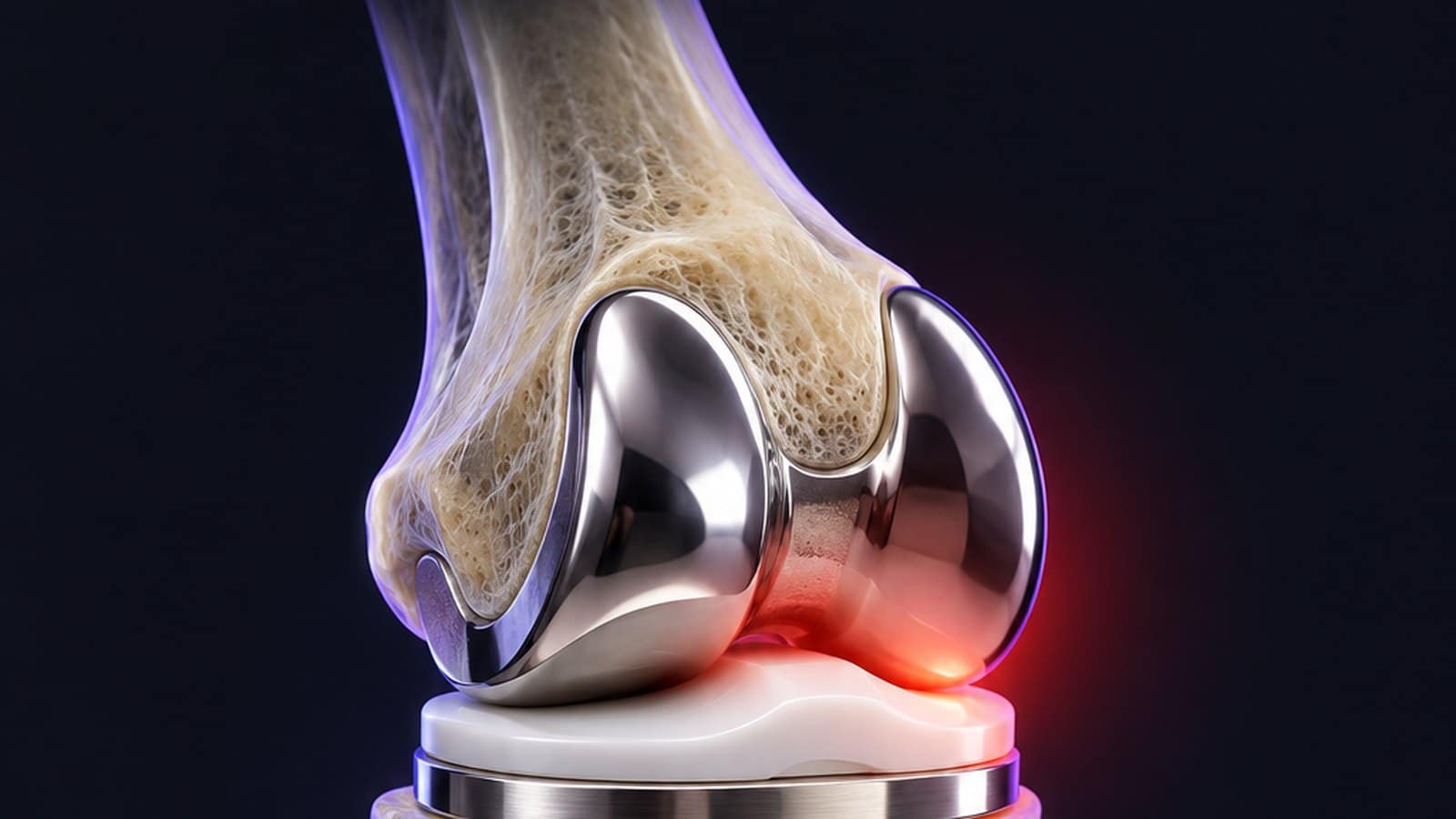
Most knee and hip replacements settle well. Some do not. When a replacement still hurts, the X-ray often looks perfect — and that can leave people wondering whether the pain is in their head, or whether this is just how it will be.
A normal X-ray tells us the implant is in place. It does not tell us why the joint hurts. There is usually a reason, and the aim is to find it.
Six months is a checkpoint
Recovery is different for everyone. Swelling, stiffness and aching can take months to settle, and a joint can keep improving for a year or more. But by around six months, most people should be comfortable with their new joint. If it still hurts at that point, it is worth a proper look.
That does not mean the replacement has failed. It means it is time to look for the reason.
Don’t wait six months if:
you feel unwell or feverish, the joint becomes hot, red or swollen, the wound leaks, or you have new pain at rest or at night. See your GP or surgeon promptly.
The aim is a diagnosis
Pain after a replacement has a cause far more often than not. In one study of 201 painful hip replacements, doctors found a cause in 96.5% of them.1 Ongoing pain after surgery is real, and it deserves treatment while the search for a cause goes on.4
My seven checks
I work through the same checks, in the same order, every time. For a knee:
- Infection — first, every time. A normal blood test does not rule it out. In one study, about 1 in 3 confirmed joint infections had a normal CRP blood test.2
- Is the implant loose, worn or out of position? X-rays first, then CT or a special bone scan when needed.
- Is the balance right? A knee that is too loose, too tight or turned slightly can give way, feel stiff or ache.
- Could it be the bone? A small stress fracture near the implant can hurt with every step.
- Could it be soft tissue? Tendons, scar tissue and small nerves around the joint can all cause pain.
- Could the pain start somewhere else? The hip and the lower back can send pain to the knee.
- Less common causes. Nerve pain, a rare metal sensitivity or other unusual problems — keep an open mind.
A hip follows a slightly different order. Pain from the back is checked much earlier, because it is a common cause of pain around a hip replacement.1

Another operation is not always the answer
Many problems can be treated without redoing the replacement — with targeted physiotherapy, an injection, treating the back or hip, or treating nerve pain. Treatment depends on what we find and what matters to you. If a revision is ever considered, it should fix a specific problem that has been found.3
Read the full guide
My knee and hip guides explain each check in plain language, with pictures, and what happens at an appointment.
If your replacement still hurts, I am happy to have a look and give an opinion. Ask your GP for a referral, or call 08 7081 4100.
See the posts
This article brings together posts from my Facebook, Instagram and LinkedIn pages. The LinkedIn version, written for GPs and physiotherapists, is below.
Follow along for more: Facebook · Instagram · LinkedIn · YouTube
- Erivan R, et al. Painful hip arthroplasty: what should we find? Diagnostic approach and results. J Arthroplasty. 2019;34:1802-1807. PubMed
- Akgün D, et al. The serum level of C-reactive protein alone cannot be used for the diagnosis of prosthetic joint infections. Bone Joint J. 2018;100-B:1482-1486. PubMed
- BOA/BASK. BOAST: Investigation and management of patients with problematic knee replacements. 2020. BOA
- Wylde V, et al. The STAR care pathway for patients with pain at 3 months after total knee replacement. Lancet Rheumatol. 2022;4:e188-e197. PubMed
General information only, not advice about your individual joint. If you are worried about your replacement, see your GP or surgeon.